FHSU students help bring stories of relationship-based violence in rural Kansas to light
10/16/26
By FHSU University Marketing and Strategic Communication
HAYS, Kan. - Fort Hays State University students are helping bring greater visibility to experiences of relationship-based violence in rural Kansas through the Facing Relationship-Based Violence: A Rural Kansas Initiative. This community storytelling project creates opportunities for survivors and others affected by relationship violence to share their experiences, elevate perspectives that are often overlooked, and contribute to greater community understanding and dialogue.
Guided by Dr. Ziwei Qi, FHSU associate professor of criminal justice, Dr. Lori E. Kniffin, Voss Distinguished Professor of Leadership and director of Civic Learning and Engagement, and Diana Angarita, FHSU alumna of Marketing and Organizational Leadership, and funded by the Robert Wood Johnson Foundation, the project brings together storytellers and writers to document lived experiences and explore the challenges and opportunities surrounding relationship-based violence in rural communities.
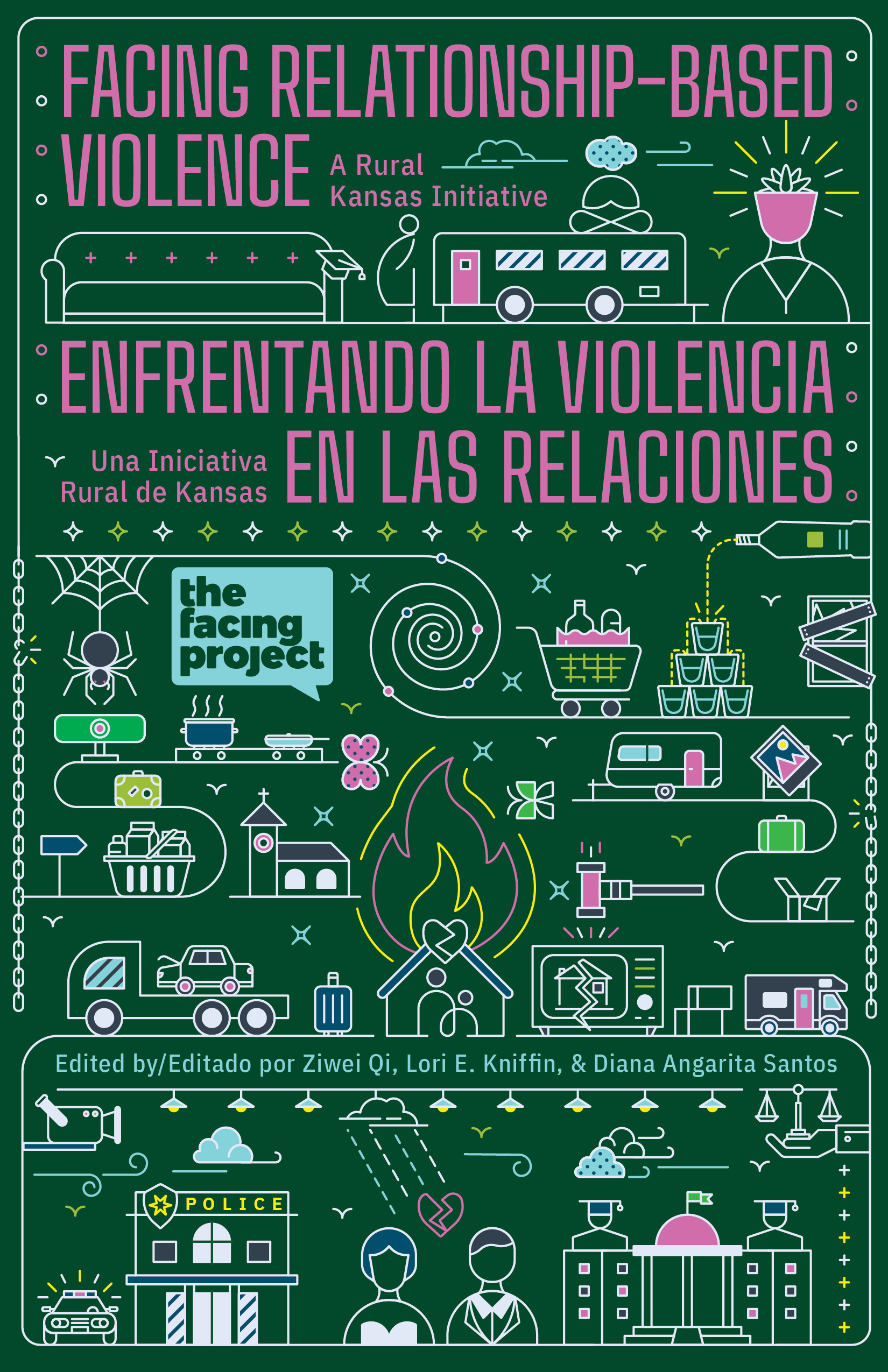
FHSU students have contributed as writers, steering committee members, and photographers, helping to create the book Facing Relationship-Based Violence: A Rural Kansas Initiative, which will be shared with the community during a launch event at the Hays Public Library on October 22 from 4:30 to 7:30 p.m.
The project is led by Fort Hays State University in collaboration with The Facing Project, a storytelling organization that brings people and communities together through listening, storytelling, and connection, using stories to build understanding and empathy, and to inspire action.
The goal of the project is not only to raise awareness of relationship-based violence, but also to reduce stigma, strengthen connections to resources, build on existing community strengths, and help communities think about what meaningful support can look like in rural places.
For Ben Wilkerson, a senior from Lawrence double-majoring in criminal justice and psychology, the project offered an opportunity to further his undergraduate research experience with Qi and to explore the power of storytelling.
Wilkerson contacted the Facing Project's directors about developing a project focused specifically on relationship-based violence in rural Kansas. As a writer, he was paired with an individual whose experiences he would help shape into a written narrative.
After initial Zoom conversations, Wilkerson and his storyteller spent hours discussing the individual's experiences, followed by multiple rounds of revisions.
“Figuring out how to tell this individual’s story, without trying to speak for them, was very difficult,” Wilkerson said. “It took a lot of reflection.”
The experience also challenged his assumptions about the differences between rural and urban communities. His storyteller had previously lived in a more populated area before moving to a rural community, providing a perspective on how location can influence the experience of relationship-based violence.
“There were fewer resources in the rural areas, and sometimes there was more stigma,” Wilkerson said. “But there was a small-town community aspect of having support from close circles that they didn’t have back in the bigger area. There were two sides to it, and that wasn’t something that I was expecting going into it.”
Although barriers exist in rural areas, Qi pointed out that recognizing the value of rural strengths has been an important part of the project. Although barriers such as distance, privacy, and transportation exist, members of rural communities have strong relationships, local knowledge, trust, and are deeply committed to helping one another.
The project has strengthened Wilkerson’s interest in pursuing an academic career. He hopes to earn a doctorate at the University of Kansas and research how storytelling and language shape human experiences.
Lauren Franks, a senior from Russell majoring in sociology with a minor in political science, also contributed as a writer after becoming interested in the project through her interactions with Qi.
Franks wrote the story of a health care provider, gaining insight into the experiences of professionals who support individuals affected by relationship-based violence. She said the project helped her recognize that the effects of relationship-based violence extend beyond survivors to the people who care for and assist them.
“When I was speaking with my storyteller, she didn’t think she had a story to tell,” Franks said. “But it’s everyone’s perspective. It’s so much bigger than just survivors.”
Franks also emphasized the significance of the project's bilingual format. It is the first bilingual book produced through The Facing Project and includes translated stories intended to ensure that language does not prevent people from sharing their experiences or connecting with others.
“They had a lot of translators come together to translate all the stories and work with people who are non-English speaking, particularly Spanish-speaking, because they have stories to tell, too, and they shouldn’t be excluded just because their story writer doesn’t know English,” Franks said. “That was monumental.”
For Franks, one of the project's most important goals is helping rural communities recognize that relationship-based violence is not limited to urban areas.
“This is happening in rural areas,” she said. “We’re not immune to it. I hope for the community that they learn to acknowledge that this is happening here.”
The project also included a photography competition, with images of rural settings adding another dimension to the stories collected in the book. In addition, listening circles in Western Kansas have created opportunities for community members to engage with the narratives, learn from one another, and identify possible actions to strengthen support and create meaningful community change.
Norah Bradstreet, a junior from WaKeeney double-majoring in sociology and criminal justice, participated as a writer. She said hearing a storyteller describe personal experiences made the issue more immediate than studying relationship violence statistics in the classroom.
“You see all the numbers and statistics in classes, but when your storyteller is actually telling you what happened to them, and where they were, it is really close to home, and it’s eye-opening,” Bradstreet said.
Although she initially found the writing process challenging, Bradstreet said that working closely with her storyteller helped her develop the narrative and understand the responsibility of representing another person's experiences.
“My storyteller was really flexible and helped me a lot with my writing,” Bradstreet said. “It definitely was a privilege.”
Through their participation, FHSU students gained valuable research and communication experience while contributing to a project with a broader community purpose. By documenting personal experiences and creating opportunities for conversation, they help challenge stigma surrounding relationship violence and draw attention to the resources and support rural communities need.
“One of the most meaningful parts of this project has been watching students move beyond learning about relationship-based violence in a classroom,” Qi said. “They have had to listen carefully, build trust, think about how they represent someone else’s experience, and understand the responsibility that comes with community-engaged work. They are not just completing an assignment. They are contributing to something that has a life beyond the university.”
Facing Relationship-Based Violence has truly been a collaborative effort, with many people and organizations helping move the work forward, including The Facing Project and J.R. Jamison, editors Mary Price and Katy Harris, Hays Public Library, Options, Jana’s Campaign, the Kansas Statewide Homeless Coalition, Catholic Charities in Garden City, and Fort Hays State University’s Civic Learning and Engagement, Criminal Justice Program, Center for Empowering Victims of Gender-Based Violence, and numerous other campus and community partners.
“The book launch at the Hays Public Library will bring these stories into a shared community space, continuing the project’s work of amplifying voices, encouraging people to listen, and turning personal stories into opportunities for greater understanding and action,” Qi said.
The book launch will also feature live graphic recordings and a silent auction featuring photography. Proceeds and donations from the event will help support efforts related to relationship-based violence and strengthen community support for those affected.
For more information about the Center for Empowering Victims of Gender-based Violence, visit: https://www.fhsu.edu/criminaljustice/center-for-empowering-victims-of-gender-based-violence/
For more information about Options Domestic and Sexual Violence Services, visit: https://help4abuse.org/
For more information about Jana’s Campaign, visit: https://www.janascampaign.org/
For more information about The Facing Project, visit: https://facingproject.com/