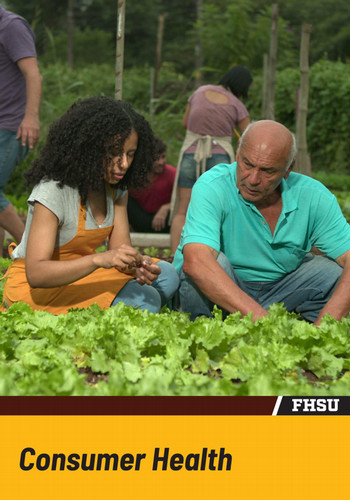
Certificate in Consumer Health
Hours: 13 Online
The Certificate in Consumer Health at Fort Hays State University is designed to enhance knowledge and skills in health education promotion. Covering a wide range of consumer health topics, the certificate prepares participants to address health-related issues within community settings effectively.
The certificate is offered entirely online and provides flexibility for working professionals and those with demanding schedules. The curriculum integrates lectures, demonstrations, labs, and field experiences, strongly emphasizing practical application. This structure ensures students are well-prepared to tackle real-world health education and promotion challenges.
Who is this program for?
The certificate is designed for individuals seeking to enhance their health education and promotion knowledge and skills. It is especially well-suited for:
- Public health professionals
- Health educators
- Community health workers
- Healthcare providers
- Individuals seeking career advancement in health education
- Those interested in public health and wellness
The Best Value in Higher Education Anywhere
Fort Hays State University prides itself on quality education at an affordable price. Students in this program can expect to pay approximately $3,583.45* (online) per semester.
*Estimated cost based on 13 credit hours at the FHSU Online Undergrad tuition rate ($275.65/credit hour) for online courses. Actual price may vary depending on course load and location. Tuition and Fees are subject to change as they are approved by the Kansas Board of Regents each year.
The certificate’s core curriculum consists of 13 credit hours, emphasizing essential consumer health and education areas. Coursework covers foundational topics such as consumer health principles, public health strategies, and health promotion methods, equipping students with the skills to address community health concerns and promote healthy behaviors effectively.
Key subjects include disease prevention, health communication, and program evaluation. Students learn to design, implement, and assess health education programs, adapting their approaches to meet the changing needs of the communities they serve.
HHP 310: Consumer Health
This course deals with critical analysis and evaluation of health appraisal techniques and federal and state legislation affecting consumer health.
HHP 314: Issues in Health Education
This course reviews sensitive and controversial issues in health education, covering topics related to nutrition, individual health, community health, and STDs that are important to families and individuals.
HHP 400: Safety Education
This course examines theories of accident causation and various methods of preventing accidents in schools, work, home, and recreational settings.
Discover the full Certificate in Consumer Health course listing by visiting the Academic Catalog.
Students who complete the Certificate in Consumer Health gain skills and knowledge that open diverse career opportunities in various health-related fields. The certificate prepares students for meaningful roles in health education and promotion.
Health Educator
Health educators develop and implement programs to promote healthy behaviors and prevent disease. They work in schools, community organizations, and healthcare settings, creating materials and conducting outreach.
Public Health Worker
Public health workers improve community health through education, policy, and promotion programs. They work in government, non-profits, or healthcare, addressing various public health issues.
Community Health Specialist
Community health specialists assess the health needs of communities and develop programs to meet those needs. They collaborate with local organizations and stakeholders to implement and evaluate health initiatives.
Health Promotion Coordinator
Health promotion coordinators plan and manage programs that encourage healthy lifestyles. They work in corporate wellness, non-profits, and community health organizations to design effective interventions.
Wellness Coach
Wellness coaches support individuals in adopting healthy behaviors and lifestyle changes. They work one-on-one to provide motivation, education, and guidance toward achieving health goals.
Ready for the next step?
Our faculty would be excited to talk to you about how our department programs can help you explore your interests and prepare you for a variety of rewarding careers.
Related Programs
Fort Hays State University offers several related programs for those seeking to further their education in health and wellness. These programs allow individuals to specialize and deepen their expertise in key areas of the field:
- B.S. in Health and Human Performance
- Certificate in Community Health
- Master of Professional Studies (Public Health Administration)
- Certificate in Community Health Promotion - Graduate-Level
Participants can pursue careers in health education, public health, community health, health promotion, and wellness coaching.
The Certificate in Consumer Health comprises 13 credit hours and can be completed online, allowing flexibility and convenience.
Students engage in service-learning projects, laboratory exercises, and field experiences that provide hands-on learning opportunities.
You will learn to assess community health needs, develop and implement health education programs, and evaluate their effectiveness.
Applicants need a minimum GPA of 2.5, a personal statement, and two letters of recommendation to apply.
Information about the Department of Health and Human Performance
The Department of Health and Human Performance at FHSU offers specialized, in-demand degree programs that combine innovative, hands-on learning with access to state-of-the-art facilities. Supported by a dedicated faculty and staff, students are encouraged to address community needs and make a meaningful impact beyond the campus.
The department is committed to preparing students for fulfilling and rewarding careers that align with their personal and professional goals. Emphasizing practical learning experiences, flexible academic options, and close mentorship from experienced faculty, the programs equip students to succeed in diverse, high-growth fields such as professional sports, healthcare, and more. By joining this community, students become part of a network of accomplished alumni and embark on a career path that fosters both personal satisfaction and professional achievement.
While earning a degree remains the primary focus, college life offers much more than classroom learning. Students are encouraged to participate in extracurricular activities that foster leadership skills, deepen their understanding of their chosen careers, and provide opportunities to make a positive impact in their communities. For more information about the following student organizations, please contact the Department of Health and Human Performance.
- Phi Epsilon Kappa - Delta Theta Chapter: The Delta Theta chapter of Phi Epsilon Kappa, a national honor society, recognizes FHSU students pursuing careers in physical education, health, recreation, dance, human performance, exercise science, sports medicine, and sports management. Through active involvement in campus, community, and professional activities, members develop valuable leadership skills and enhance their professional growth.
- HHP Majors Club: The HHP Majors Club offers students an excellent opportunity to stay engaged in departmental activities, connect with classmates, and take part in university events. The club fosters a strong sense of community within the Department of Health and Human Performance while encouraging involvement and collaboration among students.
- Fellowship of Christian Athletes: The Fellowship of Christian Athletes provides students with the opportunity to integrate their faith with a passion for athletics. This organization sponsors the national annual event Fields of Faith, where FHSU students worship and serve alongside members of the Hays community. FCA welcomes all students interested in Christianity, regardless of their involvement in FHSU athletics.
- Pre-Professional Healthcare Club: The FHSU Pre-Physical Therapy Club fosters a sense of community among students pursuing careers in fields such as Pre-Physical Therapy, Pre-Occupational Therapy, Pre-Athletic Training, Pre-Physician Assistant, and Pre-Chiropractic. The club supports professional development by offering resources and activities designed to strengthen students’ applications for graduate healthcare programs and future careers. Membership is open to any FHSU student interested in entering a professional healthcare or related field.
- Certificate
- Online