Certificate in Fisheries Science
Hours: 12 On-Campus
The Certificate in Fisheries Science at Fort Hays State University prepares students to build expertise in fisheries management, conservation, and research. It offers focused coursework in aquatic ecosystems, fish biology, and sustainable fisheries practices.
Participants explore key topics, including fish population dynamics, habitat restoration, and the impacts of human activity on aquatic environments. This certificate is ideal for individuals pursuing careers in fisheries science, wildlife management, conservation biology, or roles within government and nonprofit agencies dedicated to the stewardship of aquatic resources.
Upon completion, students will have the foundational knowledge and applied skills needed to address contemporary challenges in fisheries management. The certificate supports efforts to conserve aquatic ecosystems and promote the sustainable use of global fish stocks, contributing to long-term environmental sustainability and resource management.
Who is this program for?
This certificate is ideal for students and aspiring professionals interested in aquatic ecosystems, conservation, and sustainable fisheries management. It provides a strong foundation in essential scientific principles paired with practical, hands-on experience. It is especially well-suited for:
- Students planning to pursue careers in fisheries science, wildlife management, or conservation biology
- Individuals passionate about addressing environmental challenges and preserving aquatic ecosystems
- Aspiring professionals seeking a strong foundation in fish biology, population dynamics, and sustainable practices
- Those looking to gain hands-on field experience in fisheries management and aquatic resource conservation
- Students interested in contributing to the sustainable use and protection of global fish stocks and aquatic habitats
The Best Value in Higher Education Anywhere
Fort Hays State University prides itself on quality education at an affordable price. Students in this program can expect to pay approximately $2,590.08* (on-campus) per semester.
*Estimated cost based on 12 credit hours at the Undergrad resident/regional tuition rate ($215.84/credit hour) for on-campus courses. Actual price may vary depending on course load and location. Tuition and Fees are subject to change as they are approved by the Kansas Board of Regents each year.
The curriculum provides a solid foundation in aquatic ecosystems, fish biology, and sustainable fisheries management. Students explore key topics, including fish physiology, habitat restoration, and population dynamics, as well as the impact of human activities on aquatic environments.
BIOL 619/619L: Aquatic Ecology/Laboratory
This course examines freshwater resources, ecological processes, and the impact of human activities on aquatic ecosystems. Through a combination of lectures, group activities, and fieldwork, including a laboratory component, students learn to assess water quality, quantify habitats, and conduct ecological analysis.
BIOL 673/673L: Ichthyology/Laboratory
This course focuses on fish biology, with an emphasis on physiology, taxonomy, distribution, evolution, and ecology, including a laboratory component. Students will explore the diverse adaptations of fish species, their evolutionary history, ecological roles, and distribution patterns across various aquatic environments.
BIOL 699/699L: Fisheries Management/Laboratory
This course introduces the fundamental principles and techniques of inland fisheries management. Students explore key concepts in fish population management, habitat restoration, and sustainable practices, with a focus on the effective conservation and utilization of freshwater resources.
Discover the full Certificate in Fisheries Science course listing by visiting the Academic Catalog.
The Certificate in Fisheries Science provides a solid foundation for careers in fisheries management, conservation, and the protection of aquatic ecosystems. While it does not lead to professional licensure for advanced roles, it supports entry-level opportunities in fish hatchery operations, habitat management, ecological research, and environmental education.
Students are well-positioned for employment with government agencies, nonprofit organizations, and private entities focused on sustainable fisheries and aquatic resource conservation.
To strengthen career prospects, students are encouraged to pair this certificate with a degree in biology, environmental science, or a related field, as many positions may require additional academic preparation or specialized certifications.
Fish Hatchery Technician
Fish hatchery technicians manage breeding and stocking programs, monitor fish health, and support sustainable fisheries in government, nonprofit, or private hatcheries.
Aquatic Habitat Manager
Aquatic habitat managers restore and protect ecosystems by implementing habitat programs on forests, wetlands, lakes, and rivers. They collaborate with agencies and conservation groups to support fish populations and promote sustainability.
Fisheries Biologist
Fisheries biologists study fish populations and ecosystems to support the conservation and sustainable management of these resources. They conduct surveys, analyze data, and work with agencies to develop protection policies.
Outdoor Educator/Conservation Educator
Outdoor educators teach freshwater ecology and conservation, leading programs that promote sustainable fishing and environmental stewardship. They work with government agencies, NGOs, and educational organizations.
Ready for the next step?
Our faculty would be excited to talk to you about how our department programs can help you explore your interests and prepare you for a variety of rewarding careers.
Related Programs
Fort Hays State University offers several related programs that complement the Certificate in Fisheries Science for students interested in expanding their knowledge of aquatic ecosystems, conservation, and environmental science. These additional opportunities allow students to deepen their understanding of ecological processes, environmental management, and wildlife conservation, enhancing their ability to support sustainable aquatic resource management.
- B.S. in Biology (General Biology)
- Certificate in Ecological Analysis
- Certificate in Wildlife Biology
- Certificate in Zoology
With a Certificate in Fisheries Science, you can pursue a variety of career opportunities in fisheries management, conservation, and environmental protection. Additionally, it can enhance your qualifications for roles with government agencies, non-profits, research institutions, and environmental organizations dedicated to the preservation and sustainable use of aquatic resources.
The certificate consists of 12 credit hours. Depending on the student’s course load and availability, it can be completed in one year. To accommodate different schedules, both full-time and part-time options are available.
This certificate is available on campus.
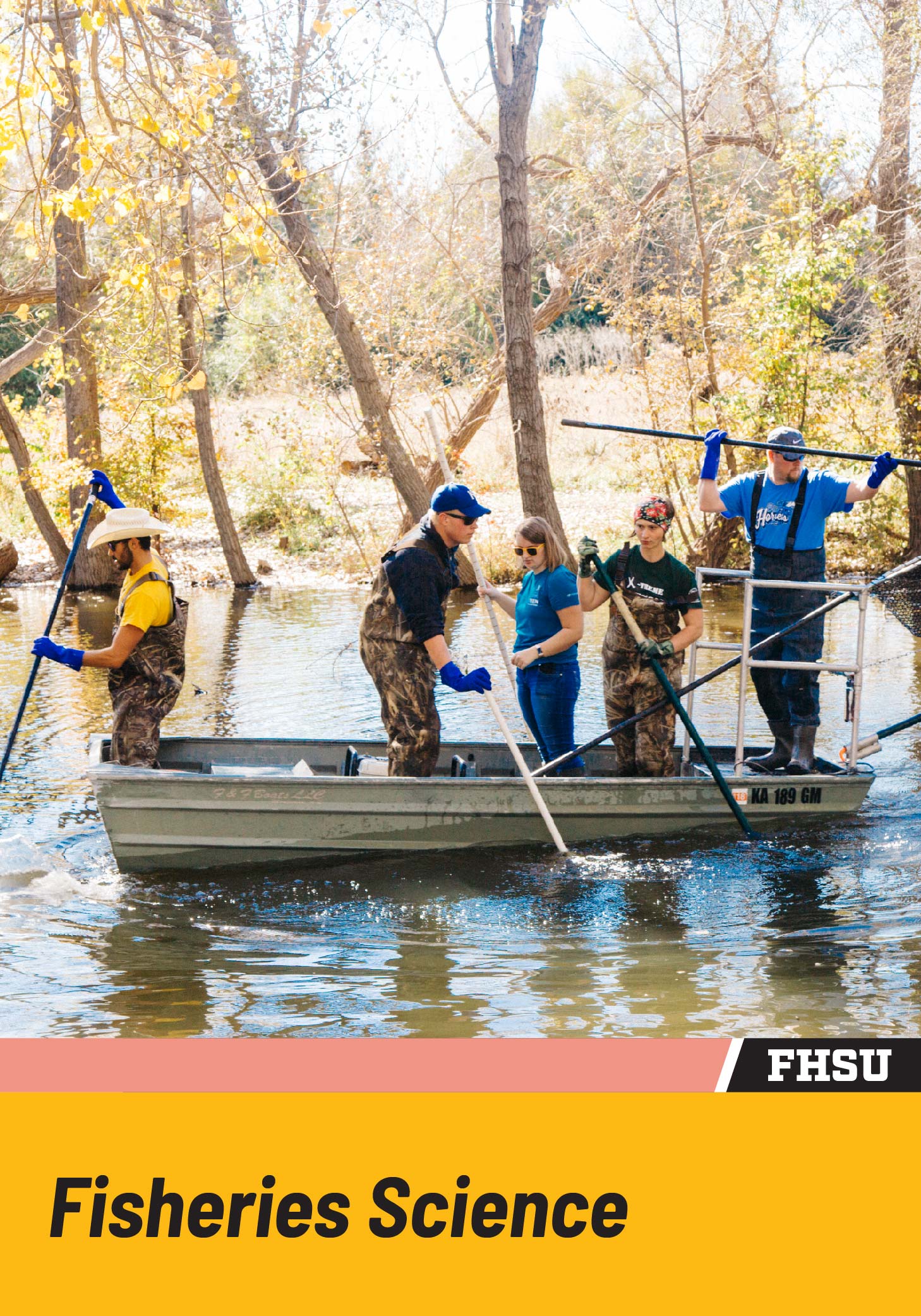
Our Certificate in Fisheries Science provides hands-on experience through field surveys, internships, and lab work. You'll gain skills in fish population assessment, water quality analysis, and techniques like electrofishing. Internships with hatcheries or conservation organizations provide real-world experience, preparing you for careers in fisheries management and aquatic conservation.
Information about the Department of Biological Sciences
The Department of Biological Sciences at FHSU provides a comprehensive foundation in life sciences, preparing students for success across a wide range of biological fields. The department offers modern facilities, personalized instruction, and extensive research opportunities, enabling students to explore topics from molecular biology to wildlife studies.
Students benefit from a high-quality education at an excellent value, with hands-on research experiences, dedicated faculty mentoring, and specialized training in pre-professional tracks such as Pre-Med, Pre-Physical Therapy, and Pre-Veterinary Medicine.
Graduates are well-equipped for careers in human and veterinary health, conservation, education, or advanced graduate studies. Supported by strong academic programs and a committed faculty, students are prepared to pursue rewarding careers and become part of a thriving network of successful alumni.
While earning a degree remains the primary focus, college life offers much more than classroom learning. Students are encouraged to participate in extracurricular activities that foster leadership skills, deepen their understanding of their chosen careers, and provide opportunities to make a positive impact in their communities.
- AMSA/Pre-Medical Club: This club supports students pursuing pre-medical, pre-dental, pre-physician assistant (Pre-PA), and pre-optometry tracks by offering valuable experiences such as clinic visits, field trips, and networking opportunities with healthcare professionals. With the pre-PA and dental fields among the fastest-growing areas in healthcare, the club provides essential resources and guidance to help students successfully navigate their chosen paths. For more information, students are encouraged to contact Dr. James Balthazor.
- Biology Club: This club is dedicated to educating and supporting students interested in the biological sciences. The club promotes both personal and professional growth by offering opportunities to develop job-related skills, engage in professional development activities, and build connections through social events. For more information, students can contact Dr. Claudia Carvalho.
- Pre-Physician Associate Club: This club supports aspiring PA students as they prepare for the Centralized Application Service for Physician Assistants (CASPA) process. Through regular meetings, students receive guidance on building competitive applications, including opportunities to earn volunteer hours, develop personal statements, and strengthen other key components. This organization features guest speakers, workshops on CV and résumé writing, program selection, and hands-on training in areas such as wound care and suturing, and helpful checklists. By fostering a supportive community of like-minded peers, the club offers encouragement and practical support throughout college and the PA application process. First-year students and anyone interested in a PA career are highly encouraged to join.
- National Resources Club: This club is dedicated to studying natural resources and promoting conservation, restoration, and sustainability through hands-on activities and community service. Members participate in recreational and research-based projects focused on natural resource management while also exploring career opportunities within the field. The club fosters both environmental stewardship and professional development for students passionate about the outdoors and sustainability.
- Certificate
- On-Campus