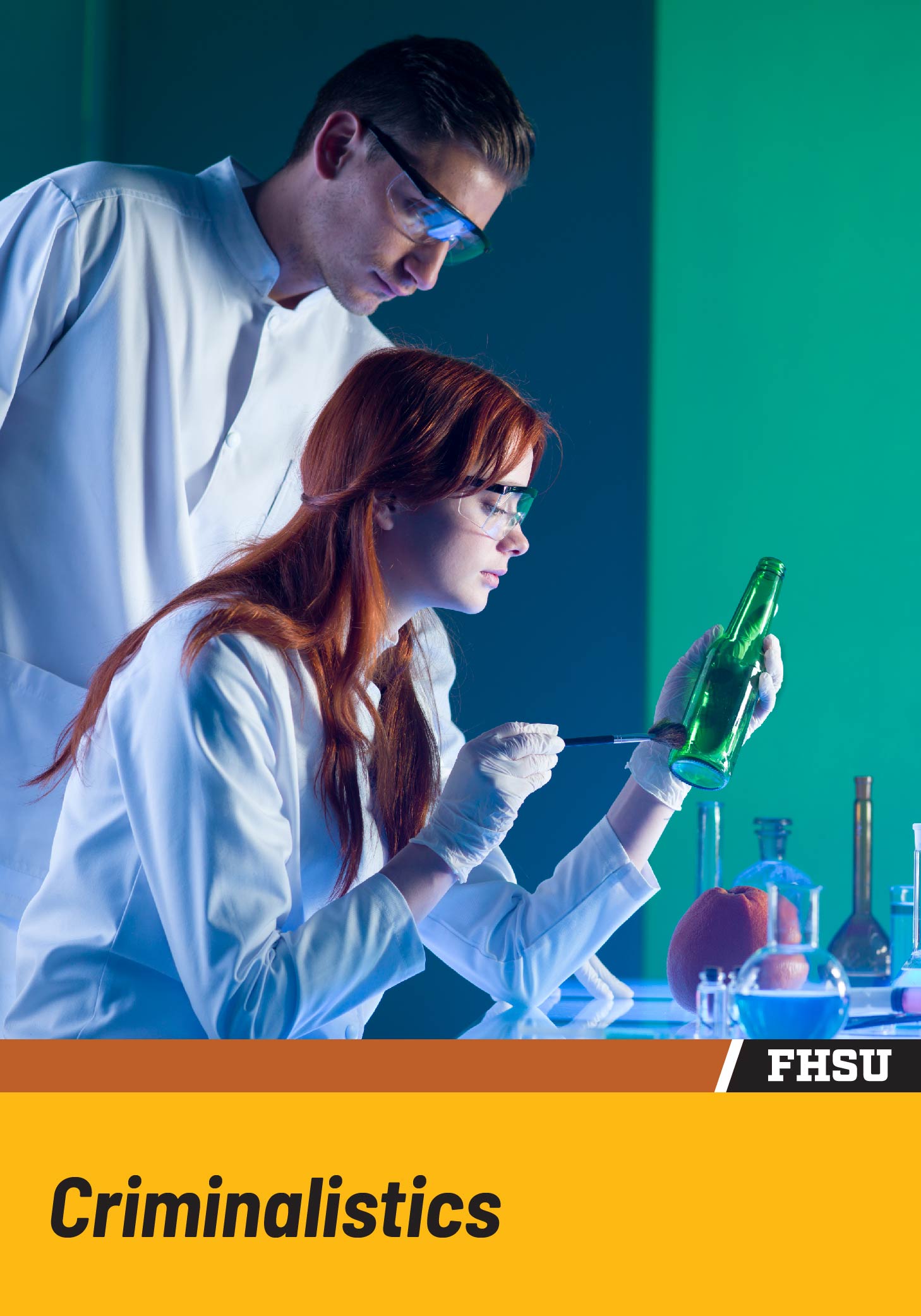
Bachelor of Science in Criminalistics (Forensic Biology)
Hours: 120 On-Campus
The Bachelor of Science in Criminalistics (Forensic Biology) at Fort Hays State University provides a strong scientific foundation for students interested in the forensic applications of biology, particularly DNA analysis. The program combines core biological concepts with hands-on laboratory training, preparing students to examine biological evidence such as blood, DNA, and seminal fluid commonly found in criminal investigations.
Students gain practical experience with the Combined DNA Index System (CODIS), learn how to isolate DNA profiles, compare samples, and contribute to the development of criminal cases. The curriculum emphasizes real-world application, strengthening students’ forensic biology and analytical skills.
Graduates are well-prepared for careers in forensic science, with opportunities in crime laboratories and investigative agencies, including the Kansas Bureau of Investigation (KBI) and other state or federal organizations. They use their training in DNA analysis to support and advance criminal investigations.
Who is this program for?
This program is well-suited for students interested in forensic science, biology, or criminal justice who want to play an active role in solving crimes and supporting public safety. Ideal candidates are detail-oriented and committed to scientific analysis, ethical practice, and justice:
- Individuals aiming to become forensic scientists
- Students interested in crime scene investigation
- Aspiring DNA analysts in forensic labs
- Those committed to ethical criminal justice work
- Future public safety professionals in forensic science
The Best Value in Higher Education Anywhere
Fort Hays State University prides itself on quality education at an affordable price. Students in this program can expect to pay approximately $3,237.60* (on-campus) per semester.
*Estimated cost based on 15 credit hours at the Undergrad resident/regional tuition rate ($215.84/credit hour) for on-campus courses. Actual price may vary depending on course load and location. Tuition and Fees are subject to change as they are approved by the Kansas Board of Regents each year.
The curriculum provides a strong foundation in biology and forensic science, equipping students with the knowledge needed to work with biological samples and understand human biological systems. As students advance, upper-level coursework strengthens their technical skills in areas such as DNA analysis and database management, supported by extensive lab work and hands-on projects that reflect real-world forensic challenges. This comprehensive, experience-based approach ensures graduates are well-prepared for careers in forensic biology.
BIOL 325/325L: Genetics/Laboratory
This is a survey course in genetics, emphasizing key principles and concepts and incorporating a laboratory component to provide hands-on experience and practical application of genetic theories.
BIOL 345/345L: Human Anatomy/Laboratory
This course covers the structure of the human body, providing an in-depth understanding of its anatomical features, along with a laboratory component that facilitates hands-on learning and the practical application of anatomical concepts.
BIOL 685: Molecular Biology
This course investigates biological processes at the molecular level by examining the structure and function of DNA, RNA, and proteins, and by applying these concepts to experimental practice. Emphasis is placed on developing technical competence, experimental design skills, and an understanding of how molecular biology underpins advances in genetics, medicine, biotechnology, pharmaceuticals, forensic science, and personalized healthcare.
Discover the full Bachelor of Science in Criminalistics (Forensic Biology) course listing by visiting the Academic Catalog.
Graduates pursue a variety of rewarding and impactful careers in forensic science and criminal justice.
DNA Analyst
DNA analysts apply their expertise in genetics and laboratory procedures to identify suspects and establish connections between offenders and their involvement in criminal activity. This role requires precision, strict adherence to laboratory standards, and a deep understanding of genetic markers and forensic databases.
Crime Scene Investigator (CSI)
Crime scene investigators (CSIs) play a crucial role in collecting and analyzing evidence from crime scenes. They document the scene, gather physical evidence, and carefully preserve critical materials such as blood, DNA, and trace elements. Their work is crucial for reconstructing events and providing key insights that aid in solving cases.
Forensic Lab Technician
Forensic lab technicians work in laboratories analyzing evidence from crime scenes, performing tasks such as DNA extraction and blood testing. They must have strong lab skills, follow safety protocols, and accurately interpret results.
Forensic Science Educator
Forensic science educators have an opportunity to train the next generation of professionals by teaching forensic techniques, criminalistics principles, and laboratory skills. They work in academic institutions, community colleges, or training centers, sharing their expertise to prepare students for careers in the field.
Criminal Justice Researcher
Criminal justice researchers specializing in forensic methodologies and evidence analysis conduct studies to improve forensic techniques, tackle emerging challenges in DNA testing, and develop new protocols for crime scene investigation. These professionals play a vital role in advancing the field through their research.
Ready for the next step?
Our faculty would be excited to talk to you about how our department programs can help you explore your interests and prepare you for a variety of rewarding careers.
Related Programs
Students interested in forensic science may also explore related programs at Fort Hays State University that offer complementary skills and areas of study. These programs provide additional pathways into careers in criminal justice, biology, and forensic analysis, equipping students with versatile, transferable skills applicable across multiple fields:
- B.A./B.S. in Criminal Justice
- B.S. in Criminalistics (Forensic Chemistry)
- B.S. in Criminalistics (Crime Mapping & Spatial Analysis)
- Certificate in Crime Mapping and Analysis
Graduates can pursue a variety of rewarding careers within forensic science and criminal justice. These include roles such as DNA analysts, crime scene investigators, forensic lab technicians, forensic science educators, criminal justice researchers, and more. These careers enable graduates to apply their knowledge of forensic biology in meaningful ways, contributing to the advancement of criminal justice and public safety.
No specific prior experience is necessary. However, foundational knowledge in biology or criminal justice can be beneficial.
The program is available on-campus only.
The program includes extensive lab work in each biology course and simulated crime scene investigations and DNA analysis projects.
Standard FHSU admission requirements apply, including a high school diploma or equivalent and submission of official transcripts.
Information about the School of Criminal Justice, Leadership and Sociology
The School of Criminal Justice, Leadership and Sociology at FHSU offers a diverse range of programs designed to prepare students for meaningful and impactful careers in law enforcement, leadership, and the social sciences. Through an integrated, interdisciplinary approach, students develop critical skills that equip them to address complex societal challenges and become effective leaders and professionals.
The Criminal Justice programs provide both online and on-campus options, focusing on areas such as law enforcement, corrections, and the legal system, with a strong emphasis on leadership, ethics, and integrity. Leadership programs cultivate essential organizational and interpersonal skills through interactive coursework and hands-on internships, supported by initiatives like the Leadership Studies Association and the VALUE program. Sociology programs explore human behavior, social structures, and community issues, encouraging analytical thinking and research-based problem-solving.
Together, these programs create a robust and collaborative educational environment that promotes cross-disciplinary learning. Students are empowered to lead, innovate, and contribute meaningfully to their communities and the broader society. Whether focused on justice, leadership, or social change, students in the School of Criminal Justice, Leadership and Sociology gain the knowledge and experience needed to make a lasting impact.
While earning a degree remains the primary focus, college life offers much more than classroom learning. Students are encouraged to participate in extracurricular activities that foster leadership skills, deepen their understanding of their chosen careers, and provide opportunities to make a positive impact in their communities.
- Criminal Justice Club: Open to students majoring, minoring, or pursuing a certificate in Criminal Justice, as well as those majoring in Criminalistics, the Criminal Justice Club offers career-focused opportunities for service, networking, and social engagement. The club meets weekly during the academic year, with activities that vary each semester based on student interests.
- Delta Tau Omega: Students in the Criminal Justice Club have an opportunity to join the FHSU chapter of the American Criminal Justice Association, Delta Tau Omega. Membership in this organization allows students to participate in regional and national conferences, where they can engage in a variety of competitions, including written exams, mock crime scene investigations, physical agility tests, scholarly research poster presentations, and national research paper and scholarship contests. To remain active in the organization, students must maintain a minimum 3.0 GPA in their criminal justice coursework.
- Sociology Club: Open to all students and majors, the Sociology Club promotes research on topics aimed at improving the community. The club actively collaborates with both the FHSU campus community and residents of Hays, hosting student engagement events and participating in a variety of community service projects. Its mission is to foster a deeper interest in sociology while highlighting the discipline’s importance in understanding society and enhancing the human condition.
- Alpha Kappa Delta: Sociology majors may be eligible for membership in Alpha Kappa Delta, the honor society for sociology. This organization promotes academic excellence and fosters scholarship and fellowship among undergraduate and graduate students. To qualify for membership, students must have junior standing, a minimum 3.0 GPA in sociology, and at least 12 completed credit hours in sociology coursework.
- Leadership Studies Association: The Leadership Studies Association provides students with opportunities to develop their leadership skills by building meaningful relationships, engaging in skill-building activities, and applying leadership in real-world settings. The organization encourages student growth through a variety of events and activities designed to foster personal and professional development.
Criminal Justice Centers
- National De-escalation Training Center:
In August 2020, Fort Hays State University’s Criminal Justice Programs and University Police partnered with the National De-escalation Training Center (NDTC) to become the Region 2 Central Region Training Center. As a designated regional center, FHSU offers the only Level 3 de-escalation training currently available in the United States.
- Level 1 training includes traditional de-escalation techniques grounded in procedural justice.
- Level 2 provides basic crisis intervention strategies.
- Level 3 enhances both traditional de-escalation and crisis intervention methods by incorporating rapid personality identification.
The NDTC De-escalation: Principles & Practice course is an evidence-based program that has been shown to increase officer confidence in applying de-escalation techniques when working with the public.
FHSU facilitates all three of NDTC’s training modalities, including an 8-hour online training, a two-day, in-person training, and a comprehensive 32- to 40-hour train-the-trainer program. Supported by substantial federal funding, these training opportunities are available to agencies at little to no cost. In addition, scholarships may be available to help agencies enroll officers in the online course.
NDTC training is approved by the U.S. Department of Justice, Office of Community-Oriented Policing Services (COPS), and certified by the International Association of Directors of Law Enforcement Standards and Training (IADLEST).
- Center for Empowering Victims of Gender-based Violence:
Located within the Criminal Justice Programs at Fort Hays State University, the Center for Empowering Victims of Gender-Based Violence functions as a regional hub for collaborative research and community service. Its mission is to alleviate the barriers faced by survivors, promote economic independence, and empower survivors to embrace new opportunities with freedom and confidence.
The Center commits to providing sustainable support aimed at helping survivors break the cycle of violence and transform from victims/survivors into social entrepreneurs.
Focusing on gender-based violence in rural areas, the Center facilitates cross-disciplinary research that explores its causes and effective control measures. It leads collaborative networks of researchers committed to applying evidence-based approaches and identifying best practices to address gender-based violence within rural communities.
Additionally, the Center fosters academic-community partnerships through service-learning, research, assessment, education, and policy development, all designed to enhance the well-being and resilience of rural populations.
- VALUE Program:
The Voss Advanced Leadership Undergraduate Experience (VALUE) is a year-long program designed to cultivate promising undergraduates into effective agents of change. It offers a combination of curricular and co-curricular experiences across three specialized tracks: corporate leadership, civic/nonprofit leadership, and scholarship/leadership research.
- CNN Heroes Advisory Board:
The Sociology Programs focus on creating real-world impact through projects aimed at supporting those in need. A key initiative involves collaboration with CNN Heroes, individuals nationally recognized for their outstanding contributions to nonprofit organizations. The CNN Heroes Advisory Board, made up of these distinguished leaders, offers students valuable guidance and insights drawn from their successful experiences in the nonprofit sector.
- On-Campus