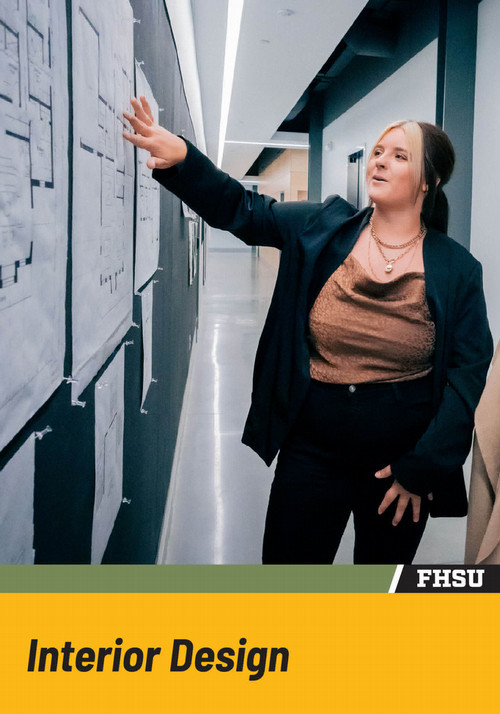
Bachelor of Fine Arts in Art (Interior Design)
Hours: 120 On-Campus
The Bachelor of Fine Arts in Art (Interior Design) program at Fort Hays State University equips students with the creative vision and technical skills needed to design functional, visually appealing interior spaces. The curriculum focuses on essential aspects of the field, including spatial planning, material selection, and environmental psychology, offering a well-rounded foundation in design principles.
Students develop practical expertise in designing residential, commercial, and corporate interiors through intensive studio projects. With its strong emphasis on creativity, technical proficiency, and academic rigor, this program stands out as an excellent choice for individuals pursuing a career in interior design.
Who is this program for?
This program is designed for individuals who are passionate about transforming spaces and creating environments that are both functional and visually compelling. It is especially well-suited for those who:
- Aspire to become professional interior designers with a strong portfolio
- Have a keen interest in both the artistic and technical aspects of design
- Are looking for a program that offers hands-on experience in real-world design projects
- Desire personalized mentorship and guidance from experienced faculty
- Want to gain proficiency in industry-standard design software and tools
- Seek a comprehensive education that includes both foundational art and specialized interior design courses
The Best Value in Higher Education Anywhere
Fort Hays State University prides itself on quality education at an affordable price. Students in this program can expect to pay approximately $3,237.60* (on-campus) per semester.
*Estimated cost based on 15 credit hours at the Undergrad resident/regional tuition rate ($215.84/credit hour) for on-campus courses. Actual price may vary depending on course load and location. Tuition and Fees are subject to change as they are approved by the Kansas Board of Regents each year.
The program begins with core courses that develop essential drawing skills, 2D and 3D design, and art history. These foundational classes establish a solid understanding of design principles and the historical context that shapes contemporary practice. Students also gain knowledge in spatial planning, material selection, and environmental psychology, equipping them with the tools to create functional and visually appealing spaces.
As students progress through the program, they explore specialized topics such as color theory, lighting, sustainable materials, and advanced rendering techniques. Through studio projects and collaborations with industry professionals, students apply their knowledge to real-world scenarios, ensuring they graduate with the comprehensive theoretical and practical skills necessary for success in the interior design industry.
ART 341: Residential Interiors
This course introduces students to the comprehensive design process for residential interiors, with a strong focus on creating user-centered spaces that address the unique needs of families. From initial research and client engagement to final design development, students are guided through every phase of the process. The curriculum emphasizes integrating environmental, cultural, and regulatory factors and studying materials, lighting, and space planning. Through a project-based approach, students apply fundamental principles and elements of residential design while honing their skills in collaboration, critical thinking, and effective communication.
ART 352: Commercial Interiors
This course provides students with a comprehensive understanding of commercial interior design's core principles and practices, emphasizing a human-centered approach. Beginning with thorough research and precedent studies, students explore how social, economic, and contemporary factors influence the built environment. They will develop their programming and space planning skills with a focus on users' needs, behaviors, and experiences in commercial settings. Through a project-based methodology, students engage in all phases of the commercial design process, from initial concept development to the production of final design visuals. The course highlights creating functional, innovative spaces that meet client needs, support business objectives, and comply with industry standards.
ART 343: Business Interiors
This course addresses contemporary challenges and strategies in workplace interior design, focusing on design research, programming methods, and workplace design theories. Students will work on space planning, circulation design, and selecting and specifying office furniture, finishes, and millwork, ensuring compliance with universal and inclusive design standards. The curriculum includes the development of functional space proposals that integrate design standards, building codes, appropriate FF&E, and environmental factors affecting ergonomics and occupant well-being. Key topics such as acoustics, thermal comfort, lighting, and circulation are studied in conjunction with the environmental impact of material choices.
Discover the full Bachelor of Fine Arts in Art (Interior Design) course listing by visiting the academic catalog.
Graduates have the skills and knowledge necessary to pursue various career opportunities within the interior design industry. The program’s comprehensive curriculum, combined with its strong emphasis on practical experience, ensures that students are well-prepared to meet the profession's demands. Some of the potential career paths available to graduates include:
Interior Designer
Professional interior designers design functional and visually appealing residential, commercial, and hospitality spaces. They collaborate with clients to develop concepts and oversee projects to ensure the final design aligns with client needs and budgets.
Space Planner
Space planners optimize interior layouts for functionality and efficiency, often working on large-scale projects like offices or public spaces. They consider traffic flow, accessibility, and safety to create organized, user-friendly environments.
Lighting Designer
Lighting designers create and plan lighting schemes that enhance a space’s mood, function, and aesthetics. They collaborate with architects and designers to select fixtures and technologies that complement the design while promoting energy efficiency and sustainability.
Project Manager
Project managers oversee the planning and execution of interior design projects, ensuring timely completion while effectively addressing challenges through strong problem-solving and decision-making skills.
Showroom Customer Designer
Showroom customer designers advise clients on products such as kitchen and bath, flooring, and furniture. They combine design expertise with sales skills and accurately estimate project scopes.
Ready for the next step?
Our faculty would be excited to talk to you about how our department programs can help you explore your interests and prepare you for a variety of rewarding careers.
Related Programs
Fort Hays State University offers several related programs that complement and enhance the BFA in Art (Interior Design) for students seeking to broaden their expertise beyond interior design. These programs are well-suited for those looking to deepen their knowledge of design, construction, and visual arts, providing pathways to careers connected to interior design. Related programs include:
- B.S. in Technology Studies (Construction Management)
- BFA in Art (Graphic Design)
- Master of Fine Arts (Graphic Design)
- Certificate in Architectural Technology
- Certificate in Drafting/Design Technology
Students will engage in diverse residential, commercial, and business projects, providing comprehensive experience across design sectors.
The program facilitates connections through industry partnerships and guest lectures from established professionals, offering students valuable networking opportunities.
Students must be proficient in industry-standard software such as AutoCAD, Revit, and Adobe Creative Suite to communicate and visualize design concepts effectively.
Fort Hays State University provides career development and industry networking events to help students secure employment after graduation.
Students have multiple opportunities to present their work through exhibitions and design competitions, allowing them to gain visibility and receive professional feedback.
Information about the School of Visual and Performing Arts
The School of Visual and Performing Arts at FHSU inspires creativity within a supportive and passionate community. Each program in Art and Design, along with Music and Theatre, offers students the opportunity to develop their talents and prepare for rewarding careers in the arts. Whether students aspire to create visual masterpieces, perform on stage, or educate the next generation, expert faculty provide hands-on learning experiences that both inspire and challenge.
With access to state-of-the-art facilities and personalized mentorship, students gain the skills and confidence needed to excel in their chosen fields. From local exhibitions and major performances to internships and professional development opportunities, these programs equip students with the tools to make a lasting impact in the world of visual and performing arts.
While earning a degree remains the primary focus, college life offers much more than classroom learning. Students are encouraged to participate in extracurricular activities that foster leadership skills, deepen their understanding of their chosen careers, and provide opportunities to make a positive impact in their communities.
- American Institute of Graphic Artists (AIGA): Connect with industry professionals and fellow graphic design students, attend conferences, and expand your network.
- Arts for Social Change: Use art as a catalyst for positive social change through lectures, workshops, and public events.
- Ceramica Clay Club (CCC): Participate in ceramic workshops, art events, and interdisciplinary projects that spread art into the community.
- FHSU Theater: Dive into acting, writing, and directing through performances and peer education programs.
- Fe Sculpture Club: Explore metalworking and host art events both on campus and in the community.
- Interior Design Student Organization (IDSA): Prepare for a career in interior design through networking, field trips, and professional development.
- Creative Arts Society (CAS): Enhance diversity and culture through guest-artist lectures, workshops, and community art projects.
- Collaborative Art Project (CAP): The Collaborative Art Project is a partnership between Amy Schmierbach, professor of art at Fort Hays State University, FHSU students, and Developmental Services of Northwest Kansas (DSNWK). Schmierbach and the students lead workshops for DSNWK individuals, offering structured art experiences focused on weaving, drawing, and photography. The project aims to expand access to the arts within the Hays community, creating more opportunities for individuals to engage with and benefit from artistic expression.
- Art Eaters Art History Club: The Art Eaters Art History Club is a community dedicated to fostering a deep appreciation and understanding of art across cultures and throughout history. Open to all students regardless of experience, the club offers opportunities to explore art movements, artists, and various forms through lectures, gallery visits, workshops, and discussions. With a mission to inspire creativity, critical thinking, and a lifelong passion for the arts, the club also connects members with influential figures in the art world and helps develop valuable skills such as curation. Through collaboration and dialogue, the club cultivates a deeper understanding of art’s cultural significance.
- Tiger Marching Band: This group is open to all students who enjoy marching band and want to be a part of the Tiger Marching Band tradition.
- Pep Band: The FHSU pep band provides musical entertainment for FHSU Basketball games. Open to all students.
- Collegiate National Association for Music Education (CNAfME): This student organization is dedicated to developing music education professionals, including workshops, training, field experiences, and annual participation in the Kansas Music Educators Association state conference in Wichita.
- Student National Association of Teachers of Singing (S-NATS): Vocalists participate in workshops, training, and attendance at the regional NATS workshop and competition each fall.
- Music Theatre: Participate in a fully realized stage production produced each year, from a stage role to back-stage positions and technical support.
- Certificate
- Bachelor's
- On-Campus