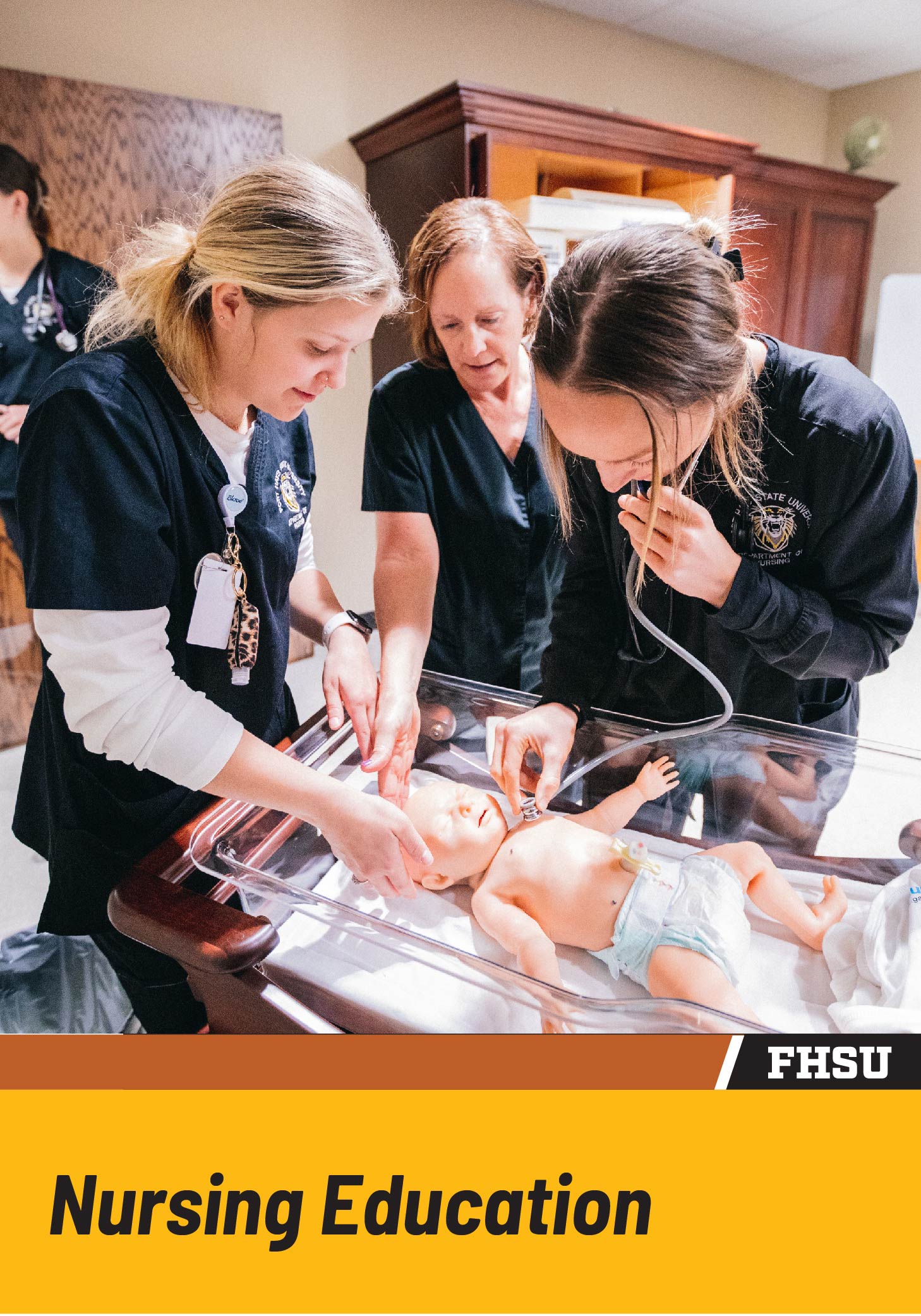
Graduate Certificate in Nursing Education
Hours: 9 Online
The Graduate Certificate in Nursing Education at Fort Hays State University is designed for nurses who already hold a graduate degree and wish to expand their expertise in teaching. This certificate prepares nurses to become effective educators in academic and clinical settings by strengthening their instructional skills and broadening their professional opportunities.
The curriculum features advanced coursework in teaching strategies, curriculum development, and evaluation methods tailored to nursing education. Through online courses and practicum experiences, students gain theoretical knowledge and hands-on teaching experience. Regular curriculum updates ensure alignment with current trends and best practices in the field. Students are well-prepared to teach at the BSN level or serve as clinical instructors.
Who is this program for?
This certificate targets nursing professionals seeking to transition into educational roles. It supports those who want to strengthen their teaching skills and broaden their career opportunities in nursing.
- Experienced nurses seeking teaching roles
- Nursing professionals aiming to enhance their educational skills
- Individuals looking to contribute to nursing education
- Nurses interested in academic positions
- Healthcare professionals seeking to broaden their career prospects
The Best Value in Higher Education Anywhere
Fort Hays State University prides itself on quality education at an affordable price. Students in this program can expect to pay approximately $2,480.85* (online) per semester.
*Estimated cost based on 9 credit hours at the FHSU Online Undergrad tuition rate ($275.65/credit hour) for online courses. Actual price may vary depending on course load and location. Tuition and Fees are subject to change as they are approved by the Kansas Board of Regents each year.
This is a 9-credit-hour certificate designed to provide a strong foundation in nursing education. Students engage in theoretical and practical coursework, including practicum experiences that offer hands-on teaching opportunities in clinical settings. The combination of online instruction and real-world application ensures that students are thoroughly prepared for educational roles within the nursing profession. Below are a few of the courses included in the certificate:
NURS 866: Teaching Strategies in Nursing
This course is designed to present theories and strategies for learning and teaching. Appropriate materials and methods for effective education in the classroom and the clinical setting are also explored.
NURS 868: Curriculum Planning: Nursing Education
This course analyzes and synthesizes curriculum theory and principles specifically for nursing education. It aims to align these theories with various educational programs, ensuring that nursing curricula meet the diverse needs of students and the healthcare field.
NURS 869: Apprenticeship: Nursing Education Curriculum
This apprenticeship course provides nursing curriculum development experiences, requiring students to complete at least 45 clock hours of practicum with an approved MSN-prepared preceptor in a nursing education role. Clinical clearance is required. For details, contact the Department of Nursing.
Discover the full Graduate Certificate in Nursing Education course listing by visiting the Academic Catalog.
Students who complete this certificate are well-prepared to pursue a range of career opportunities in nursing education and related areas within the healthcare field. Its comprehensive curriculum and practical experiences equip students with the knowledge and skills essential for success in educational roles within the healthcare sector.
Nursing Educator
Nursing educators teach BSN-level students, combining clinical and theoretical instruction. They design coursework, assess performance, and mentor future nurses.
Clinical Instructor
Clinical instructors mentor nursing students in clinical settings by supervising their rotations and ensuring they acquire practical experience and essential nursing skills.
Academic Program Developer
Academic program developers design and develop nursing education programs and curricula. Their responsibilities include creating course materials, setting educational objectives, and ensuring programs meet accreditation standards while addressing the needs of both students and the healthcare industry.
Healthcare Education Consultant
Healthcare education consultants advise healthcare institutions on best practices in nursing education. They evaluate and enhance educational programs, develop training materials, and offer guidance on curriculum design and instructional strategies.
Nursing Education Administrator
Nursing education administrators oversee nursing education programs and faculty, ensuring the quality and compliance of all educational offerings. Their responsibilities include managing budgets, coordinating program activities, and leading initiatives to improve the learning experience for nursing students.
Admission to the Graduate Certificate in Nursing Education at Fort Hays State University is competitive and aims to identify well-prepared applicants for the demands of advanced study. Applicants must meet the following criteria:
- Complete a Fort Hays State University Graduate Student Application.
- Submit official transcripts from all previous institutions attended.
- Hold an MSN or DNP degree from an accredited program recognized by CCNE or ACEN.
- Maintain a minimum cumulative GPA of 3.0 based on the BSN degree.
- Professional Experience: Students are encouraged to possess relevant nursing experience to enhance their understanding of advanced program concepts.
- Submit two letters of reference addressing academic ability, current professional competency, or personal character.
- Personal Statement: Provide no more than 500 words outlining an applicant’s motivation for pursuing an MSN. The statement will be evaluated for proper grammar, spelling, and punctuation.
- Complete an MSN Clinical Acknowledgement Form
The Department of Nursing does not accept MSN applications from the following states: Alabama, Tennessee, Washington, and Utah
All nursing courses and transcripts from institutions outside the United States require additional evaluation by the Commission of Graduates Foreign Nursing Schools (CGFNS). A detailed course-by-course assessment is required to verify a degree, course credits, grades, and overall grade point average.
Clinical Clearance Requirements
The MSN programs at FHSU require preceptor-led clinical experiences. For the Graduate Certificate in Nursing Education, the clinical practicum is completed with NURS 867 in the Fall semester and NURS 869 in the Spring semester, totaling 135 practicum hours. Clinical clearance requirements include obtaining student liability insurance, completing a background check, drug testing, and providing immunization records.
Fort Hays State University actively assists students in securing clinical contracts across the United States. However, in rare cases where a contract cannot be arranged due to location, state, or facility restrictions, and no alternative site is available locally, students will be assigned a clinical site in Hays, Kansas. In such cases, students must hold a Kansas nursing license and be able to attend their practicum in Kansas. Students are encouraged to begin the preceptor selection process early in their program. They should contact the Department of Nursing for any questions or guidance regarding clinical placements.
Fort Hays State University has received approval to offer the MSN program from the Kansas State Board of Nursing, the Kansas Board of Regents, and the Higher Learning Commission.
Ready for the next step?
Our faculty would be excited to talk to you about how our department programs can help you explore your interests and prepare you for a variety of rewarding careers.
Related Programs
Fort Hays State University offers several related programs complementing the Graduate Certificate in Nursing Education. These programs provide additional opportunities for professional growth and specialization across various nursing and healthcare education areas.
- Master of Science in Nursing (Nursing Education)
- Doctor of Nursing Practice (MSN to DNP)
- Doctor of Nursing Practice (BSN to DNP)
Students must complete two practicum courses involving hands-on teaching experiences in approved clinical and academic settings.
The program's completion depends on the student's pace and course load, typically taking one year.
Yes, financial aid options are available for eligible students. Prospective students should contact the Office of Financial Assistance for more information.
The program accommodates working professionals with a flexible online format and locally arranged practicum experiences.
Graduates can pursue roles such as nursing educator, clinical instructor, academic program developer, healthcare education consultant, and nursing education administrator.
Information about the Department of Nursing
The Department of Nursing at FHSU offers programs and courses that integrate the latest technology in a student-centered, feedback-driven learning environment. Students benefit from close interaction with highly qualified faculty who bring extensive clinical and nursing experience to the classroom. This supportive and engaging atmosphere ensures that graduates are well-prepared to earn an in-demand degree and pursue a rewarding career in nursing.
While earning a degree remains the primary focus, college life offers much more than classroom learning. Students are encouraged to participate in extracurricular activities that foster leadership skills, deepen their understanding of their chosen careers, and provide opportunities to make a positive impact in their communities.
- Fort Hays Association of Nursing Students (FHANS): The FHANS is a professional organization that provides both pre-nursing and nursing students with opportunities to build connections with classmates, apply leadership skills, and explore various nursing career paths. Members can also attend national conferences and participate in meaningful service projects, such as creating Christmas gifts for nursing home residents.
- Nursing Christian Fellowship (NCF): The NCF is both a professional organization and a ministry dedicated to supporting nurses and nursing students. Fort Hays State University’s NCF chapter aims to provide Christian-based encouragement and community for nursing and pre-nursing students. The group meets biweekly to learn, share, support, and pray together. Members also engage in local service projects, such as collecting and donating items to the Fresenius Dialysis Center.
- Sigma Theta Tau: Sigma Theta Tau is the international honor society of nursing, recognizing students for high academic achievement within their nursing programs. The organization is dedicated to advancing knowledge and excellence in professional nursing practice and actively engages in a variety of service initiatives. Nu Zeta, the local chapter of Sigma Theta Tau, regularly participates in fundraising efforts to support research on Alzheimer’s disease and other health conditions. The chapter also contributes to continuing education by supporting workshops and organizing social events that foster professional growth and community among nursing students.
The Bachelor of Science in Nursing (BSN), Master of Science in Nursing (MSN), and Doctor of Nursing Practice programs at FHSU are accredited by the Commission on Collegiate Nursing Education, 655 K Street NW, Suite 750, Washington, DC 20001, (202) 887-6791.
- Certificate
- Master's
- Online