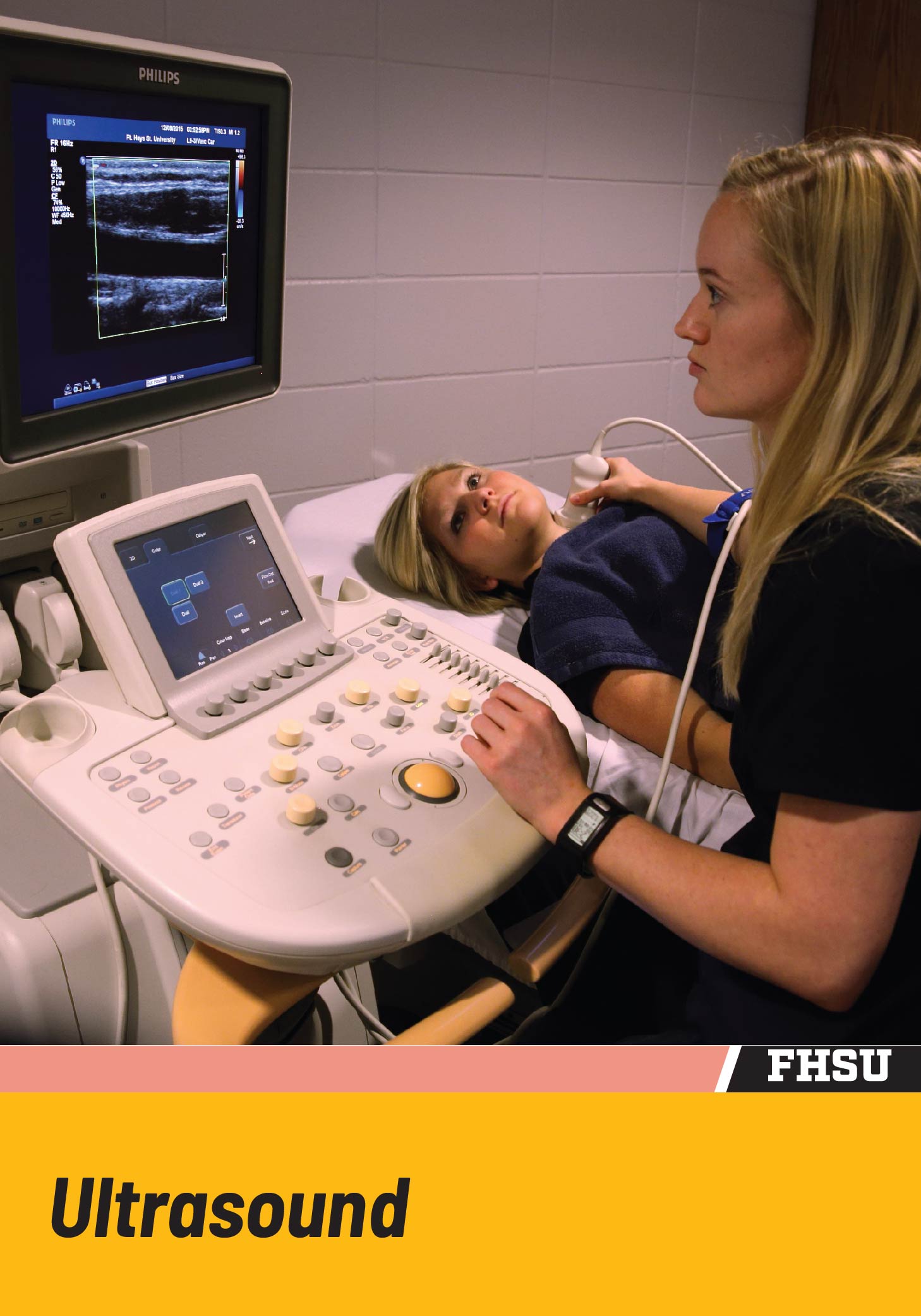
Bachelor of Science in Medical Diagnostic Imaging (Ultrasound)
Hours: 120 On-Campus/Clinical Experience
Fort Hays State University offers a Bachelor of Science in Medical Diagnostic Imaging (Ultrasound) for those interested in a career in the rapidly growing field of medical imaging. This focused, 24-month program is designed to prepare students for entry-level sonographer positions.
The program combines comprehensive classroom instruction with hands-on clinical experience, providing students with the knowledge and practical skills essential for success in this rewarding and in-demand profession. It serves as an excellent pathway for individuals seeking to make a meaningful impact in healthcare.
Who is this program for?
This program is well-suited for a diverse range of individuals pursuing a rewarding career in medical imaging. The following groups may find the program especially beneficial:
- Individuals with a Healthcare Background
- Science Enthusiast
- Individuals with a Passion for Imaging
- Individuals with an associate’s degree in health sciences
The Best Value in Higher Education Anywhere
Fort Hays State University prides itself on quality education at an affordable price. Students in this program can expect to pay approximately $3,237.60* (on-campus) per semester.
*Estimated cost based on 15 credit hours at the Actual price may vary depending on course load and location. Tuition and Fees are subject to change as they are approved by the Kansas Board of Regents each year.
The program equips students with the knowledge and skills essential for success in this dynamic field. Its comprehensive curriculum integrates classroom instruction, laboratory practice, and hands-on clinical rotations, preparing students to launch careers as competent ultrasound technologists.
DMS 404: Abdominal Ultrasound Procedures I
The course emphasizes the physics and instrumentation of ultrasound for optimal visualization in abdominal diagnostic and sonography examinations. Primary emphasis will be on the role of ultrasound in evaluating the abdominal vasculature, biliary tree, pancreas, and thyroid. Pathological patterns of these various systems will be discussed and related to the sonographic appearance, physiologic changes, and laboratory findings.
DMS 406: Obstetric/Gynecology Ultrasound Procedures 1
The course focuses on the physics and instrumentation of ultrasound for effective visualization in obstetric and gynecologic diagnostic examinations. It covers ultrasound's role in evaluating the non-pregnant female pelvis, including normal sonographic appearance, physiological changes, laboratory findings, and pathologies of the uterus and adnexa. Other topics include menstrual physiology, hormonal influences, early embryonic development, ethical considerations in obstetric ultrasound, and sonographic evaluation of the first trimester.
DMS 408: Vascular Ultrasound Procedures 1
The course emphasizes the physics and instrumentation of ultrasound for optimal visualization in vascular diagnostic and sonography examinations. Primary emphasis will include the hemodynamics, color flow, and Doppler spectral analysis of the abdominal, lower extremity venous, and lower extremity arterial vasculature. Additional vascular applications will consist of Doppler instruments and indirect testing methods.
Discover the full Bachelor of Science in Medical Diagnostic Imaging (Ultrasound) course listing by visiting the Academic Catalog.
Graduates have embarked on diverse and rewarding career paths, reflecting the broad opportunities available with a Bachelor of Science in Medical Diagnostic Imaging (Ultrasound). Examples include:
Hospital Ultrasound Technologist
Hospital ultrasound technologists have opportunities to work across multiple departments, including radiology, cardiology, and obstetrics/gynecology. These professionals play a vital role in patient care by performing diagnostic ultrasound exams and collaborating closely with physicians and other healthcare team members.
Sonographer in a Clinic or Physician's Office
Sonographers in clinics or physicians’ offices play a key role in delivering diagnostic services that support patient care. In these fast-paced settings, they perform ultrasound exams that assist in timely diagnoses and treatment planning, contributing directly to patient outcomes.
Mobile Sonographer
Mobile sonographers deliver on-site diagnostic services, bringing ultrasound imaging directly to patients in various settings such as clinics, nursing homes, and rural communities. This growing sector offers greater accessibility to care while providing graduates with a flexible and dynamic work environment.
Imaging Department Supervisor
Imaging department supervisors are experienced professionals who take on leadership roles within medical imaging teams. With clinical expertise and management skills, they oversee daily operations, coordinate staff, and ensure efficient, high-quality patient care.
Sales or Application Specialist for Ultrasound Equipment
Sales or application specialists for ultrasound equipment play a vital role in the medical technology industry. Medical equipment manufacturers highly value the expertise of trained sonographers, who contribute to product demonstrations, user training, and customer support. Graduates’ clinical knowledge makes them well-suited for these dynamic and rewarding roles.
Ultrasound Educator or Researcher
Ultrasound educators or researchers play a key role in advancing the field of medical imaging. Graduates may pursue careers in teaching, research, or as application specialists, contributing to developing new techniques, technologies, and best practices—ultimately helping shape the future of ultrasound.
Fort Hays State University’s Bachelor of Science in Medical Diagnostic Imaging (Ultrasound) program recognizes that each applicant brings unique skills, experiences, and perspectives. The program prioritizes qualities such as ambition, dedication, and a genuine passion for medical imaging over any single academic pathway. Admission is based on a holistic evaluation of well-rounded individuals who meet the following criteria:
Academic Preparation
To be considered for admission, applicants must be high school graduates who meet one of the following criteria: completion of a radiologic technology program, a bachelor’s degree in any field, or at least 60 credit hours completed in a healthcare-related or science/math-focused curriculum.
In addition, applicants must complete designated prerequisite courses with a minimum grade of “C” and maintain a competitive cumulative GPA of 2.75 or higher. Required coursework includes foundational subjects such as human biology, anatomy and physiology, medical terminology, college algebra, and communication skills. The program also strongly recommends completing Cross-Sectional Anatomy: Normal course to further enhance understanding of human anatomy.
Application and Selection Process
Meeting the minimum requirements is only the initial step in a highly competitive admissions process. A rigorous selection procedure identifies the strongest candidates, with top applicants invited for interviews in March.
A committee of faculty members and experienced clinical instructors evaluates each application holistically, considering academic performance, relevant healthcare experience, familiarity with ultrasound technology, letters of recommendation, communication skills, motivation, and overall maturity. This comprehensive review ensures that only the most capable and committed individuals are selected for admission.
Application Deadline
The deadline to apply for the B.S. in Medical Diagnostic Imaging (Ultrasound) program is February 15th. Prospective students are encouraged to submit their applications early to begin their path toward a rewarding career as skilled ultrasound technologists. Additionally, scheduling a visit to an ultrasound department to observe medical imaging professionals firsthand is highly recommended, providing valuable insight into the daily responsibilities of the field.
Ready for the next step?
Applying to the Ultrasound program requires you to complete two applications, one for FHSU and one for the program.
Applicants must be accepted to Fort Hays State University before official admittance to the Ultrasound program.
Please submit your Diagnostic Medical Sonography Application Form
Related Programs
Fort Hays State University offers programs that complement the B.S. in Medical Diagnostic Imaging (Ultrasound), enabling students to specialize further and enhance their skills in medical diagnostic imaging. Exploring these options can foster continued professional development and open doors to various career opportunities.
Yes, specific prerequisite courses are mandatory for admission to the program. These include foundational subjects such as human biology, anatomy and physiology, medical terminology, college algebra, and communication skills. Additionally, completing Cross-Sectional Anatomy: Normal is highly recommended to deepen understanding of the human body.
Applicants must meet one of the following criteria to be eligible: hold a high school diploma and have completed a radiologic technology program, hold a bachelor's degree in any field, or have earned at least 60 credit hours in a healthcare-related or science/math-focused curriculum.
To be a competitive candidate, you should meet or exceed the academic requirements by completing all prerequisite courses with at least a “C” and maintaining a cumulative GPA of 2.75 or higher. Gaining healthcare experience, demonstrating knowledge of ultrasound technology, showcasing strong communication skills, providing solid letters of recommendation, and showing motivation and maturity will also improve your chances of being selected.
Yes, admission to the program is competitive. A rigorous selection process, which includes interviews, ensures that only the most qualified candidates are invited to join.
Clinical observation is highly recommended for Fort Hays State University’s Bachelor of Science in Medical Diagnostic Imaging (Ultrasound) program applicants.
The program is distinguished by its well-balanced curriculum integrating comprehensive classroom instruction with extensive hands-on training. A year-long clinical internship provides students diverse real-world experience, preparing them thoroughly for entry-level sonographer roles. Additionally, the program’s strong focus on keeping pace with industry advancements and its emphasis on practical learning further set it apart.
The program comprehensively addresses medical imaging through classroom instruction, hands-on scanning laboratory sessions that simulate real clinical environments, and a one-year clinical practicum that provides practical, real-world experience.
The B.S. in Medical Diagnostic Imaging (Ultrasound) program offers concentrations in Abdominal Ultrasound, Obstetrics and Gynecology (OB/Gyn) Ultrasound, and Vascular Ultrasound. The curriculum combines comprehensive classroom instruction with extensive hands-on training to prepare students for diverse career paths within these specializations.
Earning a B.S. in Medical Diagnostic Imaging (Ultrasound) opens a wide range of career opportunities, including roles as hospital ultrasound technologists, sonographers in clinics or physician offices, mobile sonographers, imaging department supervisors, sales or application specialists for ultrasound equipment, and positions in ultrasound education or research.
Information about the Department of Allied Health
The Department of Allied Health at FHSU integrates healthcare and technology to offer modern on-campus and online programs designed to prepare students for successful careers in the medical field. These programs provide students with the skills needed to operate advanced imaging technologies, supporting physicians in the diagnosis and treatment of a wide range of health conditions.
Whether studying on-campus or online, students gain valuable hands-on experience through a curriculum tailored to meet the demands of various medical imaging environments. The department’s nearly 100% national certification exam pass rate reflects the strength and effectiveness of its programs, ensuring graduates are well-equipped for the workforce.
Faculty members provide personalized academic and career mentoring, guiding students toward securing optimal job opportunities in their field.
While earning a degree remains the primary focus, college life offers much more than classroom learning. Students are encouraged to participate in extracurricular activities that foster leadership skills, deepen their understanding of their chosen careers, and provide opportunities to make a positive impact in their communities.
- Association of Radiologic Technology Students (ARTS): This organization helps students build and strengthen professional connections within the healthcare field while offering opportunities to participate in events such as Radiologic Technologist Week.
- Society of Student Sonographers (SSS): This organization provides students with opportunities to connect with professionals in Diagnostic Medical Sonography and participate in a range of professional and educational activities.
- Kansas Society of Radiologic Technologists (KSRT): Radiologic Technology students are encouraged to become members of this statewide professional organization, engage in its annual convention, and pursue leadership opportunities within the society.
- Society of Diagnostic Medical Sonographers (SDMS): Sonography students are encouraged to join this national professional organization, participate in its national convention, and utilize a wide range of valuable resources related to the field.
- Bachelor's
- On-Campus/ Clinical Experience