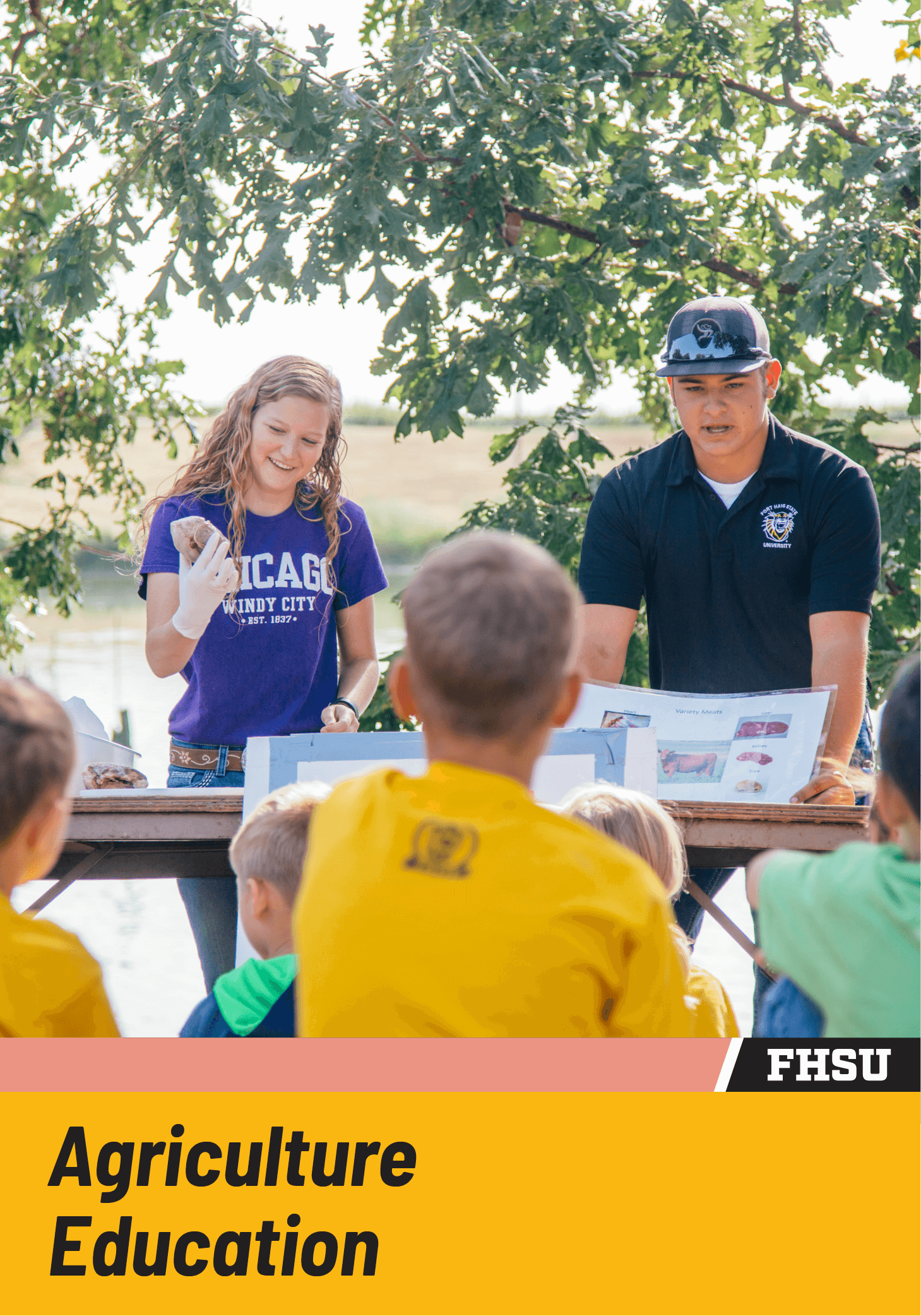
Bachelor of Science in Agriculture (Agricultural Education)
Hours: 124-126 On-Campus
The Bachelor of Science in Agriculture (Agricultural Education) at Fort Hays State University provides an exceptional opportunity for individuals passionate about agriculture to develop the skills needed to educate the next generation of agricultural professionals. This specialized program seamlessly integrates agricultural expertise with educational methods, offering a comprehensive curriculum that blends theoretical knowledge with practical experience.
Students learn to create engaging and practical lessons, incorporate technology into the classroom, and inspire a genuine appreciation for agriculture among their students. The program prepares graduates to teach agriculture courses in public schools across the nation.
Who is this program for?
The program offers a comprehensive curriculum that explores key areas of agriculture, including crop production, livestock management, environmental science, and natural resource conservation. It is tailored to meet the needs of the following groups:
- High school students who are members of the National FFA Organization
- Individuals with a strong interest in natural resources
- Individuals interested in experiential learning
- Students looking for a successful career in agriculture
- People with a passion for teaching and working with young people
The Best Value in Higher Education Anywhere
Fort Hays State University prides itself on quality education at an affordable price. Students in this program can expect to pay approximately $3,237.60* (on-campus) per semester.
*Estimated cost based on 15 credit hours at the Undergrad resident/regional tuition rate ($215.84/credit hour) for on-campus courses. Actual price may vary depending on course load and location. Tuition and Fees are subject to change as they are approved by the Kansas Board of Regents each year.
The program offers a rigorous curriculum designed to prepare students for careers in the agricultural industry. It aims to provide a solid foundation in the principles of agricultural science, alongside the pedagogical skills essential for teaching agriculture in diverse settings.
AGRI 277: Early Field Experience in Agriculture
This course will provide agricultural education students with an observation and participation experience in the high school/junior high school agricultural classroom. This experience will expose students to a variety of educational philosophies, goals, objectives, and activities.
AGRI 460: Teaching Agriculture Education
A course on planning and conducting practical agriculture instructional programs. Topics include introducing instructional methods, techniques, devices, and procedures used in disseminating agricultural information to youth and adult audiences.
TESS 496: Student Teaching Secondary
This course is a supervised teaching experience provided in approved, accredited secondary schools.
Discover the full Bachelor of Science in Agriculture (Agricultural Education) course listing by visiting the Academic Catalog.
With a strong science foundation and specialized training in agricultural education, graduates are well-equipped to make a positive impact on students and the agricultural industry. They have an opportunity to pursue a wide range of careers following graduation.
Agricultural Educator
Agricultural educators play a vital role in shaping the futures of students through school-based agricultural education. They deliver engaging and informative lessons that cultivate a deep appreciation for agriculture among their students.
Curriculum Developer
Curriculum developers design educational materials for school-based agricultural education programs. In this role, they contribute to the enhancement of teaching resources and the ongoing improvement of agricultural curricula.
Education Administrator
With experience and additional qualifications, graduates in agricultural education can advance into roles as education administrators. These professionals oversee and manage educational institutions, ensuring the effective implementation of school-based agricultural education programs.
Agricultural Policy Analyst
Agricultural policy analysts examine and evaluate government policies that affect the agricultural industry. They assess the impact of these policies on farmers, ranchers, and other stakeholders, and develop recommendations to promote economic growth, environmental sustainability, and food security.
Career Counselor for Agriculture Education
Career counselors specializing in agricultural education guide students aspiring to pursue successful careers in agriculture. They leverage their knowledge and expertise gained through the B.S. in Agriculture (Agricultural Education) program to provide practical career guidance and support.
Ready for the next step?
Our faculty would be excited to talk to you about how our department programs can help you explore your interests and prepare you for a variety of rewarding careers.
Related Programs
For individuals passionate about agriculture and motivated to make a positive impact, this program provides an ideal pathway. Students may also consider exploring other related majors available, including:
- B.S. in Agriculture (Agronomy Business)
- B.S. in Agricultural Business
- B.S. in Agriculture (Animal Science)
- B.S. in Agriculture (Agronomy)
- B.S. in Agriculture (Agricultural Leadership)
- B.S. in Agriculture (Agricultural Communication)
- B.S. in Agriculture (General)
Agricultural education is a specialized field of teaching that prepares individuals to educate the next generation of agricultural professionals.
Agricultural education students can be placed into the following categories: secondary agriculture education, postsecondary agriculture education, business/industry agriculture education, and extension education.
Agricultural educators are in high demand, with numerous job opportunities available in the field. Additionally, agricultural education is a relatively low-cost major, as most required courses are offered at public universities.
There are two main types of agricultural education: formal and informal. The formal one gives students the knowledge and skills they need to succeed in the agricultural industry. The informal type, however, takes place outside of schools, promotes an interest in agriculture, and provides students with hands-on experience.
Our program requires applicants to meet specific academic prerequisites, including maintaining a minimum GPA, demonstrating strong performance in prerequisite courses, and completing a background check.
Information about the Department of Agriculture
The Department of Agriculture at FHSU is dedicated to sustaining the future of American agriculture by blending tradition with innovation through career-focused, hands-on programs. With a strong emphasis on applied learning and foundational coursework, the department prepares students to thrive in the evolving agricultural industry, equipping them to address industry challenges, drive innovation, and promote sustainable practices.
Students gain practical experience on FHSU’s 3,825-acre farm while developing critical skills in leadership, communication, and problem-solving. These programs also foster lasting mentorships and friendships, creating a supportive community that extends beyond graduation.
Graduates pursue diverse careers, including farm management, feed yard operations, grain trading, agricultural education, crop consulting, and leadership roles in agribusiness corporations. Backed by a strong academic foundation and a wide-reaching alumni network, students are well-prepared for rewarding and impactful careers in the agricultural sector.
While earning a degree remains the primary focus, college life offers much more than classroom learning. Students are encouraged to participate in extracurricular activities that foster leadership skills, deepen their understanding of their chosen careers, and provide opportunities to make a positive impact in their communities.
- Agronomy Business Club: The Agronomy Business Club is the only student-led organization on campus dedicated to promoting both the scientific and professional business development of agronomy. The club provides students with opportunities to deepen their knowledge of agronomic sciences while building essential business skills, preparing them for success in the agriculture industry.
- Alpha Gamma Rho Fraternity: This fraternity is both a social and professional organization that emphasizes leadership development and active engagement within the campus and local community. Members participate in a variety of volunteer activities, building strong connections while fostering personal growth and professional excellence.
- Block & Bridle Club: This club is a chapter of a national animal science organization that fosters student interest in a wide range of animal science disciplines. It provides educational opportunities, professional development, and a community for students passionate about animal agriculture and related fields.
- Collegiate Farm Bureau: This is an agricultural advocacy organization committed to educating the public through a variety of events and outreach activities. The group promotes awareness of agricultural issues and fosters leadership skills among students interested in the agriculture industry.
- Delta Tau Alpha: National Agriculture Honor Society for students who rank in the upper 35% of their class.
- FHSU Rodeo Club: Open to all FHSU students and provides opportunities to compete in rodeo events across the region. The club fosters a community for students interested in rodeo sports while promoting skill development and sportsmanship.
- FHSU Livestock Judging Team: Open to all FHSU students interested in competitive livestock evaluation. The team offers hands-on experience and skill development in assessing livestock, preparing members for careers in agriculture and related industries.
- Sigma Alpha Agriculture Sorority: This sorority is a professional organization dedicated to cultivating leadership and professional development among women pursuing careers in agriculture. The sorority fosters a supportive community focused on advancing women’s roles within the agricultural industry.
- Teaching Ag Group (TAG): TAG supports agricultural literacy and advocacy by collaborating with local FFA chapters. The group is dedicated to promoting agricultural education and engaging the community in the importance of agriculture.
- Virtual Agricultural Business Club: This is an online, student-led organization that promotes professional business development for aspiring agricultural professionals. The club provides opportunities for networking, skill-building, and career preparation within the agricultural industry.
- Livestock Show Team
- Bachelor's
- On-Campus