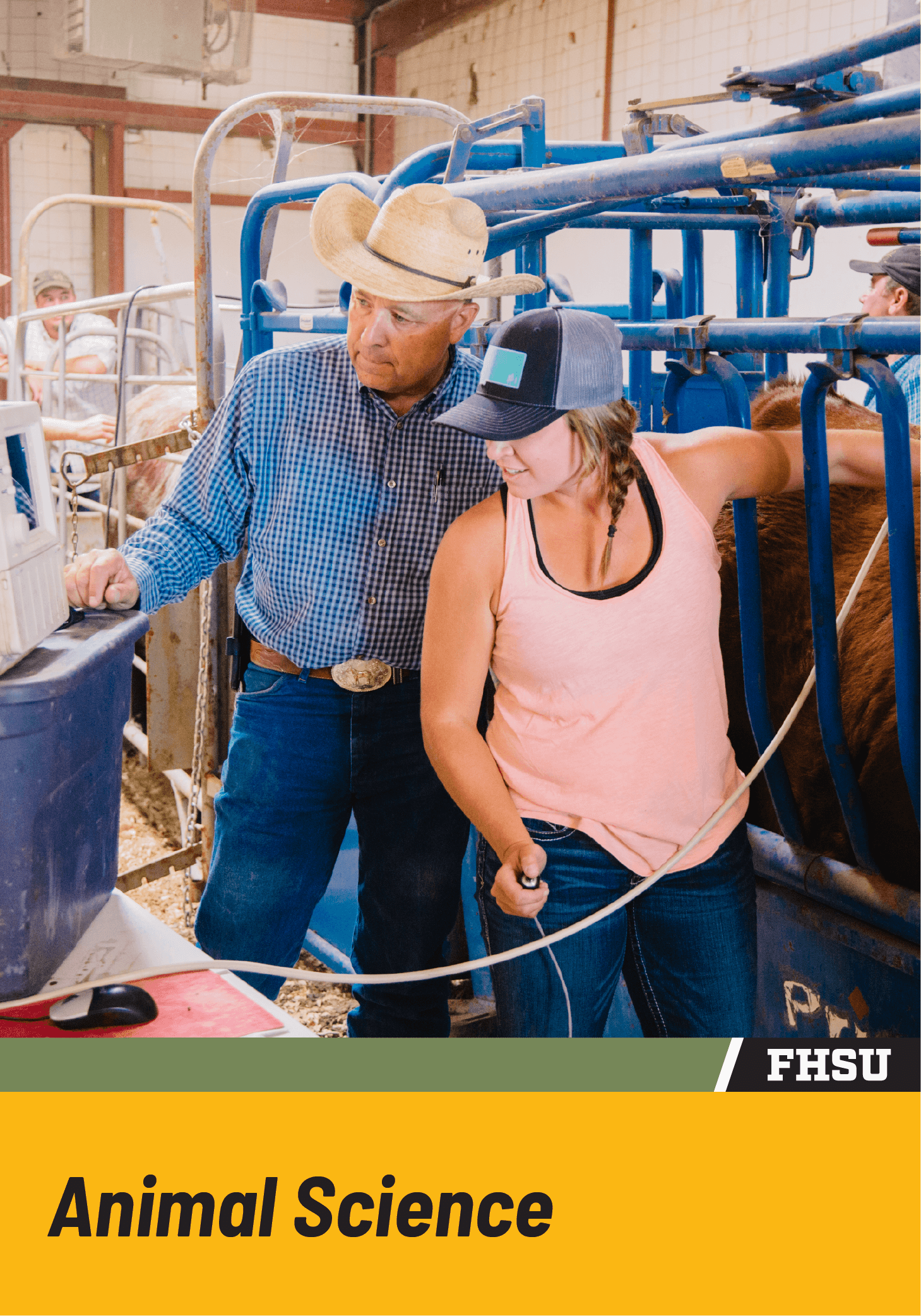
Minor in Animal Science
Hours: 20-21 On-Campus
The Minor in Animal Science at Fort Hays State University provides a solid foundation in key animal science principles, blending essential theory with practical experience. Designed to complement a variety of majors, the program builds core skills in areas such as animal nutrition, feeding principles, and related topics.
Well-suited for students with a strong interest in animals, the minor emphasizes hands-on learning and real-world application. It strengthens students’ academic and professional profiles by broadening their expertise and expanding opportunities in agriculture and related fields.
Who is this program for?
This minor enhances a student's primary field of study by providing specialized knowledge in animal science, making it an excellent choice for those with a passion for animals. It is particularly well-suited for students majoring in other disciplines who wish to expand their understanding and explore additional career opportunities in agriculture and related industries.
- Those with an interest in animal nutrition
- Individuals seeking hands-on learning experiences
- Students aiming for careers in agriculture
- Learners wanting to complement their major with animal science
- Those interested in sustainable agricultural practices
The Best Value in Higher Education Anywhere
Fort Hays State University prides itself on quality education at an affordable price. Students in this program can expect to pay approximately $3,237.60* (on-campus) per semester.
*Estimated cost based on 15 credit hours at the Undergrad resident/regional tuition rate ($215.84/credit hour) for on-campus courses. Actual price may vary depending on course load and location. Tuition and Fees are subject to change as they are approved by the Kansas Board of Regents each year.
The core curriculum comprises essential courses that provide students with a comprehensive understanding of animal science. These foundational courses cover fundamental concepts such as animal nutrition and feeding strategies, which are particularly valuable for those pursuing careers in animal husbandry, veterinary care, or agricultural consulting.
Students may select from a range of electives covering topics such as animal health management, sustainable agricultural practices, and applied research methods. This flexibility enables students to tailor their education to align with their individual interests and career objectives. Overall, the curriculum ensures that students acquire the theoretical knowledge and practical skills necessary for success in their chosen fields.
AGRI 214: Principles of Feeding
A study of the nutritive value of feeds and nutrient requirements of all species of domestic farm animals. The effect of processing, environment, feed additives, and the combination of nutrients on efficiency and level of production.
AGRI 411: Beef Feedlot Technology and Management
A study of the beef feedlot and stocker cattle industries including animal management, health, nutrition and feeding, handling, facilities, and risk management. Course includes two 1-hour lectures with a 2-hour laboratory component.
AGRI 617: Animal Nutrition
A scientific approach to the nutrition of monogastric and ruminant animals involves these animals utilizing the mechanisms through which they absorb nutrients, as well as the application of ration-balancing techniques for livestock species.
Discover the full Minor in Animal Science course listing by visiting the Academic Catalog.
Graduates are well-prepared for a wide range of career opportunities. The program equips students with the knowledge and skills necessary to excel in various roles within the agricultural industry.
Livestock Manager
Livestock managers oversee the care and management of farm animals, ensuring their health and productivity. They implement feeding programs, monitor animal health, and manage breeding operations to maximize efficiency and output.
Veterinary Assistant
Veterinary assistants support veterinarians in providing medical care to animals. They assist with routine procedures, maintain health records, and ensure the well-being of animals in clinical settings. This role requires strong communication and practical skills.
Agricultural Consultant
Agricultural consultants advise farmers and agricultural businesses on best practices for animal nutrition, health management, and sustainable farming techniques. They use their expertise to help clients improve productivity and profitability while adhering to industry standards.
Research Technician
Research technicians in animal science conduct experiments and studies to advance knowledge of animal nutrition, health, and genetics. They work in laboratories and field settings, collecting data and analyzing results to support scientific discoveries.
Farm Supervisor
Farm supervisors manage daily farm operations, including animal care, crop production, and resource management. They ensure that all activities comply with regulatory standards and work to improve farm efficiency and sustainability. This role combines leadership and technical expertise.
Ready for the next step?
Our faculty would be excited to talk to you about how our department programs can help you explore your interests and prepare you for a variety of rewarding careers.
Related Programs
Fort Hays State University offers a range of programs related to agriculture and other fields for students seeking to deepen their knowledge and skills. These programs provide valuable opportunities for specialization and support career advancement.
- Minor in Agribusiness
- Minor in Agriculture
- Bachelor of Science in Agricultural Business
- Certificate in Animal Science
Students can complete the Minor in Animal Science within the duration of their primary degree program.
The program offers a Minor in Animal Science primarily on campus to provide hands-on learning experiences.
Graduates can pursue careers in livestock management, veterinary assistance, agricultural consulting, and more.
The program includes laboratory work, internships, and field trips to provide practical, real-world experience.
Information about the Department of Agriculture
The Department of Agriculture at FHSU is dedicated to sustaining the future of American agriculture by blending tradition with innovation through career-focused, hands-on programs. With a strong emphasis on applied learning and foundational coursework, the department prepares students to thrive in the evolving agricultural industry, equipping them to address industry challenges, drive innovation, and promote sustainable practices.
Students gain practical experience on FHSU’s 3,825-acre farm while developing critical skills in leadership, communication, and problem-solving. These programs also foster lasting mentorships and friendships, creating a supportive community that extends beyond graduation.
Graduates pursue diverse careers, including farm management, feed yard operations, grain trading, agricultural education, crop consulting, and leadership roles in agribusiness corporations. Backed by a strong academic foundation and a wide-reaching alumni network, students are well-prepared for rewarding and impactful careers in the agricultural sector.
While earning a degree remains the primary focus, college life offers much more than classroom learning. Students are encouraged to participate in extracurricular activities that foster leadership skills, deepen their understanding of their chosen careers, and provide opportunities to make a positive impact in their communities.
- Agronomy Business Club: The Agronomy Business Club is the only student-led organization on campus dedicated to promoting both the scientific and professional business development of agronomy. The club provides students with opportunities to deepen their knowledge of agronomic sciences while building essential business skills, preparing them for success in the agriculture industry.
- Alpha Gamma Rho Fraternity: This fraternity is both a social and professional organization that emphasizes leadership development and active engagement within the campus and local community. Members participate in a variety of volunteer activities, building strong connections while fostering personal growth and professional excellence.
- Block & Bridle Club: This club is a chapter of a national animal science organization that fosters student interest in a wide range of animal science disciplines. It provides educational opportunities, professional development, and a community for students passionate about animal agriculture and related fields.
- Collegiate Farm Bureau: This is an agricultural advocacy organization committed to educating the public through a variety of events and outreach activities. The group promotes awareness of agricultural issues and fosters leadership skills among students interested in the agriculture industry.
- Delta Tau Alpha: National Agriculture Honor Society for students who rank in the upper 35% of their class.
- FHSU Rodeo Club: Open to all FHSU students and provides opportunities to compete in rodeo events across the region. The club fosters a community for students interested in rodeo sports while promoting skill development and sportsmanship.
- FHSU Livestock Judging Team: Open to all FHSU students interested in competitive livestock evaluation. The team offers hands-on experience and skill development in assessing livestock, preparing members for careers in agriculture and related industries.
- Sigma Alpha Agriculture Sorority: This sorority is a professional organization dedicated to cultivating leadership and professional development among women pursuing careers in agriculture. The sorority fosters a supportive community focused on advancing women’s roles within the agricultural industry.
- Teaching Ag Group (TAG): TAG supports agricultural literacy and advocacy by collaborating with local FFA chapters. The group is dedicated to promoting agricultural education and engaging the community in the importance of agriculture.
- Virtual Agricultural Business Club: This is an online, student-led organization that promotes professional business development for aspiring agricultural professionals. The club provides opportunities for networking, skill-building, and career preparation within the agricultural industry.
- Livestock Show Team
- Certificate
- Minor
- Bachelor's
- On-Campus