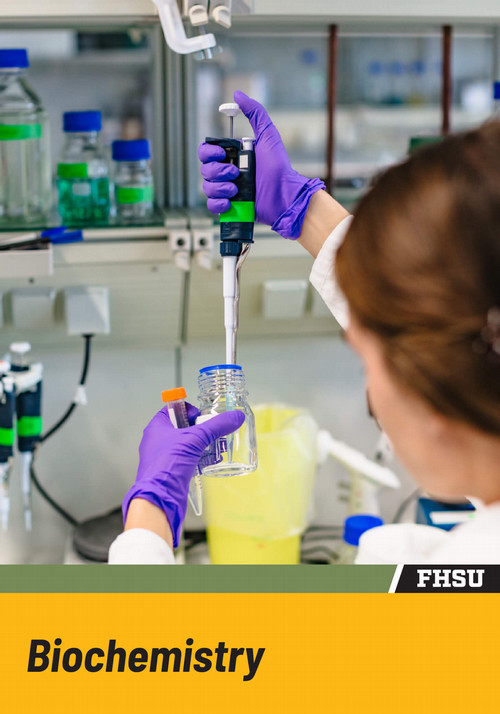
Bachelor of Science in Chemistry (Biochemistry)
Hours: 120 On-Campus
The Bachelor of Science in Chemistry (Biochemistry) program at Fort Hays State University combines the study of chemistry and biology to prepare students for careers that bridge both scientific disciplines. Students develop a strong foundation in chemical principles while exploring the biological processes that drive living systems, gaining the knowledge needed for a variety of science-related careers and advanced study opportunities.
The curriculum emphasizes hands-on learning through extensive laboratory experiences, allowing students to apply scientific concepts and develop practical research skills. In addition to technical knowledge, students strengthen their critical thinking, problem-solving, and communication abilities, which are essential for success in scientific and professional settings.
With a balance of classroom instruction and laboratory training, the program prepares students for careers in the chemical, pharmaceutical, biotechnology, environmental, and healthcare industries.
Who is this program for?
This program is designed for students interested in chemistry and biology who want to explore how these fields work together. It is a strong fit for those seeking hands-on learning, research opportunities, and preparation for science-related careers or advanced study.
- Students interested in chemistry and biological sciences
- Individuals seeking an interdisciplinary science education
- Future professionals in the biotechnology, pharmaceutical, environmental, and chemical industries
- Students who enjoy laboratory work, research, and scientific discovery
- Critical thinkers who want to strengthen their analytical and problem-solving skills
- Students planning to pursue graduate or professional studies in science, healthcare, or related fields
The Best Value in Higher Education Anywhere
Fort Hays State University prides itself on quality education at an affordable price. Students in this program can expect to pay approximately $3,237.60* (on-campus) per semester.
*Estimated cost based on 15 credit hours at the Undergrad resident/regional tuition rate ($215.84/credit hour) for on-campus courses. Actual price may vary depending on course load and location. Tuition and Fees are subject to change as they are approved by the Kansas Board of Regents each year.
The core combines coursework in chemistry and biology, including general chemistry, organic chemistry, biochemistry, molecular biology, genetics, and microbiology. Students can further tailor their studies through electives such as environmental chemistry, pharmacology, and bioinformatics, while a capstone research seminar provides an opportunity to apply their knowledge and present scientific findings.
CHEM 120/120L: University Chemistry I/Laboratory
University Chemistry I is the first course in a two-semester sequence, which serves as an introduction to chemistry for science majors and pre-engineering, pre-veterinary, pre-pharmacy, and pre-medical science students.
CHEM 340/340L: Organic Chemistry I/Laboratory
This is the first course in a comprehensive two-semester sequence on organic chemistry, tailored for majors in chemistry, biology, and medical sciences. The course includes three recitation sessions per week, along with a laboratory component and problem-solving sessions.
CHEM 662/662L: Biochemistry I/Laboratory
This course explores the chemical and physical properties of biologically significant molecules. Key topics will include carbohydrates, lipids, proteins, nucleic acids, and enzymes. Students will engage in three recitation sessions each week to deepen their understanding of these essential biomolecules, as well as a laboratory component and problem-solving sessions.
Discover the full Bachelor of Science in Chemistry (Biochemistry) course listing by visiting the Academic Catalog.
Graduates are prepared for a variety of careers that combine chemistry, biology, laboratory science, and research.
Formulation Chemist
Formulation chemists develop and test products such as pharmaceuticals, cosmetics, food products, and specialty chemicals. They evaluate ingredients, optimize product performance, and ensure products meet quality and safety standards.
Research Scientist
Research scientists design and conduct experiments to investigate scientific questions and advance knowledge in chemistry, biology, and related fields. They analyze data, interpret results, and contribute to the development of new discoveries, products, and technologies.
Quality Control Analyst
Quality control analysts test materials and products to ensure they meet established quality, safety, and regulatory requirements. They identify potential issues, analyze results, and help maintain consistent manufacturing standards.
Environmental Scientist
Environmental scientists study environmental conditions and evaluate the impact of human activities on natural systems. They collect and analyze data, conduct field and laboratory investigations, and help develop solutions to environmental challenges.
Biotechnologist
Biotechnologists use biological processes and scientific research to develop products and technologies in healthcare, agriculture, and environmental management. They conduct experiments, analyze biological data, and support innovation in areas such as genetic research, diagnostics, and biotechnology products.
Ready for the next step?
Our faculty would be excited to talk to you about how our department programs can help you explore your interests and prepare you for a variety of rewarding careers.
Related Programs
The following programs may be of interest to students exploring careers in chemistry, biology, healthcare, and related scientific fields.
- B.S. in Chemistry (Forensic Science)
- B.S. in Biology (General Biology)
- M.S. in Biology
- Master of Professional Studies (Chemistry)
- Master of Science in Education (Chemistry)
The program offers flexibility with elective courses and research opportunities, allowing students to explore various interests and tailor their education to their career goals.
Fort Hays State University provides modern laboratory facilities equipped with advanced instruments and technology. Students gain hands-on experience using the equipment and tools commonly found in professional chemistry and forensic science laboratories.
Yes. Students can participate in internships, undergraduate research, and professional conferences, gaining hands-on experience while building valuable connections in the field.
Core courses typically feature small class sizes, allowing students to receive personalized attention from faculty, build strong relationships with instructors, and learn in a supportive and engaging environment.
Yes, Fort Hays State University offers scholarship opportunities for chemistry students. Awards may be based on academic achievement, financial need, leadership, research involvement, and other qualifications. Students can explore available scholarships through the Financial Assistance Office and the Department of Chemistry.
Information about the Department of Chemistry
The Department of Chemistry at FHSU offers a comprehensive education designed to equip students with advanced knowledge of chemistry and strong research skills. Supported by experienced faculty, students develop technical expertise and problem-solving abilities essential for success in the workforce or in graduate and professional schools.
Students engage in extensive hands-on learning and research using state-of-the-art equipment, preparing them for a wide range of careers in scientific and healthcare fields. Whether pursuing careers in teaching, research, or professional programs such as medical or dental schools, the department offers in-depth undergraduate and pre-professional programs tailored to individual goals.
Graduates of the chemistry programs are highly sought after across a wide range of chemistry-related professions. With a solid academic foundation and dedicated faculty support, students are well-prepared to embark on successful careers upon completing the programs.
While earning a degree remains the primary focus, college life offers much more than classroom learning. Students are encouraged to participate in extracurricular activities that foster leadership skills, deepen their understanding of their chosen careers, and provide opportunities to make a positive impact in their communities.
- Chemistry/Pre-Professional Club: This club fosters professional development, academic excellence, practical education, and community service within the sciences. Its activities include popular Magic Shows for local schools, tutoring services, and scholarship opportunities for active members. For more information, students may contact Dr. Arvin Cruz.
- AMSA/Premedical Club: This organization supports pre-medical, pre-dental, and pre-optometry students by helping them prepare for entrance exams and stay focused on their academic and professional goals. The club offers valuable opportunities such as clinic visits, field trips to professional schools, and networking events with healthcare professionals. For more information, students are encouraged to contact Dr. James Balthazor.
- Bachelor's
- On-Campus