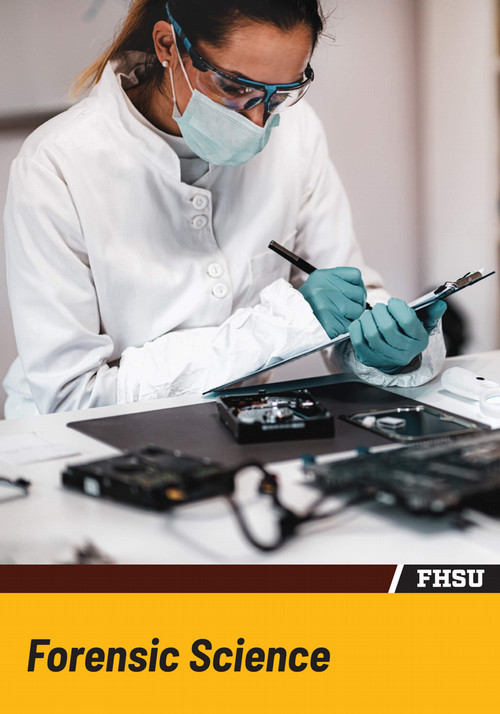
Bachelor of Science in Chemistry (Forensic Science)
Hours: 120 On-Campus
The Bachelor of Science in Chemistry (Forensic Science) program at Fort Hays State University prepares students for careers in forensic science, criminal investigation, and other fields that rely on a strong understanding of chemistry. The program combines foundational chemistry coursework with specialized training in forensic applications, helping students develop the analytical and problem-solving skills needed to examine evidence and support scientific investigations.
Students gain hands-on experience through laboratory courses, faculty-led research opportunities, and training with advanced scientific instrumentation. The curriculum also includes coursework in mathematics and physics, providing a strong scientific foundation that supports success in both forensic and chemical sciences.
Certified by the American Chemical Society (ACS), the program meets recognized industry standards and prepares graduates for careers in forensic laboratories, government agencies, chemical and manufacturing industries, and research settings. Graduates are also well-positioned to pursue graduate studies in forensic science, chemistry, and related disciplines, supported by a strong background in scientific research, critical thinking, and laboratory practice.
Who is this program for?
This program is designed for students who enjoy chemistry, critical thinking, and scientific problem-solving. It is an excellent fit for those interested in applying chemical knowledge to forensic investigations, laboratory analysis, and related scientific careers.
- Aspiring forensic scientists with an interest in chemistry
- Students focused on criminal justice and scientific analysis
- Individuals aiming for careers in forensic labs or research
- Those passionate about solving challenges through chemistry
- Students planning to pursue graduate studies in forensic science or related fields
The Best Value in Higher Education Anywhere
Fort Hays State University prides itself on quality education at an affordable price. Students in this program can expect to pay approximately $3,237.60* (on-campus) per semester.
*Estimated cost based on 15 credit hours at the Undergrad resident/regional tuition rate ($215.84/credit hour) for on-campus courses. Actual price may vary depending on course load and location. Tuition and Fees are subject to change as they are approved by the Kansas Board of Regents each year.
The curriculum provides a strong foundation in chemistry while emphasizing its applications in forensic science. Students complete coursework in general, organic, inorganic, physical, and analytical chemistry, along with specialized studies in forensic science and environmental analysis. Hands-on laboratory experiences, undergraduate research opportunities, and professional development activities help students apply their knowledge in practical settings.
CHEM 352/352L: Environmental Chemistry/Laboratory
This course applies chemistry to natural systems, focusing on pollutants and their impact. The lab covers environmental analysis methods, with an emphasis on protocols.
CHEM 382: Introduction to Forensic Science
This course covers analytical techniques used in forensic science and is aimed at chemistry majors, preprofessional students, and those pursuing careers in forensic science.
CHEM 656/656L: Instrumental Analysis/Laboratory
This course explores the fundamentals of chemical analysis using electrical instrumentation, including spectroscopy, electroanalytical methods, and chemical separations. It integrates laboratory work with experimental physical chemistry principles, providing hands-on experience with instrumental analysis techniques.
Discover the full Bachelor of Science in Chemistry (Forensic Science) course listing by visiting the Academic Catalog.
Graduates are prepared for a variety of careers that combine chemistry, laboratory science, and forensic investigation. The program develops strong analytical, technical, and problem-solving skills that support careers in criminal justice, research, education, and related scientific fields. Graduates may also choose to pursue advanced study in forensic science, chemistry, or health-related professions.
Criminalist/Forensic Scientist
Criminalists and forensic scientists analyze physical evidence and apply scientific methods to support criminal investigations. They work in forensic laboratories, law enforcement agencies, and government organizations to identify, evaluate, and interpret evidence.
Forensic Researcher
Forensic researchers develop and improve analytical methods, laboratory procedures, and investigative techniques used in forensic science. They work in academic, government, and private research settings to advance the field and support more effective forensic investigations.
Forensic Science Educator
Forensic science educators teach and mentor students in schools, colleges, and universities, helping prepare future professionals for careers in forensic science. They may also contribute to curriculum development and research in the field.
Pre-Professional/Pre-Health Careers
Physicians, pharmacists, veterinarians, and other healthcare professionals rely on a strong understanding of chemistry and biological sciences to diagnose conditions, develop treatments, and promote health and well-being.
Ready for the next step?
Our faculty would be excited to talk to you about how our department programs can help you explore your interests and prepare you for a variety of rewarding careers.
Related Programs
Fort Hays State University offers related programs that allow students to explore complementary areas of study while expanding their career opportunities.
Yes, Fort Hays State University offers scholarship opportunities for chemistry students. Awards may be based on academic achievement, financial need, leadership, research involvement, and other qualifications. Students can explore available scholarships through the Financial Assistance Office and the Department of Chemistry.
The program offers flexibility for exploratory studies, allowing students to choose electives in related fields such as criminal justice, biology, or pre-health. Research and internship opportunities further enable students to tailor their educational experience to specific interests within forensic science.
The B.S. in Chemistry (Forensic Science) focuses on the scientific analysis of evidence through advanced study in chemistry and laboratory techniques. While the B.S. in Criminalistics (Forensic Chemistry) and B.A./B.S. in Criminal Justice programs emphasize criminal investigations, law enforcement, and the justice system, this program offers a deeper concentration in the chemical sciences and the analytical methods used in forensic laboratories.
Fort Hays State University provides modern laboratory facilities equipped with advanced instruments and technology. Students gain hands-on experience using the equipment and tools commonly found in professional chemistry and forensic science laboratories.
Information about the Department of Chemistry
The Department of Chemistry at FHSU offers a comprehensive education designed to equip students with advanced knowledge of chemistry and strong research skills. Supported by experienced faculty, students develop technical expertise and problem-solving abilities essential for success in the workforce or in graduate and professional schools.
Students engage in extensive hands-on learning and research using state-of-the-art equipment, preparing them for a wide range of careers in scientific and healthcare fields. Whether pursuing careers in teaching, research, or professional programs such as medical or dental schools, the department offers in-depth undergraduate and pre-professional programs tailored to individual goals.
Graduates of the chemistry programs are highly sought after across a wide range of chemistry-related professions. With a solid academic foundation and dedicated faculty support, students are well-prepared to embark on successful careers upon completing the programs.
While earning a degree remains the primary focus, college life offers much more than classroom learning. Students are encouraged to participate in extracurricular activities that foster leadership skills, deepen their understanding of their chosen careers, and provide opportunities to make a positive impact in their communities.
- Chemistry/Pre-Professional Club: This club fosters professional development, academic excellence, practical education, and community service within the sciences. Its activities include popular Magic Shows for local schools, tutoring services, and scholarship opportunities for active members. For more information, students may contact Dr. Arvin Cruz.
- AMSA/Premedical Club: This organization supports pre-medical, pre-dental, and pre-optometry students by helping them prepare for entrance exams and stay focused on their academic and professional goals. The club offers valuable opportunities such as clinic visits, field trips to professional schools, and networking events with healthcare professionals. For more information, students are encouraged to contact Dr. James Balthazor.
- Bachelor's
- On-Campus