Master of Professional Studies (Community Engaged Art)
Hours: 31 Online
The Master of Professional Studies (Community Engaged Art) at Fort Hays State University is a fully online graduate program designed for artists who want to deepen their impact through creative community engagement.
Ideal for both visual and performing artists, the program emphasizes the use of art as a catalyst for social justice, sustainability, and cultural awareness, with a strong focus on serving underserved communities.
The interdisciplinary curriculum combines coursework in studio practice, community engagement theory, and social entrepreneurship. Through this holistic approach, students develop and lead community arts initiatives that address real-world challenges and generate meaningful, measurable social change.
Who is this program for?
This program is ideal for those who believe in the transformative power of the arts and are ready to lead community-focused initiatives. Artists, educators, community organizers, and nonprofit professionals with a passion for creative collaboration will find it especially valuable for integrating the arts into social change.
- Practicing artists seeking to impact communities
- K-12 teachers wanting to expand civic learning
- Arts professionals working in nonprofit settings
- Activists using creative media for social justice
- Graduates pursuing advanced study in social practices
The Best Value in Higher Education Anywhere
Fort Hays State University prides itself on quality education at an affordable price. Students in this program can expect to pay approximately $3,264.57* (online) per semester.
*Estimated cost based on 9 credit hours at the FHSU Online Graduate tuition rate ($362.73/credit hour) for online courses. Actual price may vary depending on course load and location. Tuition and Fees are subject to change as they are approved by the Kansas Board of Regents each year.
The core curriculum provides a solid foundation in the theory and practice of community-engaged art, balancing academic rigor with practical application. Students start with foundational courses in art education, community engagement, and research methods. As the program advances, they engage in applied coursework and electives covering program development, social impact, and entrepreneurship. Additionally, studio-based art electives and leadership courses offer opportunities for students to tailor their studies to their personal interests and career goals.
ART 890: Introduction to Community Engaged Art
This introductory course provides a foundation in community-engaged art education, examining current practices through the lens of the United Nations Sustainable Development Goals. Students will explore their own positionality and strengths while developing strategies for community-building and fostering resilience through creative practice.
ART 894: Program Development and Assessment in Community Engaged Art
In this course, students will design and implement a community-engaged art project tailored to the needs of a specific community and in collaboration with local organizations. As part of the process, students will develop a project assessment plan, prepare and submit an IRB application, and seek grant funding to support their work.
SOC 664G: Social Entrepreneurship and Grassroots Social Action
This course introduces students to social entrepreneurship as a tool for grassroots social action. Students will explore issues they care about, examine real-world examples, and learn how to design community-based projects to support those in need. By the end of the course, each student will develop a detailed proposal for a grassroots initiative they may choose to pursue in the future.
Discover the full Master of Professional Studies (Community Engaged Art) course listing by visiting the Academic Catalog.
Graduates are prepared to assume diverse roles that combine creative practice with social responsibility. Emphasizing leadership, planning, and evaluation, the program equips students to take on leadership positions within cultural institutions, schools, and grassroots organizations.
Community Arts Center Director
Community arts center directors oversee program development, manage staff and volunteers, and foster partnerships with local stakeholders. Their expertise in community engagement allows them to create accessible programs that boost public participation in the arts.
Arts Education Coordinator
Arts education coordinators develop curricula, implement educational outreach programs, and train teaching artists. Often employed by museums, nonprofits, or school districts, they use art to promote civic responsibility and cultural awareness.
Teaching Artists in Schools or Nonprofits
Many graduates work as teaching artists in classrooms, after-school programs, or community workshops, focusing on inclusion, creative expression, and social themes relevant to their students.
Grant and Program Manager in Arts Nonprofits
Grant and program managers oversee funding portfolios and lead major art-based initiatives. They develop proposals, evaluate project impact, and ensure alignment with both funder requirements and community goals.
Festival or Public Arts Program Coordinator
Festival and public arts program coordinators organize exhibitions, interactive installations, and performance events that celebrate and amplify local voices through collaborative art making.
Applicants to the Master of Professional Studies (Community Engaged Art) program at Fort Hays State University must hold a bachelor’s degree from an accredited institution with a minimum GPA of 3.0 in the last 60 undergraduate credit hours. Although the degree does not need to be in visual or performing arts, applicants are required to demonstrate proficiency in creative media.
Application and Supporting Documents
Applicants are required to complete the online master's program application and pay the associated fee. Official transcripts from all post-secondary institutions attended must be submitted as part of the application.
Statement of Interest
Applicants must submit a written statement outlining their interest in community-engaged art, relevant experience, and motivation for pursuing the graduate program. The statement should also convey the applicant’s vision for using art to foster community development.
Portfolio of Work
Visual artists are required to submit 10 images of original work, while performing artists must provide 10 examples of their creative contributions through video or audio recordings. The portfolio should showcase the applicant’s artistic practice and readiness for graduate-level study.
Letters of Recommendation
Applicants must submit two letters of recommendation: one from an academic reference familiar with the applicant’s scholarly or creative work, and a second from a professional or community leader who can speak to the applicant’s dedication to civic engagement.
Enrollment Period
Admission is offered exclusively for the summer term, supporting a cohort model that fosters intensive, collaborative, and project-based learning from the outset of the program.
Ready for the next step?
Our faculty would be excited to talk to you about how our department programs can help you explore your interests and prepare you for a variety of rewarding careers.
Related Programs
Fort Hays State University offers complementary graduate programs in arts, leadership, and community development. These programs provide alternative pathways for students seeking interdisciplinary approaches or aiming to broaden their qualifications.
- Certificate in Arts Entrepreneurship (with a B.A. Degree)
- Certificate in Studio Art
- Certificate in Arts Entrepreneurship (with a BFA Degree)
Yes, the program is entirely online and has no in-person requirement.
Applicants do not need an undergraduate art degree but must demonstrate creative visual or performing arts competency.
Most students complete the 31-credit program within two and a half years.
Students must develop, implement, and assess a community-engaged art project as a two-part thesis.
Yes, students receive grant writing and program evaluation training, preparing them to apply for funding to support future projects.
Information about the School of Visual and Performing Arts
The School of Visual and Performing Arts at FHSU inspires creativity within a supportive and passionate community. Each program in Art and Design, along with Music and Theatre, offers students the opportunity to develop their talents and prepare for rewarding careers in the arts. Whether students aspire to create visual masterpieces, perform on stage, or educate the next generation, expert faculty provide hands-on learning experiences that both inspire and challenge.
With access to state-of-the-art facilities and personalized mentorship, students gain the skills and confidence needed to excel in their chosen fields. From local exhibitions and major performances to internships and professional development opportunities, these programs equip students with the tools to make a lasting impact in the world of visual and performing arts.
While earning a degree remains the primary focus, college life offers much more than classroom learning. Students are encouraged to participate in extracurricular activities that foster leadership skills, deepen their understanding of their chosen careers, and provide opportunities to make a positive impact in their communities.
- American Institute of Graphic Artists (AIGA): Connect with industry professionals and fellow graphic design students, attend conferences, and expand your network.
- Arts for Social Change: Use art as a catalyst for positive social change through lectures, workshops, and public events.
- Ceramica Clay Club (CCC): Participate in ceramic workshops, art events, and interdisciplinary projects that spread art into the community.
- FHSU Theater: Dive into acting, writing, and directing through performances and peer education programs.
- Fe Sculpture Club: Explore metalworking and host art events both on campus and in the community.
- Interior Design Student Organization (IDSA): Prepare for a career in interior design through networking, field trips, and professional development.
- Creative Arts Society (CAS): Enhance diversity and culture through guest-artist lectures, workshops, and community art projects.
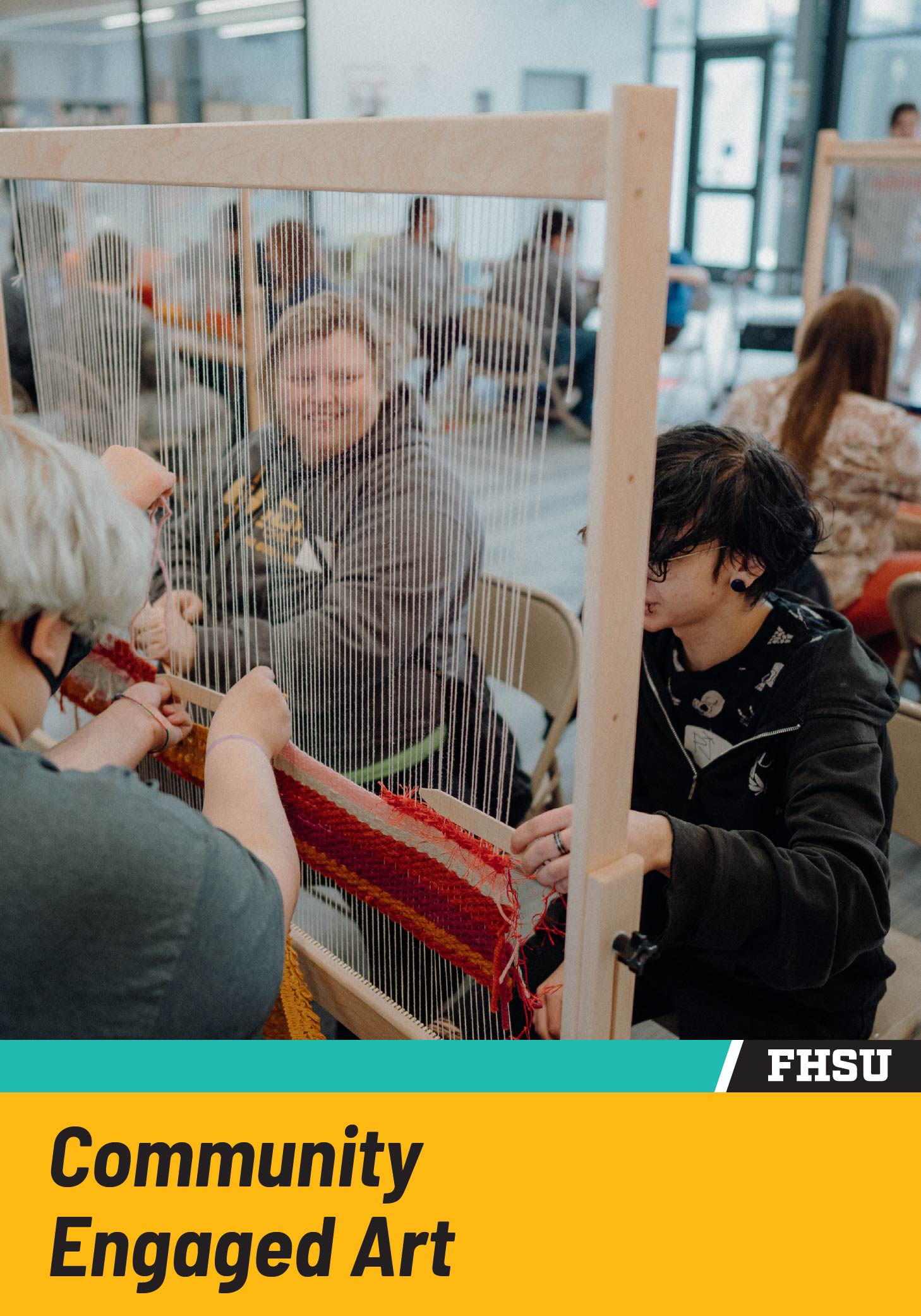
- Collaborative Art Project (CAP): The Collaborative Art Project is a partnership between Amy Schmierbach, professor of art at Fort Hays State University, FHSU students, and Developmental Services of Northwest Kansas (DSNWK). Schmierbach and the students lead workshops for DSNWK individuals, offering structured art experiences focused on weaving, drawing, and photography. The project aims to expand access to the arts within the Hays community, creating more opportunities for individuals to engage with and benefit from artistic expression.
- Art Eaters Art History Club: The Art Eaters Art History Club is a community dedicated to fostering a deep appreciation and understanding of art across cultures and throughout history. Open to all students regardless of experience, the club offers opportunities to explore art movements, artists, and various forms through lectures, gallery visits, workshops, and discussions. With a mission to inspire creativity, critical thinking, and a lifelong passion for the arts, the club also connects members with influential figures in the art world and helps develop valuable skills such as curation. Through collaboration and dialogue, the club cultivates a deeper understanding of art’s cultural significance.
- Tiger Marching Band: This group is open to all students who enjoy marching band and want to be a part of the Tiger Marching Band tradition.
- Pep Band: The FHSU pep band provides musical entertainment for FHSU Basketball games. Open to all students.
- Collegiate National Association for Music Education (CNAfME): This student organization is dedicated to developing music education professionals, including workshops, training, field experiences, and annual participation in the Kansas Music Educators Association state conference in Wichita.
- Student National Association of Teachers of Singing (S-NATS): Vocalists participate in workshops, training, and attendance at the regional NATS workshop and competition each fall.
- Music Theatre: Participate in a fully realized stage production produced each year, from a stage role to back-stage positions and technical support.
- Certificate
- Bachelor's
- Master's
- On-Campus
- Online