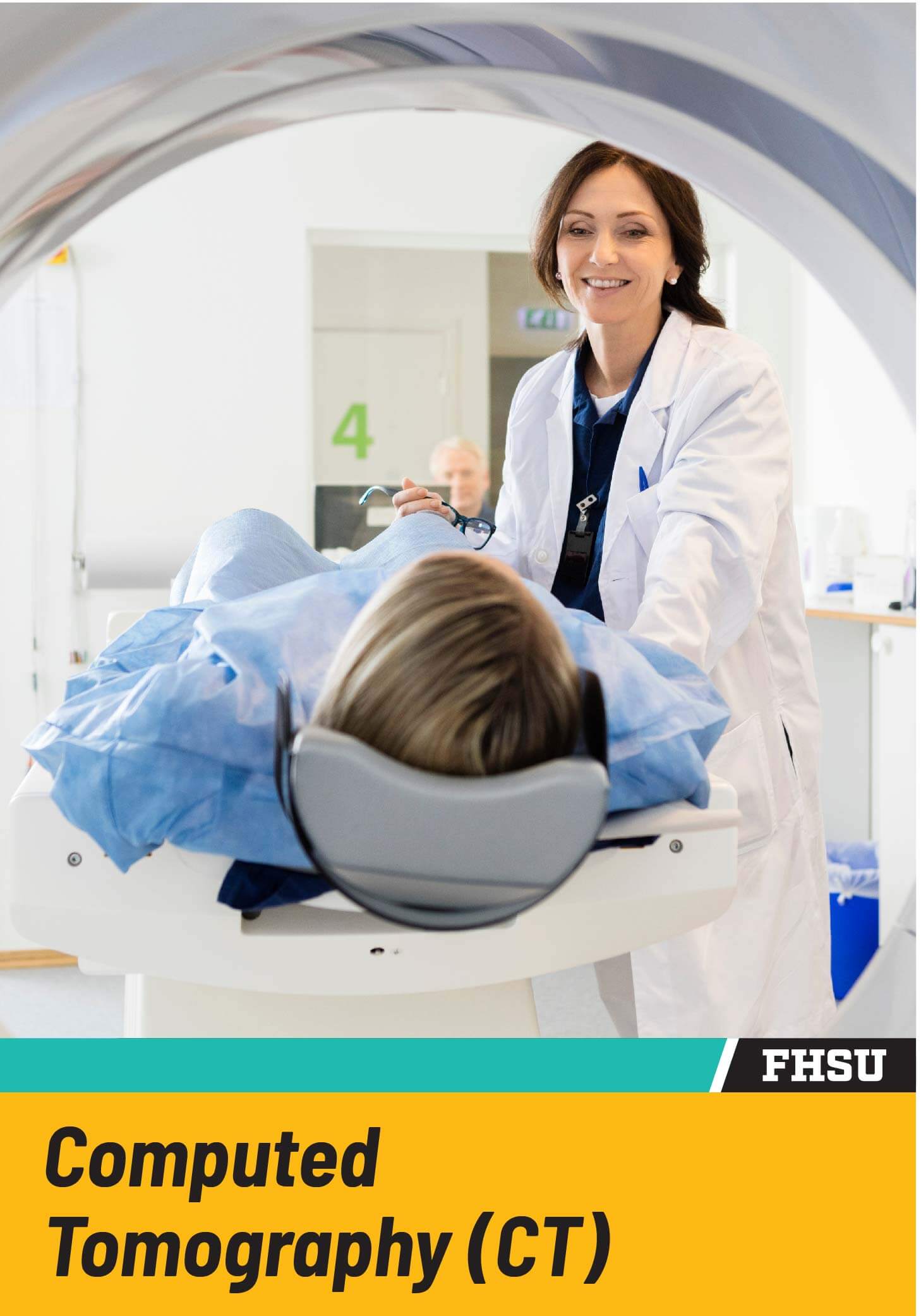
Certificate in Computed Tomography (CT)
Hours: 16 Online
The Certificate in Computed Tomography (CT) at Fort Hays State University is designed for licensed radiologic technologists who want to advance their knowledge and enhance their professional qualifications in medical diagnostic imaging. This 16-credit-hour certificate offers in-depth, specialized coursework that builds a strong CT foundation, focusing on theoretical concepts and hands-on application.
Who is this program for?
This certificate is intended for practicing radiologic technologists who want to expand their skills, fulfill continuing education requirements, or pursue specialized roles in medical imaging. Its flexible online format is well-suited for working professionals.
- Practicing radiologic technologists seeking advanced skills
- Technologists needing to fulfill continuing education requirements
- Technologists aspiring to gain registry eligibility for advanced certifications
- Those looking for a flexible, online learning format
The Best Value in Higher Education Anywhere
Fort Hays State University prides itself on quality education at an affordable price. Students in this program can expect to pay approximately $4,134.75* (online) per semester.
*Estimated cost based on 15 credit hours at the FHSU Online Undergrad tuition rate ($275.65/credit hour) for online courses. Actual price may vary depending on course load and location. Tuition and Fees are subject to change as they are approved by the Kansas Board of Regents each year.
The certificate features a comprehensive curriculum designed to build foundational knowledge and practical skills in CT imaging. Participants complete 16 credit hours across four core courses, each focused on essential components of computed tomography.
MDI 410: Cross-Sectional Anatomy: Normal
The course is designed to provide students in the diagnostic imaging sciences with an advanced understanding of the three-dimensional structure relationships of normal anatomy. Medical images of visceral anatomy of the head, neck, thorax, abdomen, pelvis, spine, and joints will be presented in transverse, oblique, coronal, and sagittal orientations.
MDI 412: CT Procedures
This course will teach students the basic protocols for examinations performed on a multislice CT scanner. Students will learn to recognize pathology and medical situations and adapt protocols accordingly.
MDI 413: CT Physics and Instrumentation
Designed to teach the theory and operation of computed tomography equipment, accessories, and image production techniques.
Discover the full Certificate in Computed Tomography (CT) course listing by visiting the Academic Catalog.
Students who complete the Certificate in Computed Tomography (CT) are well-prepared for various career opportunities in the medical imaging field. The certificate equips them with a solid foundation for success in a variety of clinical environments and supports ongoing professional development.
Hospital Radiologic Technologist
Many professionals find employment in hospital settings, where they perform CT scans and work closely with healthcare teams to support patient diagnosis and treatment. Hospitals offer a fast-paced, dynamic environment with exposure to diverse clinical cases, providing ongoing opportunities for skill development and professional advancement.
Outpatient Imaging Center Specialist
Many individuals who complete the certificate pursue roles in outpatient imaging centers, providing CT imaging services in a more structured, routine setting. These environments often offer consistent scheduling and the opportunity to build strong, ongoing relationships with patients.
Traveling Technologist
For those who enjoy variety and flexibility, working as a traveling technologist offers a dynamic career path. These professionals provide CT imaging services at multiple locations, often filling in during staff shortages or high-demand periods. This role allows for travel while gaining experience in diverse clinical settings.
Equipment Sales and Product Development
Professionals interested in the technical aspects of medical imaging may pursue careers in equipment sales or product development with imaging manufacturers. These roles typically involve demonstrating advanced CT technologies, training end-users, and contributing to developing innovative imaging solutions.
Education and Research
Some technologists pursue careers in education or research, using their expertise to teach future imaging professionals or contribute to advancing the field through innovative studies. These roles often involve working with emerging technologies and shaping the future of computed tomography.
Fort Hays State University has established specific admission requirements to ensure applicants are well-prepared for the advanced coursework and professional expectations of the Certificate in Computed Tomography (CT). Prospective students must have a solid foundation in radiologic technology and meet professional standards set by relevant accrediting organizations. These eligibility criteria help uphold the certificate’s high standards and support student success in this rigorous and rewarding field.
Completed Associate’s Degree or Certificate
Applicants must have completed an associate degree or certificate in Radiologic Technology from an accredited program. This foundational education ensures they are adequately prepared for the advanced coursework required in the Certificate in Computed Tomography (CT).
ARRT Registration
Applicants must hold current registration and be in good standing with the American Registry of Radiologic Technologists (ARRT). This requirement confirms that they have met established professional standards and are qualified to pursue advanced specialization in computed tomography.
University Admission
Prospective students must be admitted to Fort Hays State University. This step involves meeting FHSU’s general admission criteria, ensuring a seamless integration into the academic community.
Certificate Program Application
In addition to FHSU admission, applicants must complete a dedicated application for the Certificate in Computed Tomography (CT). This process enables program administrators to evaluate candidates’ suitability for the specialized curriculum.
Ready for the next step?
Applying to the Computed Tomography program requires you to complete two applications, one for FHSU and one for the program.
Applicants must be accepted to Fort Hays State University before official admittance to the Computed Tomography program.
Please submit your Certificate in Medical Diagnostic Imaging Application Form
Related Programs
Fort Hays State University provides a variety of related programs that complement the Certificate in Computed Tomography (CT), allowing participants to specialize further and broaden their expertise in medical imaging. Exploring these additional options can support continued professional growth and expanded career opportunities.
- Bachelor of Science in Medical Diagnostic Imaging
- Certificate in Magnetic Resonance Imaging (MRI)
- Bachelor of Science in Diagnostic Medical Imaging (Ultrasound)
- Certificate in Women’s Imaging
Yes, the Certificate in Computed Tomography is offered entirely online, providing flexibility for working professionals.
The certificate can be completed in two semesters, totaling 16 credit hours.
Applicants must be graduates of a radiologic technology program or be current students in good standing within such a program.
Students can begin courses in either the fall or spring semester.
Students can participate in an 8-credit-hour CT Preceptorship for hands-on clinical experience.
Information about the Department of Allied Health
The Department of Allied Health at FHSU integrates healthcare and technology to offer modern on-campus and online programs designed to prepare students for successful careers in the medical field. These programs provide students with the skills needed to operate advanced imaging technologies, supporting physicians in the diagnosis and treatment of a wide range of health conditions.
Whether studying on-campus or online, students gain valuable hands-on experience through a curriculum tailored to meet the demands of various medical imaging environments. The department’s nearly 100% national certification exam pass rate reflects the strength and effectiveness of its programs, ensuring graduates are well-equipped for the workforce.
Faculty members provide personalized academic and career mentoring, guiding students toward securing optimal job opportunities in their field.
While earning a degree remains the primary focus, college life offers much more than classroom learning. Students are encouraged to participate in extracurricular activities that foster leadership skills, deepen their understanding of their chosen careers, and provide opportunities to make a positive impact in their communities.
- Association of Radiologic Technology Students (ARTS): This organization helps students build and strengthen professional connections within the healthcare field while offering opportunities to participate in events such as Radiologic Technologist Week.
- Society of Student Sonographers (SSS): This organization provides students with opportunities to connect with professionals in Diagnostic Medical Sonography and participate in a range of professional and educational activities.
- Kansas Society of Radiologic Technologists (KSRT): Radiologic Technology students are encouraged to become members of this statewide professional organization, engage in its annual convention, and pursue leadership opportunities within the society.
- Society of Diagnostic Medical Sonographers (SDMS): Sonography students are encouraged to join this national professional organization, participate in its national convention, and utilize a wide range of valuable resources related to the field.
- Certificate
- Online