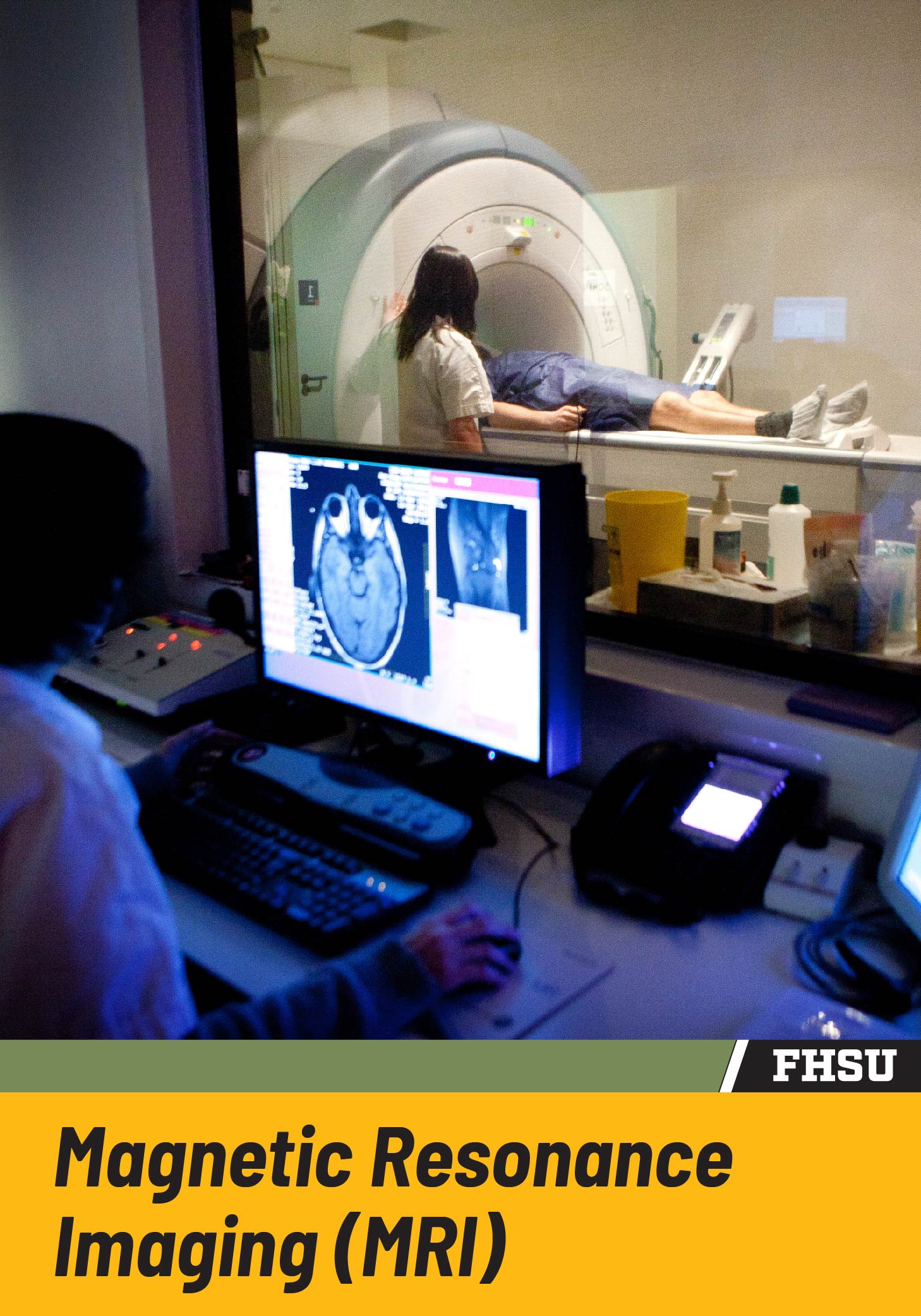
Certificate in Magnetic Resonance Imaging (MRI)
Hours: 16 Online
The Department of Allied Health at Fort Hays State University offers a fully online Certificate in Magnetic Resonance Imaging (MRI), designed specifically for practicing radiologic technologists. This certificate allows professionals to expand their education and enhance their skills in medical diagnostic imaging.
Consisting of 16 credit hours of focused coursework, the certificate prepares technologists for advanced MRI certification exams and supports ongoing professional development to help advance their careers.
Available entirely online and structured for completion within two semesters, the certificate provides a flexible and convenient option for working professionals seeking to strengthen their credentials in MRI.
Who is this program for?
Tailored for practicing radiologic technologists, this certificate helps expand skills, advance careers, meet continuing education requirements, and qualify for advanced MRI certification. Its flexible online format is ideal for professionals staying current in the field. This certificate is well-suited for:
- Practicing radiologic technologists seeking advanced skills in MRI
- Professionals aiming to fulfill continuing education requirements
- Technologists looking to become registry-eligible for advanced certification
- Individuals interested in enhancing their versatility in medical diagnostic imaging
- Radiologic technologists who prefer a flexible, online learning format
The Best Value in Higher Education Anywhere
Fort Hays State University prides itself on quality education at an affordable price. Students in this program can expect to pay approximately $4,134.75* (online) per semester.
*Estimated cost based on 15 credit hours at the FHSU Online Undergrad tuition rate ($275.65/credit hour) for online courses. Actual price may vary depending on course load and location. Tuition and Fees are subject to change as they are approved by the Kansas Board of Regents each year.
The certificate comprises 16 credit hours of specialized coursework, offering a comprehensive curriculum covering MRI technology, anatomy, pathology, and procedural techniques.
MDI 417: MRI Physics and Instrumentation
The course will provide instruction in fundamental physical and technical concepts, image procedures, quality control, and patient comfort and safety issues.
MDI 431: MRI Procedures
This course is designed to teach students diagnostic magnetic resonance imaging procedures. Students will learn methods and procedures required to obtain quality MRI examinations, including patient communication, exam positioning, and MRI equipment operation and manipulation.
Discover the full Certificate in Magnetic Resonance Imaging (MRI) course listing by visiting the Academic Catalog.
Students who complete the Certificate in Magnetic Resonance Imaging (MRI) are well-prepared for a variety of rewarding career opportunities within the healthcare industry. Potential career paths include:
Hospital Radiologic Technologist
Hospital radiologic technologists may pursue roles performing MRI scans in clinical settings. They play a vital role on the healthcare team by producing high-quality diagnostic images that assist in accurate patient diagnosis and treatment planning.
Outpatient Imaging Center Technologist
Outpatient imaging center technologists may work in facilities that provide diagnostic imaging services outside hospital settings. These roles often offer more regular work hours and focus on specialized imaging procedures, making them an attractive option for professionals seeking a balanced clinical environment.
Traveling MRI Technologist
Traveling MRI technologists have an opportunity to work in a variety of healthcare settings across different locations. These professionals provide temporary imaging services where needed, offering flexibility and the chance to gain diverse clinical experiences while supporting facilities facing staffing shortages.
Sales and Product Development Specialist
Sales and product development specialists may pursue careers in the medical imaging industry, working with equipment manufacturers and technology companies. These roles often involve supporting sales teams, contributing to product development, and serving as application specialists who demonstrate and optimize MRI technology for clinical use.
Education and Research
Education and research technologists may pursue opportunities in academic or research settings. These roles involve teaching future radiologic technologists or contributing to developing new imaging techniques and technologies, advancing the field of medical imaging through instruction and innovation.
Fort Hays State University has set specific admission requirements to ensure applicants are prepared for the academic challenges and practical experiences of the Certificate in Magnetic Resonance Imaging (MRI). Applicants must demonstrate both academic readiness and professional qualifications, including prior education in radiologic technology and current certification from the American Registry of Radiologic Technologists (ARRT). These criteria help admit individuals dedicated to advancing their MRI expertise and making meaningful contributions to medical diagnostic imaging.
University Admission
Applicants must first be admitted to Fort Hays State University by submitting official transcripts and fulfilling all general admission requirements.
Certificate Program Application
In addition to meeting FHSU’s general admission requirements, applicants must complete a separate application for the Certificate in Magnetic Resonance Imaging (MRI). This additional step ensures that applicants meet the certificate’s specific prerequisites and are prepared for the advanced coursework.
Radiologic Technology Certification
Applicants must have completed an accredited associate degree or certificate program in Radiologic Technology and hold current, active registration in good standing with the American Registry of Radiologic Technologists (ARRT).
Professional Standing
Applicants must provide proof of current certification and registration with the American Registry of Radiologic Technologists (ARRT). This documentation verifies that they meet the professional standards required for advanced MRI training.
Ready for the next step?
Applying to the Magnetic Resonance Imaging (MRI) program requires you to complete two applications, one for FHSU and one for the program.
Applicants must be accepted to Fort Hays State University before official admittance to the Magnetic Resonance Imaging (MRI) program.
Please submit your Certificate in Medical Diagnostic Imaging Application Form
Related Programs
Fort Hays State University offers related programs that complement the Certificate in Magnetic Resonance Imaging (MRI), including the B.S. in Medical Diagnostic Imaging with various specialties. These options provide additional pathways for professional growth and allow individuals to tailor their education to their career goals.
Yes, the Certificate in Magnetic Resonance Imaging (MRI) is offered online, providing flexibility for working professionals.
The certificate can be completed in two semesters, totaling 16 credit hours.
Applicants must be graduates of a radiologic technology program and in good standing with the ARRT.
Students can begin the courses in either the fall or spring semester.
The certificate aims to equip students with comprehensive knowledge of sectional anatomy, the ability to recognize MRI appearances of common pathologies, apply MRI physics principles, practice MRI safety, and evaluate MRI images for quality and completeness.
Information about the Department of Allied Health
The Department of Allied Health at FHSU integrates healthcare and technology to offer modern on-campus and online programs designed to prepare students for successful careers in the medical field. These programs provide students with the skills needed to operate advanced imaging technologies, supporting physicians in the diagnosis and treatment of a wide range of health conditions.
Whether studying on-campus or online, students gain valuable hands-on experience through a curriculum tailored to meet the demands of various medical imaging environments. The department’s nearly 100% national certification exam pass rate reflects the strength and effectiveness of its programs, ensuring graduates are well-equipped for the workforce.
Faculty members provide personalized academic and career mentoring, guiding students toward securing optimal job opportunities in their field.
While earning a degree remains the primary focus, college life offers much more than classroom learning. Students are encouraged to participate in extracurricular activities that foster leadership skills, deepen their understanding of their chosen careers, and provide opportunities to make a positive impact in their communities.
- Association of Radiologic Technology Students (ARTS): This organization helps students build and strengthen professional connections within the healthcare field while offering opportunities to participate in events such as Radiologic Technologist Week.
- Society of Student Sonographers (SSS): This organization provides students with opportunities to connect with professionals in Diagnostic Medical Sonography and participate in a range of professional and educational activities.
- Kansas Society of Radiologic Technologists (KSRT): Radiologic Technology students are encouraged to become members of this statewide professional organization, engage in its annual convention, and pursue leadership opportunities within the society.
- Society of Diagnostic Medical Sonographers (SDMS): Sonography students are encouraged to join this national professional organization, participate in its national convention, and utilize a wide range of valuable resources related to the field.
- Certificate
- Online