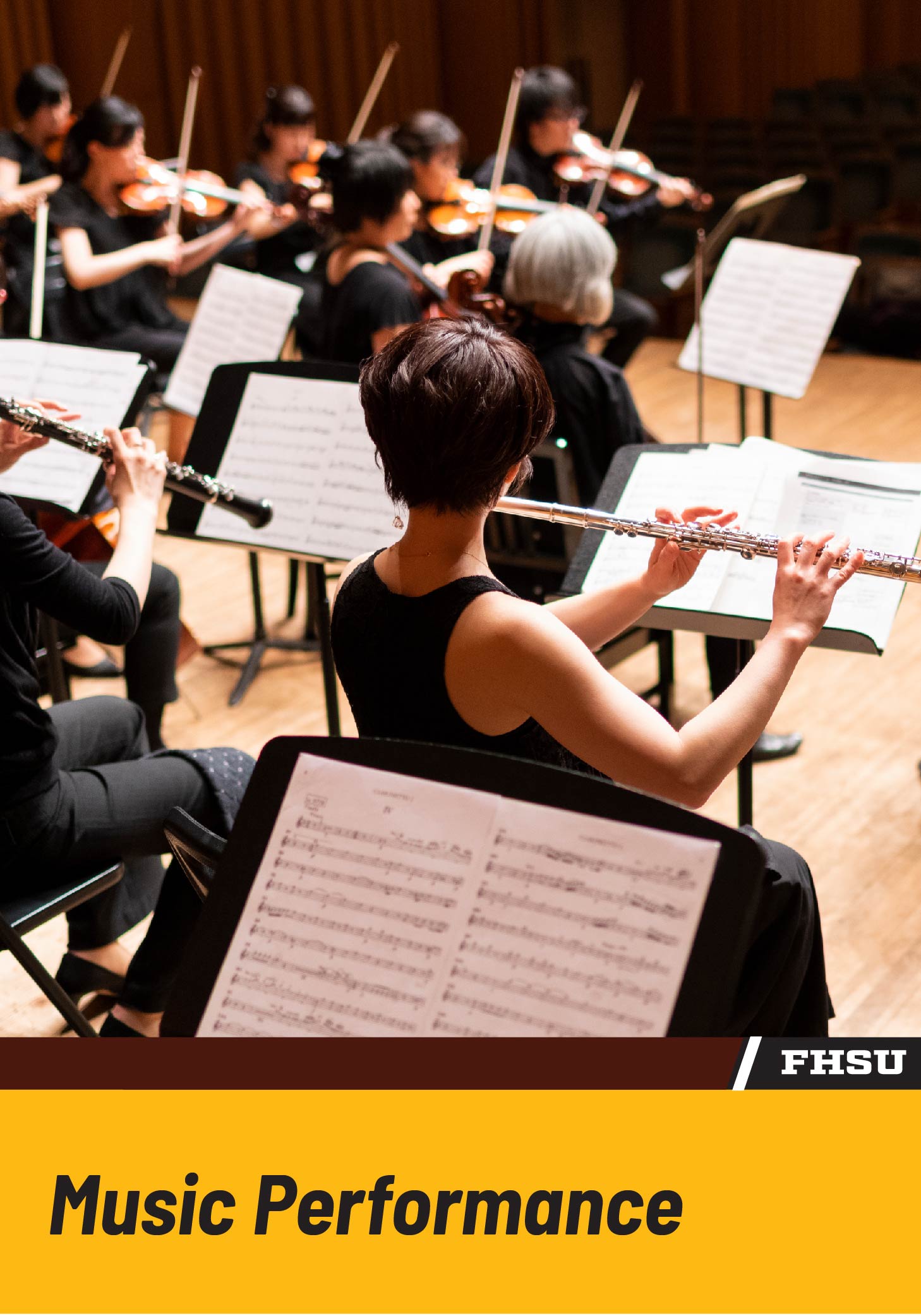
Bachelor of Music in Music (Performance)
Hours: 120 On-Campus
The Bachelor of Music in Music (Performance) program at Fort Hays State University is a comprehensive and academically rigorous four-year undergraduate degree designed for students pursuing a professional career in music. The program provides in-depth musical training and a strong academic foundation to prepare students for success both on stage and in broader musical settings.
Under the guidance of experienced and accomplished faculty, students develop advanced skills in music performance, music theory, chamber music, and a wide variety of musical styles. The curriculum emphasizes artistic growth, technical proficiency, and versatility, equipping graduates with the tools necessary to thrive in the dynamic world of music.
Who is this program for?
This program is designed for aspiring musicians dedicated to refining their skills and pursuing careers in music performance. Whether incoming high school graduates with a solid musical foundation or transfer students aiming to advance their studies, the program provides the guidance and resources necessary to help students achieve their goals.
- Aspiring musicians
- Musicians seeking diverse performance opportunities
- Future performers
- Students seeking a comprehensive musical education
- Individuals seeking a versatile degree
The Best Value in Higher Education Anywhere
Fort Hays State University prides itself on quality education at an affordable price. Students in this program can expect to pay approximately $3,237.60* (on-campus) per semester.
*Estimated cost based on 15 credit hours at the Undergrad resident/regional tuition rate ($215.84/credit hour) for on-campus courses. Actual price may vary depending on course load and location. Tuition and Fees are subject to change as they are approved by the Kansas Board of Regents each year.
The curriculum emphasizes individualized learning through private lessons in each student’s primary instrument. These lessons account for approximately 68% of the coursework, ensuring focused, personalized instruction that supports significant artistic growth.
In addition to performance training, students take courses in music theory, history, analysis, and literature. These classes explore influential composers, musical styles, and historical periods, providing students with a deeper understanding and appreciation of the art form and its evolution.
MUS 181: Music Theory I
This course is a study of the fundamentals of notation and an introduction to voice leading.
MUS 361: World Music
This course is an introduction to many styles of folk and classical music from around the world and the cultural causes and effects of this music.
MUS 293: Music History II
This course studies the development of music history and style in the eighteenth, nineteenth, and twentieth centuries.
Discover the full Bachelor of Music in Music (Performance) course listing by visiting the Academic Catalog.
Graduates are equipped with the skills and knowledge needed to pursue rewarding careers across a wide range of music-related fields. While many naturally follow paths in performance, teaching, music advocacy, or entrepreneurship, numerous other opportunities await. Below are just a few exciting career options available to graduates of the program:
Music Performance
Graduates may pursue careers as soloists, chamber musicians, or orchestral players. Through individualized lessons, ensemble participation, and regular performance opportunities, they develop the technical mastery and stage presence essential for success in the professional music world.
Music Teaching
Graduates who meet the minimum GPA requirement and complete the required music education courses are eligible to pursue licensure to teach music in K-12 schools. This fulfilling career path enables them to share their passion for music and inspire a lifelong appreciation of the arts in younger generations.
Music Advocacy
Music advocacy offers a meaningful career path for those dedicated to promoting music within their communities. This field encompasses roles such as arts administrator, arts education coordinator, and leader of nonprofit organizations. Graduates apply their musical expertise, communication skills, and passion to champion the value and impact of music in diverse settings.
Music Entrepreneurship
Graduates with a music degree can pursue entrepreneurial ventures within the music industry. Opportunities include launching music production companies, teaching studios, or online music businesses. The program cultivates an entrepreneurial mindset and business skills, equipping students to successfully navigate the dynamic and evolving music landscape.
Law
The analytical thinking and problem-solving skills developed through music study translate effectively into legal careers. Music graduates often possess strong communication abilities and the capacity to analyze complex situations, making them well-prepared candidates for law school and the legal profession.
Medicine
Music training offers valuable benefits to aspiring medical professionals. The discipline, focus, and hand-eye coordination developed through rigorous musical practice align well with the demands of medicine. Additionally, music enhances memory and spatial reasoning skills, both essential in many medical fields.
Ready for the next step?
Our faculty would be excited to talk to you about how our department programs can help you explore your interests and prepare you for a variety of rewarding careers.
Related Programs
Fort Hays State University offers a variety of music programs that enable students to broaden their musical expertise. Students may also choose to double major or pursue minors to further enhance their skills. Related programs include:
Students in the B.M. in Music (Performance) program have an opportunity to participate in a variety of ensembles. These include orchestras, wind ensembles, chamber groups, and vocal ensembles. These ensembles offer rich, collaborative musical experiences, allowing students to gain valuable experience in teamwork and artistic expression.
This program stands out for its unique combination of personalized instruction, advanced musical training, and real-world performance opportunities. Students benefit from dedicated mentorship and comprehensive guidance provided by an exceptional faculty, all within a supportive and engaging learning environment that fosters artistic growth and professional development.
The program covers various aspects of music performance through tailored, one-on-one instruction, collaborative musical experiences, and performance opportunities replicating professional contexts. Students receive individual guidance in their chosen instrumental or vocal area, complemented by music theory, history, ear training, and composition coursework.
There are specific performance opportunities and ensembles for students in the B.M. in Music (Performance) program. Students actively participate in orchestra lessons, wind ensembles, chamber groups, and vocal ensembles, alongside the chance to perform in public recitals throughout the semester.
Graduates can pursue careers as soloists, chamber musicians, or orchestral players, leveraging their refined skills and stage presence. Other paths include music teaching, advocacy, entrepreneurship, and even fields outside of music, such as law and medicine, where skills learned in music are highly valued.
Information about the School of Visual and Performing Arts
The School of Visual and Performing Arts at FHSU inspires creativity within a supportive and passionate community. Each program in Art and Design, along with Music and Theatre, offers students the opportunity to develop their talents and prepare for rewarding careers in the arts. Whether students aspire to create visual masterpieces, perform on stage, or educate the next generation, expert faculty provide hands-on learning experiences that both inspire and challenge.
With access to state-of-the-art facilities and personalized mentorship, students gain the skills and confidence needed to excel in their chosen fields. From local exhibitions and major performances to internships and professional development opportunities, these programs equip students with the tools to make a lasting impact in the world of visual and performing arts.
While earning a degree remains the primary focus, college life offers much more than classroom learning. Students are encouraged to participate in extracurricular activities that foster leadership skills, deepen their understanding of their chosen careers, and provide opportunities to make a positive impact in their communities.
- American Institute of Graphic Artists (AIGA): Connect with industry professionals and fellow graphic design students, attend conferences, and expand your network.
- Arts for Social Change: Use art as a catalyst for positive social change through lectures, workshops, and public events.
- Ceramica Clay Club (CCC): Participate in ceramic workshops, art events, and interdisciplinary projects that spread art into the community.
- FHSU Theater: Dive into acting, writing, and directing through performances and peer education programs.
- Fe Sculpture Club: Explore metalworking and host art events both on campus and in the community.
- Interior Design Student Organization (IDSA): Prepare for a career in interior design through networking, field trips, and professional development.
- Creative Arts Society (CAS): Enhance diversity and culture through guest-artist lectures, workshops, and community art projects.
- Collaborative Art Project (CAP): The Collaborative Art Project is a partnership between Amy Schmierbach, professor of art at Fort Hays State University, FHSU students, and Developmental Services of Northwest Kansas (DSNWK). Schmierbach and the students lead workshops for DSNWK individuals, offering structured art experiences focused on weaving, drawing, and photography. The project aims to expand access to the arts within the Hays community, creating more opportunities for individuals to engage with and benefit from artistic expression.
- Art Eaters Art History Club: The Art Eaters Art History Club is a community dedicated to fostering a deep appreciation and understanding of art across cultures and throughout history. Open to all students regardless of experience, the club offers opportunities to explore art movements, artists, and various forms through lectures, gallery visits, workshops, and discussions. With a mission to inspire creativity, critical thinking, and a lifelong passion for the arts, the club also connects members with influential figures in the art world and helps develop valuable skills such as curation. Through collaboration and dialogue, the club cultivates a deeper understanding of art’s cultural significance.
- Tiger Marching Band: This group is open to all students who enjoy marching band and want to be a part of the Tiger Marching Band tradition.
- Pep Band: The FHSU pep band provides musical entertainment for FHSU Basketball games. Open to all students.
- Collegiate National Association for Music Education (CNAfME): This student organization is dedicated to developing music education professionals, including workshops, training, field experiences, and annual participation in the Kansas Music Educators Association state conference in Wichita.
- Student National Association of Teachers of Singing (S-NATS): Vocalists participate in workshops, training, and attendance at the regional NATS workshop and competition each fall.
- Music Theatre: Participate in a fully realized stage production produced each year, from a stage role to back-stage positions and technical support.
- Bachelor's
- On-Campus