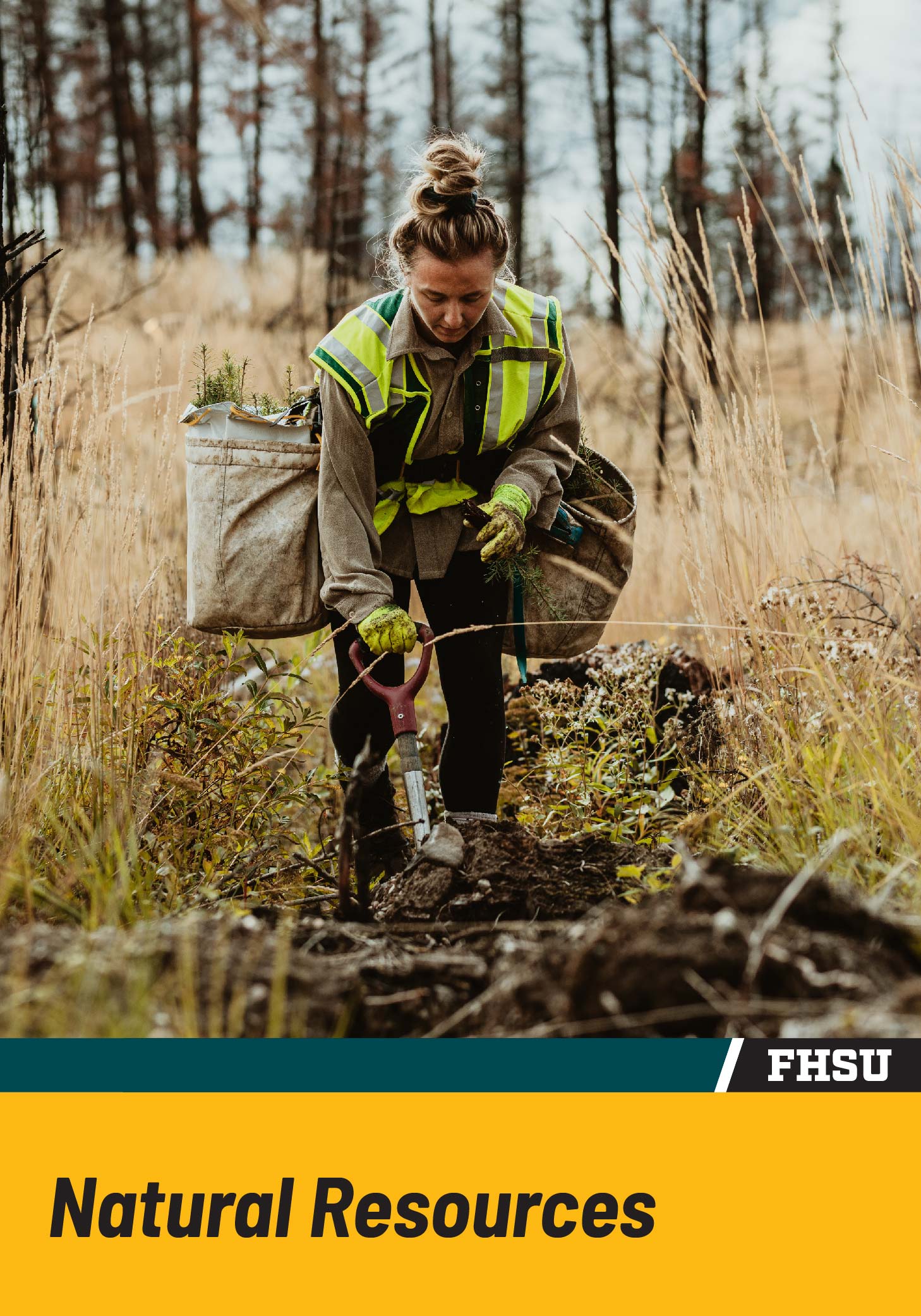
Bachelor of Science in Biology (Natural Resources)
Hours: 120 On-Campus
The Bachelor of Science in Biology (Natural Resources) at Fort Hays State University immerses students in the study of ecosystems, wildlife, and environmental stewardship. Through field courses, research opportunities, and internships, students gain meaningful, hands-on experience that strengthens their understanding of natural systems.
The curriculum integrates foundational biology with specialized coursework in ecology, wildlife conservation, resource management, and sustainable use of natural resources. This balanced approach prepares students to address real-world environmental challenges in both laboratory and field settings.
Graduates enter careers such as wildlife biologist, aquatic biologist, and rangeland manager, contributing to the conservation and responsible management of natural resources.
Who is this program for?
This program is ideal for individuals who are passionate about the environment and motivated to make a meaningful impact through conservation and resource management. It is especially well-suited for:
- Aspiring wildlife biologists
- Future conservationists
- Environmental scientists
- Ecologists
- Natural resource managers
The Best Value in Higher Education Anywhere
Fort Hays State University prides itself on quality education at an affordable price. Students in this program can expect to pay approximately $3,237.60* (on-campus) per semester.
*Estimated cost based on 15 credit hours at the Undergrad resident/regional tuition rate ($215.84/credit hour) for on-campus courses. Actual price may vary depending on course load and location. Tuition and Fees are subject to change as they are approved by the Kansas Board of Regents each year.
The core curriculum begins with foundational biology coursework, which provides students with a strong scientific foundation. Building on this foundation, students take specialized classes in areas such as wildlife management, conservation biology, and environmental science, developing a comprehensive understanding of biological principles and their application to real-world environmental challenges.
Key topics span a wide range of subjects, including ecology, animal behavior, plant biology, and ecosystem management. Elective options further enhance the program by allowing students to tailor their studies to their specific interests and career goals, creating a personalized and relevant academic experience.
BIOL 665: Biodiversity and Conservation Biology
This course examines the generation, distribution, and conservation of biological diversity.
BIOL 697: Wildlife Management
This course explores nature and mechanisms of natural and acquired immunity, including the production of antibodies and antigens, as well as serological reactions.
BIOL 670: Ecological Applications
In this course, students apply the principles of landscape ecology, geographic information systems (GIS), and spatial analysis to biological systems and scientific research.
Discover the full Bachelor of Science in Biology (Natural Resources) course listing by visiting the Academic Catalog.
The B.S. in Biology (Natural Resources) provides a strong blend of scientific knowledge and practical field experience, preparing graduates for a wide range of careers. With this solid foundation, students are well-equipped to work in government agencies, non-profit organizations, research institutions, and private industry.
Wildlife Biologist
Wildlife biologists study animals and their habitats, developing and implementing conservation plans to protect species. They collaborate with government agencies, conservation groups, and research institutions, frequently conducting field research, analyzing data, and raising public awareness about wildlife conservation.
Aquatic Biologist
Aquatic biologists study freshwater and marine ecosystems, focusing on the organisms and environmental conditions within them. They work in areas such as fisheries management, environmental consulting, and research, often addressing water quality and habitat conservation.
Rangeland Manager
Rangeland managers ensure the sustainable use of rangelands by balancing the needs of livestock, wildlife, and native vegetation. They develop grazing plans, monitor ecosystem health, and restore degraded lands while working with government agencies, nonprofits, and private landowners.
Environmental Consultant
Environmental consultants advise businesses, governments, and nonprofits on policies, regulations, and management practices. They conduct impact assessments and develop sustainable solutions, often specializing in pollution control, resource management, and regulatory compliance.
Conservation Scientist
Conservation scientists manage natural resources to protect the environment. They collaborate with landowners and agencies to develop conservation plans, monitor ecosystems, and lead restoration projects, addressing challenges like habitat loss, climate change, and biodiversity conservation.
Ready for the next step?
Our faculty would be excited to talk to you about how our department programs can help you explore your interests and prepare you for a variety of rewarding careers.
Related Programs
Students interested in the B.S. in Biology (Natural Resources) program may also explore related programs that provide complementary skills and knowledge, such as:
- B.S. in Geosciences (Geography)
- B.S. in Geosciences (Geology)
- B.S. in Agriculture (General)
- B.A in Environmental Geosciences
- Certificate in Wildlife Biology
- M.S. in Biology
The program boasts a high job placement rate, with many graduates finding employment in wildlife and natural resource management shortly after graduation. This success is attributed to the practical experience and strong connections with industry professionals gained during the program.
Yes, graduates can pursue various roles in environmental consulting, research, policy development, education, and more. The diverse curriculum and practical experiences prepare students for multiple career paths in natural resources and environmental science.
The program offers extensive hands-on experience through field courses, internships with local and state agencies, and lab-based research projects. These opportunities allow students to apply their knowledge in real-world settings and gain valuable professional skills.
The curriculum incorporates the latest advancements in biological sciences and environmental technology, including drone videography and animal tracking systems. Courses are regularly updated to reflect emerging trends and techniques, ensuring students are equipped with cutting-edge skills.
FHSU provides various support services to help students balance their studies with work, parenting, or other responsibilities. These services include flexible scheduling options, academic advising, tutoring, and access to online resources, all designed to accommodate the diverse needs of students.
Information about the Department of Biological Sciences
The Department of Biological Sciences at FHSU provides a comprehensive foundation in life sciences, preparing students for success across a wide range of biological fields. The department offers modern facilities, personalized instruction, and extensive research opportunities, enabling students to explore topics from molecular biology to wildlife studies.
Students benefit from a high-quality education at an excellent value, with hands-on research experiences, dedicated faculty mentoring, and specialized training in pre-professional tracks such as Pre-Med, Pre-Physical Therapy, and Pre-Veterinary Medicine.
Graduates are well-equipped for careers in human and veterinary health, conservation, education, or advanced graduate studies. Supported by strong academic programs and a committed faculty, students are prepared to pursue rewarding careers and become part of a thriving network of successful alumni.
While earning a degree remains the primary focus, college life offers much more than classroom learning. Students are encouraged to participate in extracurricular activities that foster leadership skills, deepen their understanding of their chosen careers, and provide opportunities to make a positive impact in their communities.
- AMSA/Pre-Medical Club: This club supports students pursuing pre-medical, pre-dental, pre-physician assistant (Pre-PA), and pre-optometry tracks by offering valuable experiences such as clinic visits, field trips, and networking opportunities with healthcare professionals. With the pre-PA and dental fields among the fastest-growing areas in healthcare, the club provides essential resources and guidance to help students successfully navigate their chosen paths. For more information, students are encouraged to contact Dr. James Balthazor.
- Biology Club: This club is dedicated to educating and supporting students interested in the biological sciences. The club promotes both personal and professional growth by offering opportunities to develop job-related skills, engage in professional development activities, and build connections through social events. For more information, students can contact Dr. Claudia Carvalho.
- Pre-Physician Associate Club: This club supports aspiring PA students as they prepare for the Centralized Application Service for Physician Assistants (CASPA) process. Through regular meetings, students receive guidance on building competitive applications, including opportunities to earn volunteer hours, develop personal statements, and strengthen other key components. This organization features guest speakers, workshops on CV and résumé writing, program selection, and hands-on training in areas such as wound care and suturing, and helpful checklists. By fostering a supportive community of like-minded peers, the club offers encouragement and practical support throughout college and the PA application process. First-year students and anyone interested in a PA career are highly encouraged to join.
- National Resources Club: This club is dedicated to studying natural resources and promoting conservation, restoration, and sustainability through hands-on activities and community service. Members participate in recreational and research-based projects focused on natural resource management while also exploring career opportunities within the field. The club fosters both environmental stewardship and professional development for students passionate about the outdoors and sustainability.
- Bachelor's
- On-Campus