Bachelor of Science in Geosciences (Geology)
Hours: 120 On-Campus
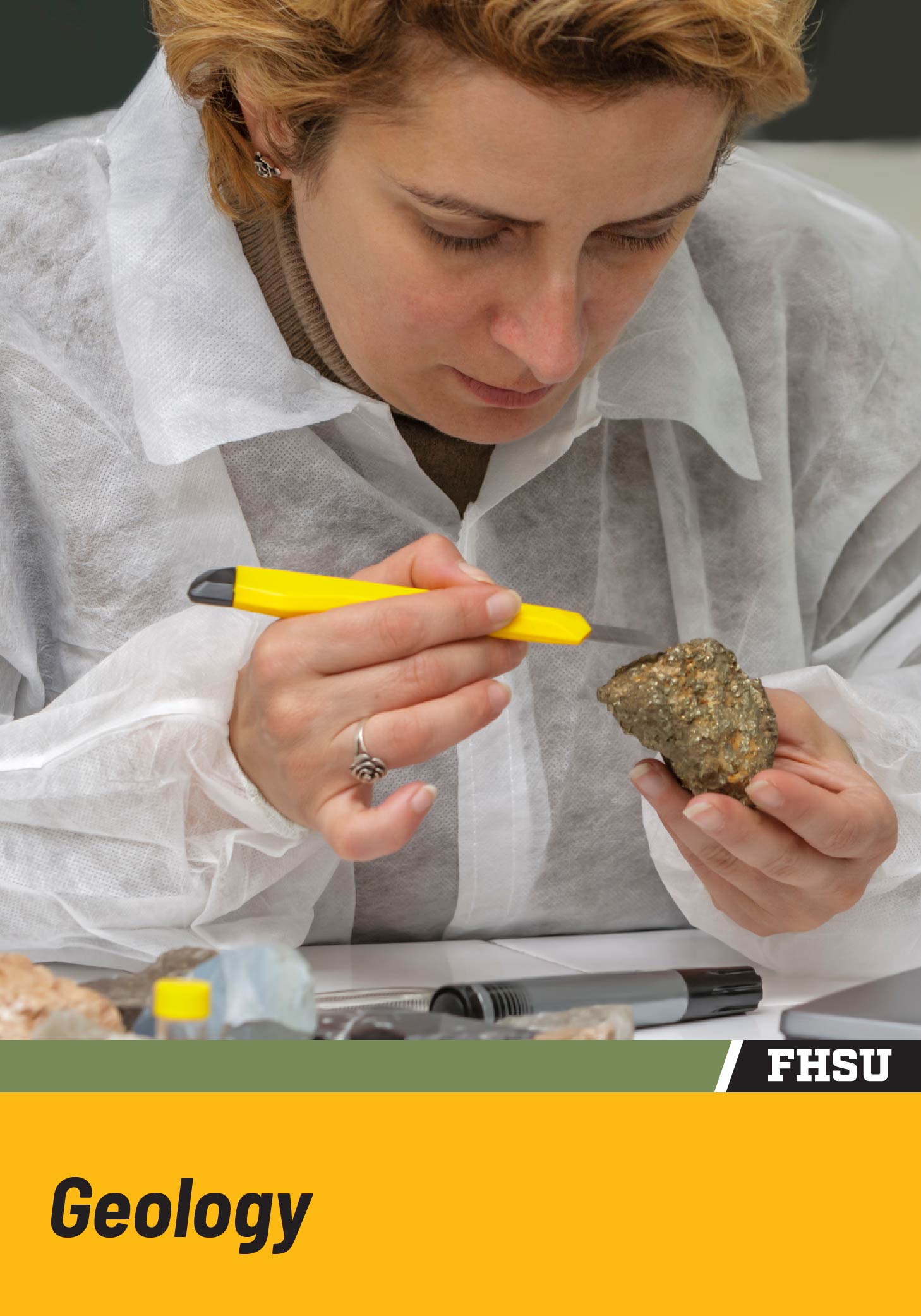
The Bachelor of Science in Geosciences (Geology) at Fort Hays State University provides students with a hands-on, experiential approach to studying the Earth. Emphasizing laboratory and field-based learning, the program equips students with the practical skills needed for success in diverse geoscience careers.
Through a comprehensive curriculum and extensive fieldwork, students explore geological phenomena and develop a solid foundation in the geosciences. Coursework covers essential areas such as mineralogy, petrology, paleontology, and sedimentology, while opportunities for field camps, internships, and laboratory work ensure real-world experience.
This program prepares graduates for careers as petroleum geologists, field geologists, hydrogeologists, and other related professions.
Who is this program for?
This program is ideal for individuals passionate about studying the Earth and its processes, especially those who enjoy outdoor, hands-on work. It is well-suited for:
- Aspiring petroleum geologists
- Future hydrogeologists
- Environmental consultants
- Students interested in mineral exploration
- Individuals seeking careers in academia or research
- Those interested in sustainable resource management
The Best Value in Higher Education Anywhere
Fort Hays State University prides itself on quality education at an affordable price. Students in this program can expect to pay approximately $3,237.60* (on-campus) per semester.
*Estimated cost based on 15 credit hours at the Undergrad resident/regional tuition rate ($215.84/credit hour) for on-campus courses. Actual price may vary depending on course load and location. Tuition and Fees are subject to change as they are approved by the Kansas Board of Regents each year.
The core curriculum provides a strong foundation in geological sciences, starting with introductory courses that cover fundamental principles and processes. Advanced coursework, including Mineralogy, Petrology, Paleontology, and structural geology, provides specialized knowledge and skills.
Laboratory and field courses provide students with practical experience, while electives offer further specialization in areas such as hydrogeology or petroleum geology. This comprehensive curriculum prepares students for diverse careers in the geosciences. Below are some of the courses included in the program:
GSCI 100: Exploring Earth
This course introduces physical and historical geology, exploring the Earth's structure, processes, and history. It can be taken with or without GSCI 102 Exploring Earth Laboratory.
GSCI 454: Applied Geology
This capstone course in geology integrates a wide range of applied field techniques and procedures, providing hands-on experience. A minimum GPA of 2.0 (C average) is required in all core courses.
GSCI 630: Geostatistics and Spatial Data Analysis
This course explores the theory behind quantitative analytic techniques applied to spatially referenced data.
Discover the full Bachelor of Science in Geosciences (Geology) course listing by visiting the Academic Catalog.
Graduates are prepared to pursue a variety of rewarding career paths. This program equips them with the skills and knowledge needed to excel in numerous professional roles.
Petroleum Geologist
Petroleum geologists locate and assess oil and gas resources by analyzing geological data and using advanced tools such as GIS. They study rock formations, subsurface structures, and resource distribution to guide energy exploration and extraction.
Field Geologist
Field geologists conduct fieldwork to collect and analyze geological samples, map geological formations, and contribute to environmental and engineering projects. They work in diverse environments, from remote wilderness areas to urban construction sites, applying their knowledge to understand geological structures and processes.
Hydrogeologist
Hydrogeologists study the distribution and movement of groundwater, analyze water quality, and evaluate water resources. They develop strategies for sustainable water management and address challenges related to water supply and environmental protection.
Environmental Consultant
Environmental consultants offer expertise on environmental issues, conduct impact assessments, and develop strategies for environmental protection and remediation. They work with businesses, governments, and non-profits to ensure compliance with environmental regulations and promote sustainable practices.
Geoscience Educator
Geoscience educators teach geology and related subjects at secondary and post-secondary levels. They engage students through lectures, hands-on activities, and field experiences, fostering curiosity and understanding of Earth sciences.
Ready for the next step?
Our faculty would be excited to talk to you about how our department programs can help you explore your interests and prepare you for a variety of rewarding careers.
Related Programs
Students interested in the B.S. in Geosciences (Geology) may also explore related programs offering complementary skills and knowledge. These programs include:
- B.S. in Geosciences (Applied Geology)
- B.A. in Environmental Geosciences
- M.S. in Geosciences (Geology)
- Certificate in GIS User
- Certificate in Museum Studies
The program includes lab courses, field camps, internships, and research projects. These activities provide practical experience in geological analysis, field surveys, and real-world problem-solving.
By integrating lab and field experiences into the curriculum, the program ensures that students develop practical skills alongside theoretical knowledge. The preparation involves the use of advanced tools and technologies, such as GIS.
Graduates can pursue careers as petroleum geologists, field geologists, hydrogeologists, environmental consultants, and geoscience educators. The program equips students with the skills needed for various professional roles in geosciences.
Yes, students can earn a Certificate in GIS User and a Certificate in Museum Studies, which enhance their qualifications and career prospects.
Information about the Department of Geosciences
The Department of Geosciences at FHSU provides students with the opportunity to explore the world through scientific and geographical lenses, preparing them for a wide range of careers that enhance our understanding of the planet. Programs, available both online and on-campus, focus on developing critical thinking and perseverance, equipping students with the skills necessary to succeed in fields such as education, government, industry, and research. With a curriculum that integrates rigorous academic study and practical field experiences, students are empowered to shape their own future success.
Faculty, experts in geology and geography, are committed to offering personalized guidance and support throughout students’ academic journeys. Department of Geosciences graduates are highly sought after across various industries, bolstered by a strong and accomplished alumni network. Whether pursuing studies on-campus or online, students can expect dedicated support to help them achieve their academic and professional goals, ensuring they are well-prepared to make a meaningful impact in their chosen fields.
While earning a degree remains the primary focus, college life offers much more than classroom learning. Students are encouraged to participate in extracurricular activities that foster leadership skills, deepen their understanding of their chosen careers, and provide opportunities to make a positive impact in their communities.
- Sternberg Geosciences Club: The Sternberg Geosciences Club is an active organization for students passionate about geology and related sciences. It provides members with opportunities to participate in field trips, attend guest lectures, and engage in hands-on projects that enrich learning beyond the classroom. Club members collaborate on research, explore geological sites, and contribute to community outreach initiatives, fostering both academic growth and community engagement.
- AAPG/SEG Petroleum Club: The AAPG/SEG Petroleum Club is affiliated with the American Association of Petroleum Geologists and the Society of Exploration Geophysicists. It offers students valuable exposure to the petroleum industry through networking events, industry presentations, and participation in national conferences. The club serves as an excellent platform for students pursuing careers in oil and gas exploration and production.
- WiSTEM (Women in STEM): WiSTEM is an inclusive organization dedicated to supporting and empowering women pursuing careers in science, technology, engineering, and mathematics. The club promotes diversity and provides mentorship opportunities, workshops, and networking events designed to foster professional growth for women in STEM fields.
- Honor Society - Gamma Theta Upsilon: Gamma Theta Upsilon is the international honor society for geography. Membership is by invitation and recognizes students who have demonstrated academic excellence in the field. Members gain access to exclusive events, scholarships, and networking opportunities, and frequently participate in service projects that benefit the community.
- Minor
- Bachelor's
- Master's
- On-Campus