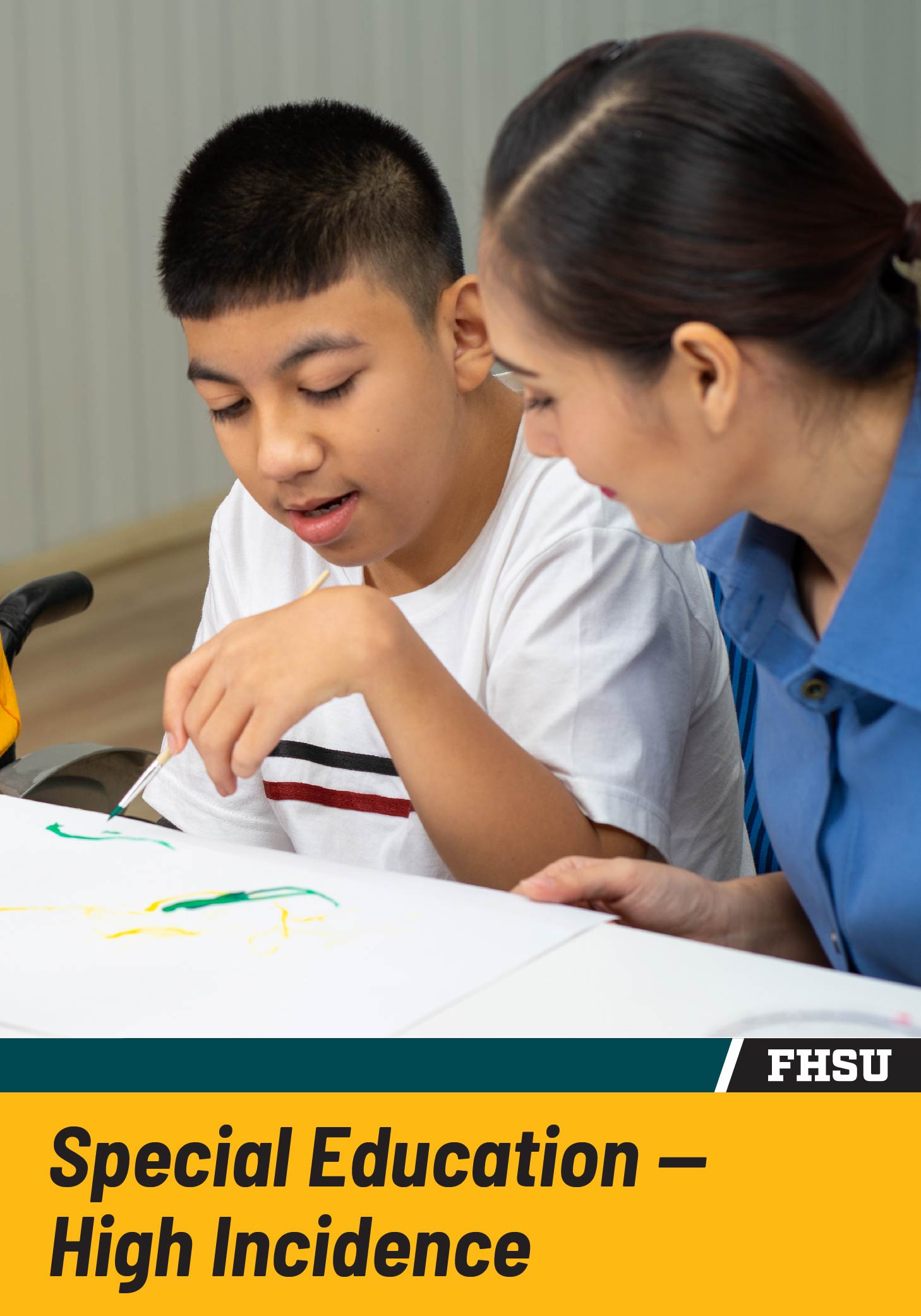
Master of Science in Special Education (High Incidence)
Hours: 36 Online
The fully online Master of Science in Special Education (High Incidence) at Fort Hays State University offers a flexible and accessible path for educators seeking to deepen their expertise in special education. Designed to meet the needs of working professionals, the program provides a comprehensive curriculum focused on effectively supporting exceptional learners.
Upon completion, educators earn a master’s degree and become eligible to add a PreK–12 high-incidence special education endorsement to their current teaching license. This endorsement prepares educators to serve students with mild to moderate disabilities across a variety of educational settings, including general education classrooms, resource rooms, and specialized support environments.
Who is this program for?
The M.S. in Special Education (High Incidence) program is perfect for passionate educators who are seeking to enhance their expertise and make a profound impact on the lives of exceptional learners. Here are the types of people who might primarily want to consider this degree:
- General education teachers who want to open new career paths
- Bachelor's degree holders interested in pursuing a career in special education
- Teachers seeking to transition to special education
The Best Value in Higher Education Anywhere
Fort Hays State University prides itself on quality education at an affordable price. Students in this program can expect to pay approximately $3,264.57* (online) per semester.
*Estimated cost based on 9 credit hours at the FHSU Online Graduate tuition rate ($362.73/credit hour) for online courses. Actual price may vary depending on course load and location. Tuition and Fees are subject to change as they are approved by the Kansas Board of Regents each year.
The curriculum addresses the legal framework of special education, emphasizing the laws and regulations that guide educators’ responsibilities. It explores theoretical foundations related to diversity and exceptionality, equipping educators to adapt their instructional practices to meet varied student needs. Coursework also includes functional behavior analysis, focusing on the development of evidence-based behavior intervention plans that foster positive and inclusive learning environments.
Assessment techniques for PreK-12 students with high-incidence disabilities are a key focus, covering areas such as literacy development and overall academic progress. The program also highlights collaboration as an essential skill, preparing students to work effectively with families, general education teachers, and external agencies. Below are a few of the courses in the Master of Science in Special Education (High Incidence) program:
SPED 801: Legal/Professional Issues in Special Education
This course will focus on legal and professional issues in special education, emphasizing exceptional children and youth and the provision of educational and related services for this population.
SPED 804: Behavior Management in Schools/Practicum
A study of the behavior of children and youth with emphasis on the diagnosis and modification of behaviors.
SPED 806: Methods and Materials for Exceptional Students
This course aims to help special educators make informed decisions about evidence-based instructional practices in literacy, math, and content areas for students with exceptionalities, ensuring they receive the support needed to succeed and reach their potential.
Discover the full Master of Science in Special Education (High Incidence) course listing by visiting the Academic Catalog.
Upon completing the coursework, graduates will possess the knowledge, skills, and credentials needed to pursue a wide range of rewarding career opportunities in special education.
Special Education Teacher
Special education teachers provide individualized instruction and support to students with disabilities in various settings, including general education classrooms, resource rooms, and self-contained classrooms. They create individualized education programs and implement evidence-based instructional strategies to help students reach their full potential.
Educational Consultant
Educational consultants provide support and guidance to school districts, parents, and other stakeholders on a variety of educational issues. They conduct evaluations, develop Individualized Education Programs (IEPs), and deliver professional development for teachers and staff. With an advanced degree, they become vital advocates for students with disabilities, helping to enhance educational outcomes across diverse settings.
Research and Development Specialist
Specialists in the field of special education contribute to the advancement of knowledge and practice through research, evaluation, and innovation. They develop new instructional strategies, assessments, and interventions, working with educators, researchers, and policymakers to improve educational outcomes for students with disabilities.
Resource Room Educator
Graduates can pursue roles as resource room educators, offering targeted support to students with special education needs. This position involves implementing evidence-based strategies to enhance student learning and achievement within a specialized, supportive setting.
At Fort Hays State University, students receive the knowledge and skills necessary to become highly qualified special education professionals. To be considered for admission to the Master of Science in Special Education (High Incidence) program, applicants must meet the following requirements:
Cumulative GPA
A solid academic foundation is crucial, and we require a minimum cumulative GPA of 3.0 on your last 60 undergraduate credit hours. This ensures that our graduate program attracts dedicated and academically proficient individuals.
Application to the Graduate School
Applicants must submit a complete application to the Graduate School. This essential step initiates the admission process for the online Master of Science in Special Education (High Incidence) program.
Personal Statement
Applicants should provide a personal statement that highlights their dedication to special education and their desire to support exceptional learners. The statement needs to detail their reasons for seeking this degree and specify what draws them to FHSU’s program, along with any specific goals or areas of emphasis within the field.
Two Outside Personal Recommendations
Two letters of recommendation are required from individuals who can speak directly to the applicant’s academic strengths, instructional abilities, and dedication to the field of special education. Ideal recommenders include former professors, educational supervisors, or colleagues who have observed the applicant’s professional work and character.
Completion of a Bachelor's Degree
Submit an official transcript from the accredited institution where your bachelor's degree was conferred. The transcript should clearly verify degree completion and reflect the academic preparation necessary for success in the online program.
Teaching License, if Applicable
Licensed educators aiming to expand their qualifications in special education should provide a copy of their current teaching license. This documentation confirms their teaching credentials and supports eligibility for advanced training in special education.
Ready for the next step?
Our faculty would be excited to talk to you about how our department programs can help you explore your interests and prepare you for a variety of rewarding careers.
Related Programs
Successful completion of the program equips graduates with the skills and confidence to meet the demands of their chosen career paths in special education. For those seeking to broaden their expertise further, Fort Hays State University offers several related programs that provide additional knowledge and professional development opportunities in this field, including:
- Master of Science in Education (Elementary Education - Transition to Teaching)
- BSE in Elementary Education (Early Childhood Unified)
- BSE in Elementary Education (PreK-6)
- BSE in Secondary Education
In special education, "high incidence" refers to disabilities that are more common than others.
High-incidence special education is the field of special education that focuses on teaching students with high incidence disabilities. Special educators specializing in high incidence special education develop and implement instructional strategies to help students with these disabilities succeed in the classroom.
The program comprises 36 credit hours and can be completed in as little as 18 months.
There are many benefits to earning an online degree. Some of the most important include flexibility, cost-effectiveness, convenience, and access to a wider range of courses.
The high incidence disabilities are learning disability, mild intellectual disability, high-functioning autism spectrum disorder, and mild behavior disorder.
Information about the Department of Advanced Education Programs
FHSU’s Department of Advanced Education Programs (AEP) is one of the most diverse and comprehensive departments, offering a wide range of programs designed to fit the unique needs of educators at every stage of their careers. Whether you aim to enhance your teaching skills, pursue a role as a building principal or community counselor, add an endorsement, or renew your license, our department is dedicated to helping you succeed in your aspirations.
AEP aims to be the leader in preparing inclusive educational and community professionals to unlock innovative potential in a rapidly advancing world, by preparing global leaders who serve in these settings. Our programs focus on the interaction among innovative technologies, relevant content, diversity, and best practices.
- CAEP Accreditation:
The Department of Advanced Education Programs holds Advanced-Level Accreditation from the Council for the Accreditation of Educator Preparation (CAEP). See the Fort Hays State University CAEP Accredited Provider page for details.
Advanced-Level Accreditation is provided at the post-baccalaureate or graduate levels leading to licensure, certification, or endorsement. Advanced-Level Programs are designed to develop P-12 teachers who have already completed an initial-licensure program, currently licensed administrators, or other certified (or similar state language) school professionals for employment in P-12 schools/districts. CAEP's Advanced-Level accreditation does not include any advanced-level program not specific to the preparation of teachers or other school professionals for P-12 schools/districts; any advanced-level non-licensure programs, including those specific to content areas; or educational leadership programs not specific to the preparation of teachers or other school professionals for P-12 schools/districts.
- Master's
- Endorsement
- Online