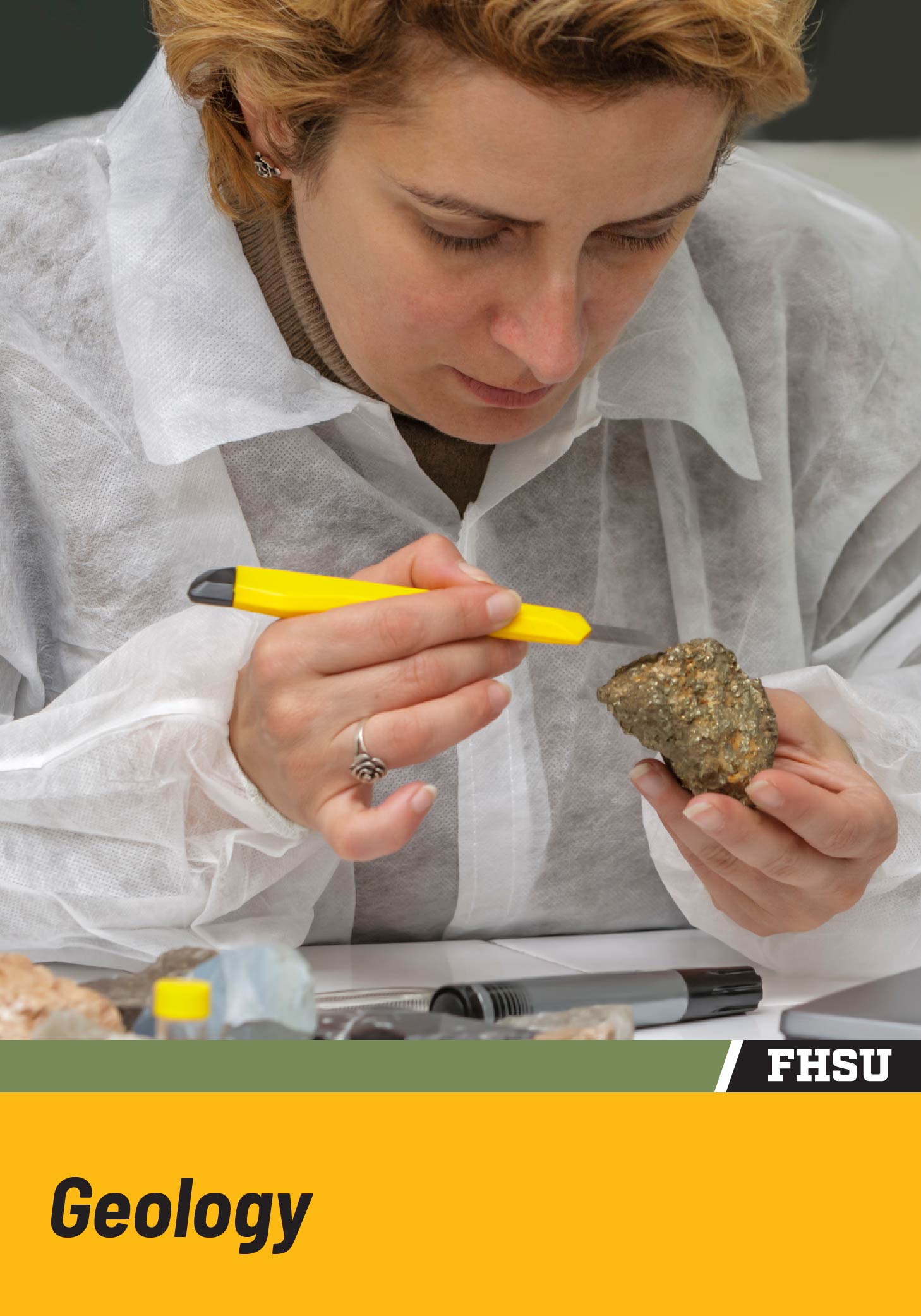
Master of Science in Geosciences (Geology)
Hours: 30 On-Campus
The Master of Science in Geosciences (Geology) at Fort Hays State University is a rigorous graduate program emphasizing applied research and academic excellence. Offering thesis and non-thesis tracks, it provides flexibility to support a diverse range of academic and professional goals. Students acquire specialized knowledge through coursework tailored for careers in geology, environmental science, and remote sensing, while also building a strong foundation for doctoral study. The program fosters close collaboration with faculty actively engaged in fieldwork, research, and national conferences.
Who is this program for?
This program caters to individuals with a background in geology or environmental science who seek advanced training for career growth or doctoral preparation. Students can pursue original research or an applied track, tailoring the program to their academic and professional goals.
- Geology and environmental graduates
- Professionals in consulting or environmental fields
- Future doctoral students
- Teachers or educators seeking advanced credentials
- Government or agency workers in natural sciences
The Best Value in Higher Education Anywhere
Fort Hays State University prides itself on quality education at an affordable price. Students in this program can expect to pay approximately $3,264.57* (on-campus) per semester.
*Estimated cost based on 9 credit hours at the Graduate resident/regional tuition rate ($362.73/credit hour) for on-campus courses. Actual price may vary depending on course load and location. Tuition and Fees are subject to change as they are approved by the Kansas Board of Regents each year.
The program builds a foundation in geological theory, research methods, and scientific communication. All students complete GSCI 800: Scientific Research Design plus 21 graduate electives. Thesis students conduct original research, defend their thesis, and complete six thesis credits (GSCI 899). Non-thesis students take oral and written comprehensive exams and complete six additional coursework credits in place of a thesis.
GSCI 800: Scientific Research Design
Techniques and methods of writing scientific papers. Satisfies graduate research methods requirement.
GSCI 899: Thesis
The written result of independent research.
GSCI 685G: Writing in the Sciences
Students will evaluate and synthesize scientific literature, applying critical thinking and problem-solving skills to analyze and apply scientific concepts. Students will communicate scientific material effectively using various formats, including research proposals, papers, and posters, to convey their findings and insights.
Discover the full Master of Science in Geosciences (Geology) course listing by visiting the Academic Catalog.
Graduates pursue a wide variety of career opportunities in the public and private sectors. The program equips students with the skills and adaptability needed to succeed in many dynamic and evolving fields.
Environmental Consultant
Environmental consultants work for private firms and government agencies to guide policies, assess impacts, and develop remediation plans. They collect and analyze geological data, prepare reports, and ensure compliance with relevant regulations.
Geological Surveyor
Geological surveyors conduct mapping and data analysis to support mining, infrastructure, and land-use projects. They assess site feasibility, explore mineral resources, evaluate seismic risks, and provide critical information for planning and decision-making.
Research Scientist
Research scientists lead funded studies in geology, environmental systems, or climate-related topics at universities, laboratories, and nonprofit organizations. They design experiments, analyze data, publish findings, and mentor junior researchers.
Hydrogeologist
Hydrogeologists study groundwater flow through soils and rocks to support environmental protection, water management, and infrastructure. They play a crucial role in addressing drought, contamination, and ensuring access to clean water in diverse communities.
Geoscience Educator
Geoscience educators teach at various levels, lead science departments, develop curricula, and engage students in field learning. Many also support outreach to promote public understanding of earth sciences.
Applicants to the Master of Science in Geosciences (Geology) program at Fort Hays State University must hold a bachelor’s degree in geology, geosciences, environmental science, or a closely related field. A solid foundation in earth sciences, evidenced by relevant coursework, is essential for success at the graduate level.
Application Materials
Applicants must submit official transcripts from all post-secondary institutions attended. These transcripts should demonstrate satisfactory academic performance, especially in upper-division science courses. A minimum GPA may be required in accordance with FHSU’s graduate admission policies.
Statement of Purpose
Applicants must submit a personal statement or letter of intent as part of their application. This essay should detail the applicant’s academic background, research interests, professional goals, and motivation for pursuing the degree. Additionally, applicants should specify their preference for the thesis or non-thesis track.
Letters of Recommendation
Applicants are required to submit at least two letters of recommendation. Ideally, one letter should come from a former academic instructor or advisor, and the other from a professional contact familiar with the applicant’s skills, work ethic, or research potential. These letters should attest to the applicant’s ability to succeed in a graduate-level science program.
Additional University Requirements
Applicants must also meet FHSU’s general admission requirements of the Graduate School, including submitting the graduate application form and paying the application fee. International students may be required to provide TOEFL or IELTS scores and demonstrate proof of financial support.
Ready for the next step?
Our faculty would be excited to talk to you about how our department programs can help you explore your interests and prepare you for a variety of rewarding careers.
Related Programs
In addition to the M.S. in Geosciences (Geology), Fort Hays State University offers graduate programs and certificates that provide specialized or complementary credentials. These programs focus on research, education, environmental science, and geospatial technologies, supporting interdisciplinary career paths in science and education.
- Master of Science in Geosciences (Geography)
- Certificate in GIS User
- Certificate in Museum Studies
- Certificate in Sustainability
We designed the program to enable full-time students to complete it in approximately two years.
Students can choose between a thesis or a non-thesis (graduate portfolio) track based on their academic goals.
Faculty provide guidance on research topics, and students often collaborate on faculty-led projects or pursue independent studies under the guidance of an advisor.
Most graduate courses in this program are miniature, allowing for individualized attention and collaborative work with master's students.
Yes, many students present at regional and national conferences, and some publish research in collaboration with faculty mentors.
Information about the Department of Geosciences
The Department of Geosciences at FHSU provides students with the opportunity to explore the world through scientific and geographical lenses, preparing them for a wide range of careers that enhance our understanding of the planet. Programs, available both online and on-campus, focus on developing critical thinking and perseverance, equipping students with the skills necessary to succeed in fields such as education, government, industry, and research. With a curriculum that integrates rigorous academic study and practical field experiences, students are empowered to shape their own future success.
Faculty, experts in geology and geography, are committed to offering personalized guidance and support throughout students’ academic journeys. Department of Geosciences graduates are highly sought after across various industries, bolstered by a strong and accomplished alumni network. Whether pursuing studies on-campus or online, students can expect dedicated support to help them achieve their academic and professional goals, ensuring they are well-prepared to make a meaningful impact in their chosen fields.
While earning a degree remains the primary focus, college life offers much more than classroom learning. Students are encouraged to participate in extracurricular activities that foster leadership skills, deepen their understanding of their chosen careers, and provide opportunities to make a positive impact in their communities.
- Sternberg Geosciences Club: The Sternberg Geosciences Club is an active organization for students passionate about geology and related sciences. It provides members with opportunities to participate in field trips, attend guest lectures, and engage in hands-on projects that enrich learning beyond the classroom. Club members collaborate on research, explore geological sites, and contribute to community outreach initiatives, fostering both academic growth and community engagement.
- AAPG/SEG Petroleum Club: The AAPG/SEG Petroleum Club is affiliated with the American Association of Petroleum Geologists and the Society of Exploration Geophysicists. It offers students valuable exposure to the petroleum industry through networking events, industry presentations, and participation in national conferences. The club serves as an excellent platform for students pursuing careers in oil and gas exploration and production.
- WiSTEM (Women in STEM): WiSTEM is an inclusive organization dedicated to supporting and empowering women pursuing careers in science, technology, engineering, and mathematics. The club promotes diversity and provides mentorship opportunities, workshops, and networking events designed to foster professional growth for women in STEM fields.
- Honor Society - Gamma Theta Upsilon: Gamma Theta Upsilon is the international honor society for geography. Membership is by invitation and recognizes students who have demonstrated academic excellence in the field. Members gain access to exclusive events, scholarships, and networking opportunities, and frequently participate in service projects that benefit the community.
- Minor
- Bachelor's
- Master's
- On-Campus